
 English
 中文简体


Product Overview: This series of products consists of high-performance, torsion-resistant flexible cables specifically designed for the harsh environments of wind turbine generators. Rated voltages ra...
See Details
Custom Wind Power Cables Factory: What Buyers Must Check Before Ordering
Oct 01,2026
Content
- 1 What Makes Wind Power Cables Different From Standard Industrial Cables
- 2 Voltage Classes in Wind Power Applications
- 3 How a Custom Wind Power Cables Factory Controls Process Quality
- 4 Qualification Checklist for a Custom Wind Power Cables Factory
- 5 What to Put in an RFQ for Custom Wind Power Cables
- 6 Frequently Asked Questions
Wind farm EPC contractors often discover the difference between a standard MV power cable and a true wind power cable during commissioning. When the 36 kV tower feeders from the nacelle to the tower base crack after a few thousand yaw cycles, the specification becomes the point of failure. The cable met the general IEC 60502 standard, but it was not built for the torsional loads a turbine tower produces. For buyers sourcing from a custom wind power cables factory, the conversation has to start with construction and testing, not just voltage and cross-section. The factory that wins the contract is the one that can prove it understands the mechanical duty cycle of a wind turbine, not just the electrical ratings.
What Makes Wind Power Cables Different From Standard Industrial Cables
Wind power cables are engineered for a specific mechanical duty: repeated torsion, flexing, and vibration over a 20-plus-year service life. The yaw and pitch mechanisms twist cables continuously, and a tower height of 100 meters creates a long vertical drop that amplifies mechanical loading. In an offshore environment, salt fog, UV radiation, and temperature swings from -40°C to +90°C add chemical stress that a standard industrial cable is never designed to handle.
A wind power cable is a cable designed and tested to withstand repeated torsional stress and flexing in the moving parts of a wind turbine, typically constructed with fine-stranded conductors, flexible insulation compounds, and a halogen-free UV-stable sheath.
A standard XLPE power cable rated for 36 kV can handle steady-state electrical loads, but its conductor stranding and insulation thickness are not designed for torsional stress. Wind power cables use fine-stranded copper conductors, typically class 5 or class 6 per IEC 60228, which allow the cable to flex without fracturing. Insulation compounds are selected for low-temperature flexibility and UV resistance, and a torsion-resistant wind cable must pass a dedicated flexing endurance test that a standard LV or MV cable is never subjected to.
Three construction factors separate a wind power cable from an industrial power cable: conductor stranding, insulation and sheath compounds, and shielding design. Each one is directly tied to the mechanical loads in a turbine.
| Parameter | Standard Power Cable | Wind Power Cable |
| Conductor | Class 1/2 solid or stranded | Class 5/6 fine stranded |
| Insulation | XLPE or PVC | XLPE with low-temp flex additives |
| Sheathing | ST1/ST2 compounds | Halogen-free, UV-stable, abrasion-resistant |
| Testing | AC withstand only | Torsion endurance, flexing, AC withstand |
At the most basic level, the difference is mechanical: wind cables are built to move, standard cables are built to stay still. A factory that cannot demonstrate torsion endurance testing capability should not be awarded a wind cable order, regardless of its price.
Voltage Classes in Wind Power Applications
When sourcing custom wind power cables, the first decision is the voltage class. The rating determines insulation thickness, conductor cross-section, and acceptance testing. Three classes dominate wind turbine design worldwide.
1.8 kV cables handle internal turbine wiring, including control circuits, sensor lines, and auxiliary power routes in the nacelle. They experience the highest flexing cycle counts because they run through moving components.
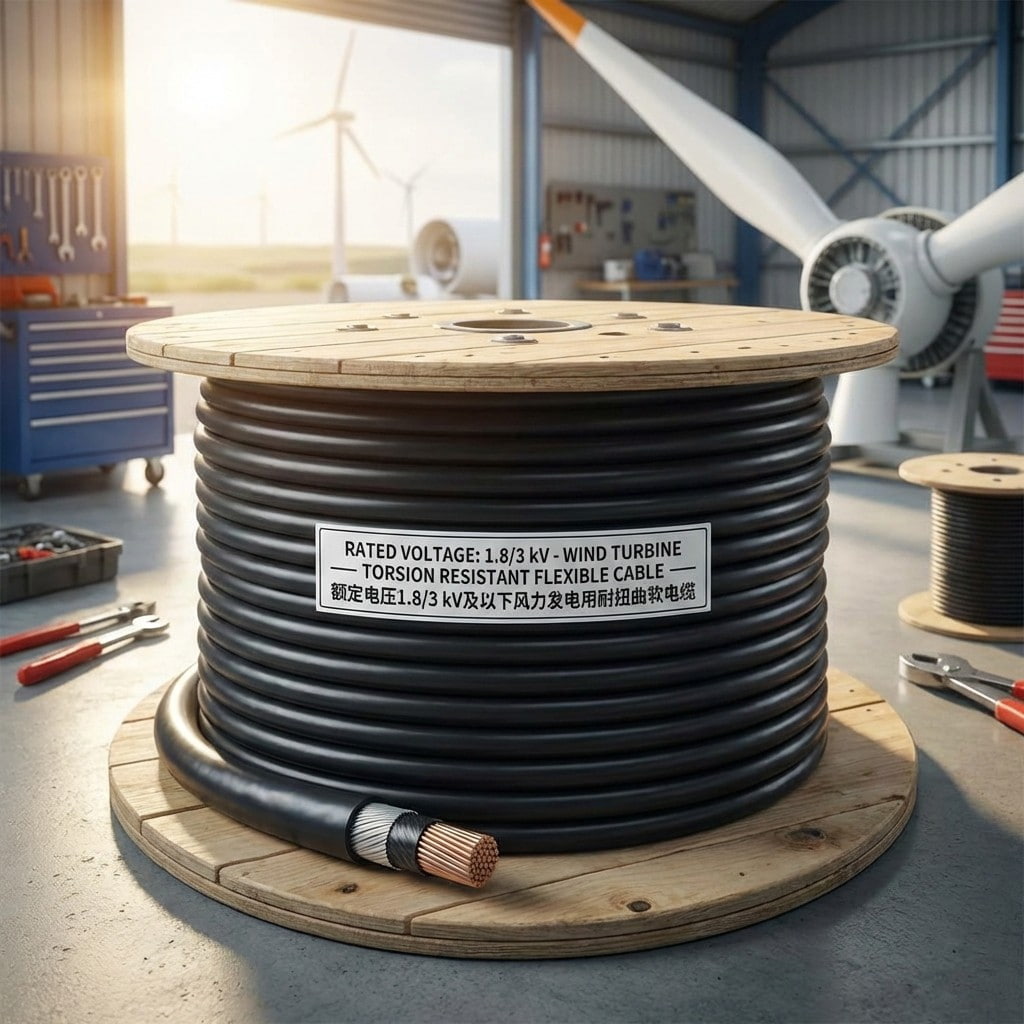 Torsion-Resistant Flexible Cable for Wind Power, Rated Up to 1.8/3kVDesigned for internal turbine wiring in the nacelle, this cable withstands continuous flexing from moving components. Its elastomer insulation and flame-retardant sheath ensure reliable power transmission and fire safety in confined routes.View Product →
6 kV cables serve as tower feeders, handling medium-voltage distribution between turbine equipment. Torsion resistance requirements are strict because the cable must survive years of yaw rotation. Many projects also require a low-smoke, halogen-free sheath for tower cable routes where fire safety is prioritized.
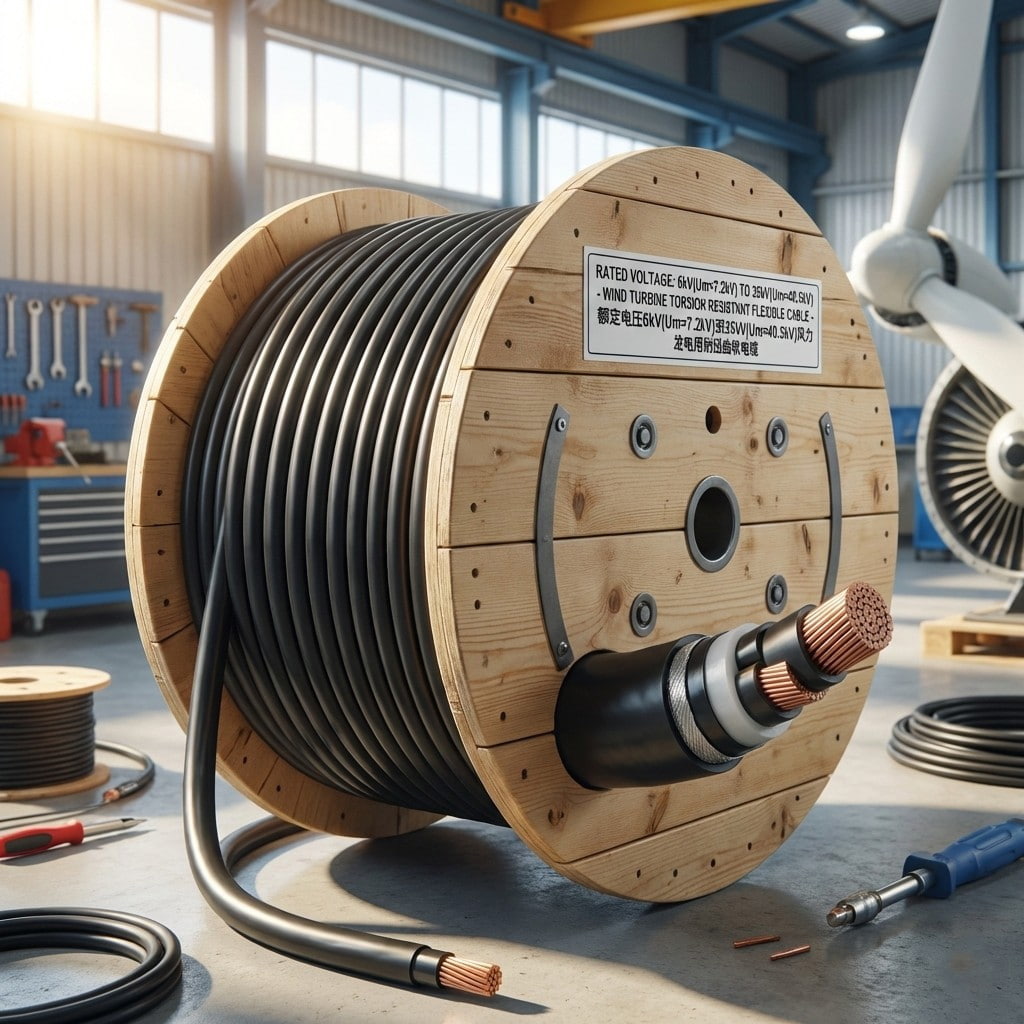
 Torsion-Resistant Flexible Cable for Wind Power, Rated 6kV to 35kVFor tower feeders and medium-voltage distribution, this cable endures yaw rotation and extreme weather. Special PUR or CPE sheaths provide UV, oil, and abrasion resistance, while EPR insulation ensures electrical stability under torsion and vibration.View Product →
66 kV cables represent the newest high-voltage class in wind applications. They are used in collection networks that connect multiple turbines to a substation or offshore platform. A 66 kV custom wind cable requires partial discharge testing, complex insulation systems, and precise screen design that handles high fault currents while remaining flexible. Few factories worldwide have the extrusion capability and testing infrastructure for 66 kV flexible wind cables.
 Torsion-Resistant Flexible Cable for Wind Power, Rated 66kVA high-voltage solution for collection networks linking turbines to substations. This cable features a flexible conductor and robust insulation, designed for 5–20MW onshore and offshore units, handling high fault currents while remaining torsion-resistant.View Product →
| Voltage Class | Application | Typical Conductor Size | Key Requirement |
| 1.8 kV | Nacelle internal wiring | 1.5–25 mm² | High flexing endurance |
| 6 kV | Tower feeders | 25–240 mm² | Torsion resistance |
| 66 kV | Collection network | 150–630 mm² | Partial discharge testing |
Selecting the right class is not a matter of preference. It is a function of the electrical load and the routing path in the turbine. A factory that can supply all three classes from a single production line simplifies the buyer's supply chain and reduces quality variance across the project.
How a Custom Wind Power Cables Factory Controls Process Quality
The quality of a custom wind power cable depends less on the raw materials and more on the process controls that the factory maintains during stranding, extrusion, and testing. Four control points matter most in a production facility.
10,000+
Torsion endurance cycles
3.5x
Test voltage for 5 min
-40 to +90°C
Operating temperature range
5x OD
Installation bend radius
These values come from real turbine demands. If a factory cannot document that it measures and reports at least these four values, it is not manufacturing wind cables. It is manufacturing a wind power cable name.
A factory with in-house partial discharge testing, specifically for 6 kV and higher cables, catches defects that would otherwise appear only after years of operation. Ask for the production batch test report, not a generic type-test certificate.
For a 40,000 m² modern factory with a 5G smart production line and integrated test center, digital monitoring and full-process quality traceability are operational realities, not marketing language.
Qualification Checklist for a Custom Wind Power Cables Factory
Qualifying a factory is the most important step before a custom wind cable order. Certifications are a starting point, not a guarantee, but they filter out most suppliers that lack the right systems.
- Management system certifications — ISO 9001, ISO 14001, and ISO 45001 form the baseline for quality, environmental, and occupational safety management.
- Product certifications — CB and TÜV certificates demonstrate compliance with IEC standards and international safety requirements.
- In-house testing capability — partial discharge, impulse, torsion, and flexing tests conducted on-site, not outsourced.
- Material traceability — the factory can trace every conductor batch from copper rod to finished cable, with composition records.
- Customization process — non-standard lengths, custom sheathing colors, and customer-specific terminations accepted without surcharge abuse.
- Environmental reporting — published greenhouse gas inventory and product carbon footprint verification reports.
The certifications that matter for wind power cables include CB (certified to IEC standards), TÜV (type-tested for safety), and ISO 9001 (process quality). A factory that publishes product carbon footprint verification reports for its wind cables has already invested in the data discipline that serious buyers want in a supply chain.
The wind power cable types and selection guide from the factory's own technical team can reveal whether the supplier treats wind cables as a specialized product line or just an add-on to its standard power cable catalog.
What to Put in an RFQ for Custom Wind Power Cables
When requesting a quote, a properly structured RFQ saves weeks of back-and-forth and prevents specification creep. These items should always be explicit:
- Required voltage class and insulation material
- Ambient and operating temperature at the installation site
- Termination and connector requirements
- Length per reel and total quantity
- Torsion and flexing test acceptance criteria
- Required certifications and traceability documentation
A factory that receives a detailed RFQ knows exactly what to quote. A factory that receives only a voltage and a length will assume the rest, and assumptions are not worth the risk. The result is a cable that passes the test bench but fails the tower.
If you are in the middle of specification work, contact the factory engineering team with your detailed requirements before committing to a purchase order.
Frequently Asked Questions
How long does a custom wind power cable order take to deliver?
A typical custom order takes 45 to 75 days from design confirmation to shipment for 1.8 kV and 6 kV cables. A 66 kV cable typically needs 90 to 120 days because of the additional partial discharge testing and quality documentation.
What is the minimum order quantity for custom wind cables?
Most factories accept 500 meters to 1,000 meters per voltage class. Setup costs for stranding and extrusion make orders under 1,000 meters less economical per meter.
Can a factory match an existing cable specification?
Yes. A capable custom factory will reverse-engineer the specification from a sample or technical datasheet and produce a cable that matches the electrical and mechanical performance of the original.
What testing should be included in a custom wind cable order?
At minimum: conductor resistance, partial discharge, AC voltage withstand, torsion endurance, and flexing endurance. For 6 kV and above, partial discharge is mandatory.
Related products
-
-
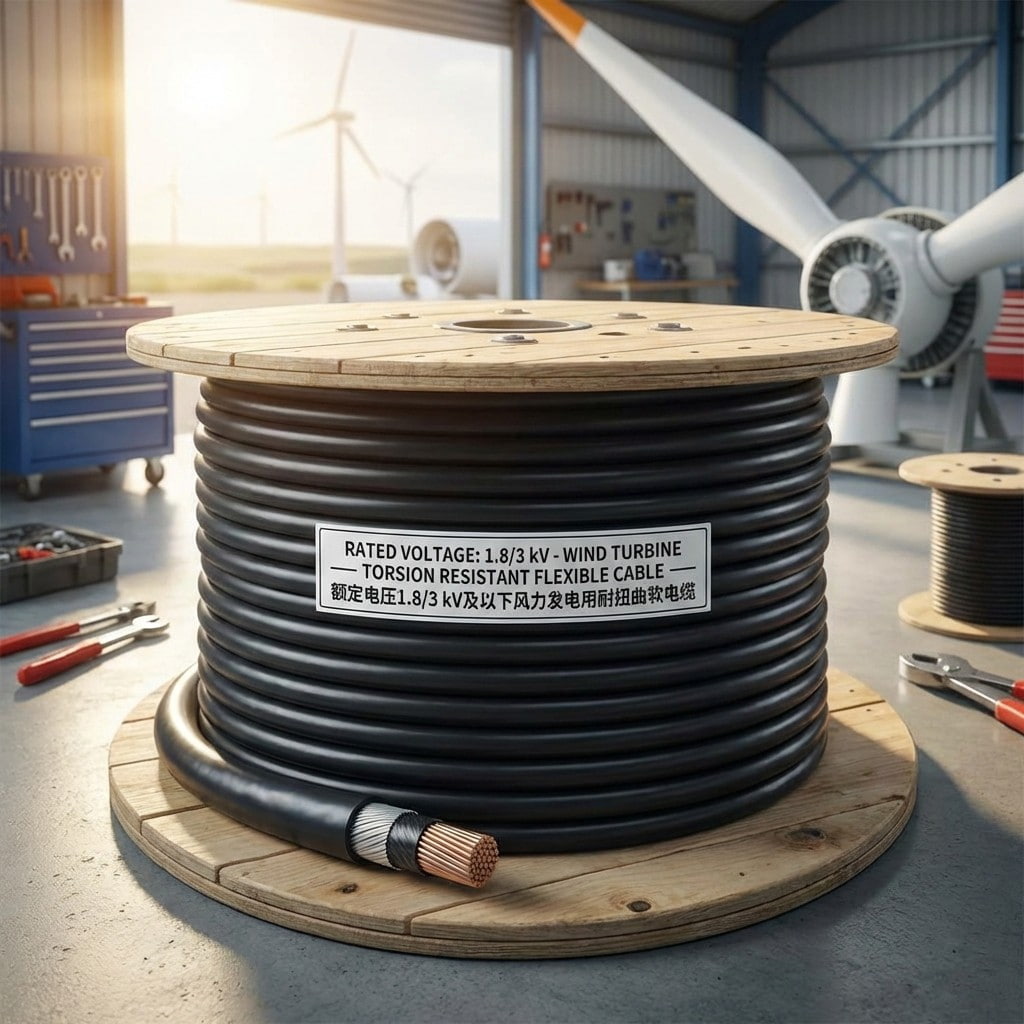
Product Introduction: Designed specifically for the harsh operating environment of wind power systems, meeting the requirements of continuous torsion and bending during mobile installation within the...
See Details -
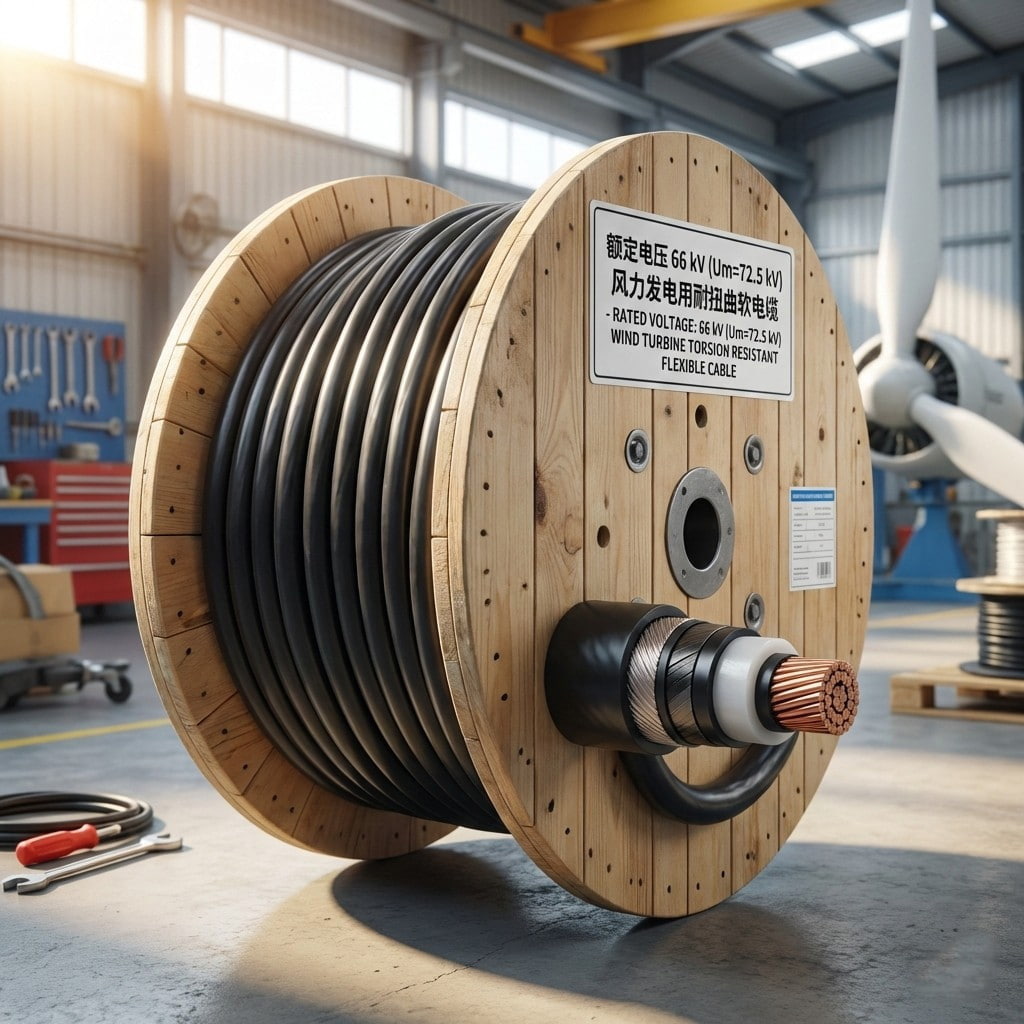
Product Introduction: This cable is specifically designed for medium- and high-voltage wind power generation equipment, with a rated voltage of 66 kV. It is suitable for high-reliability power transmi...
See Details -
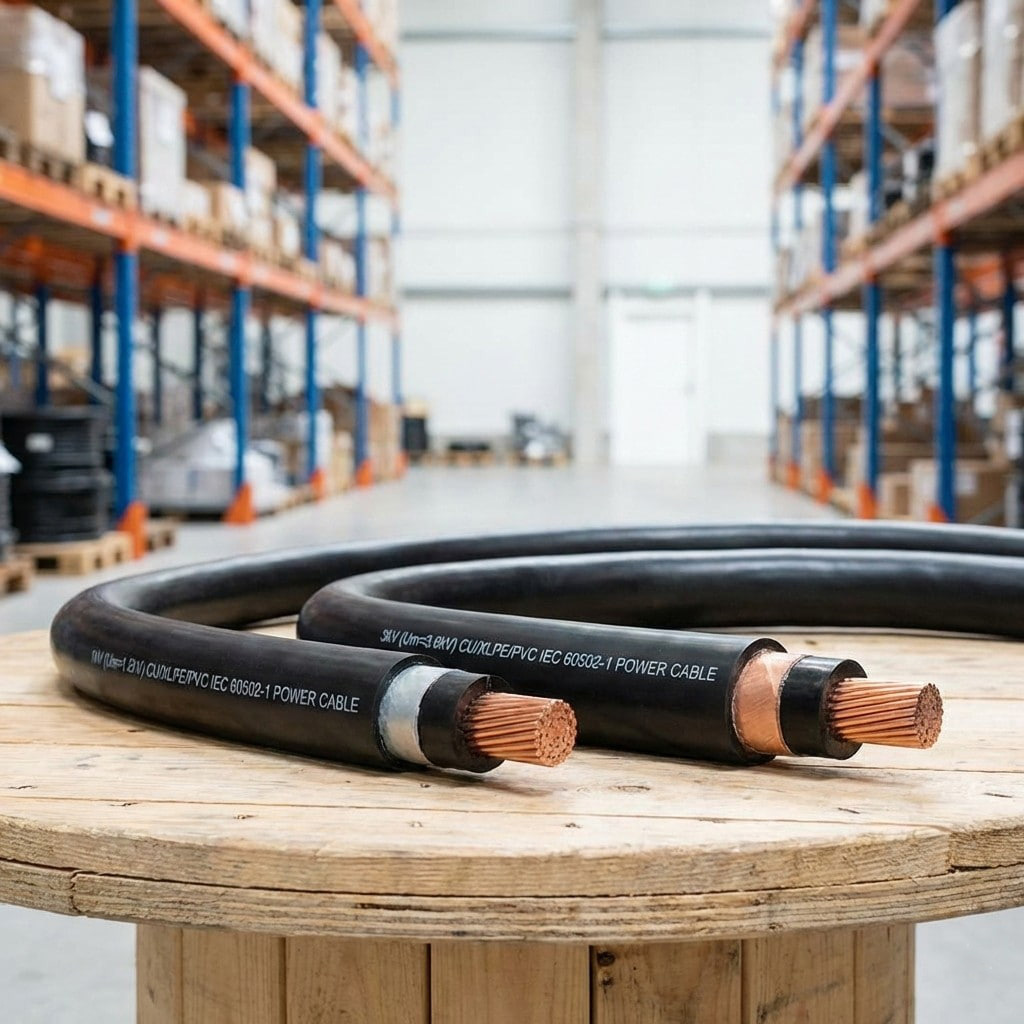
Product Definition: Low-voltage extrusion-insulated power cable for 1kV and 3kV systems, made with high-conductivity copper or aluminum conductors and premium extrusion insulation.
See Details -
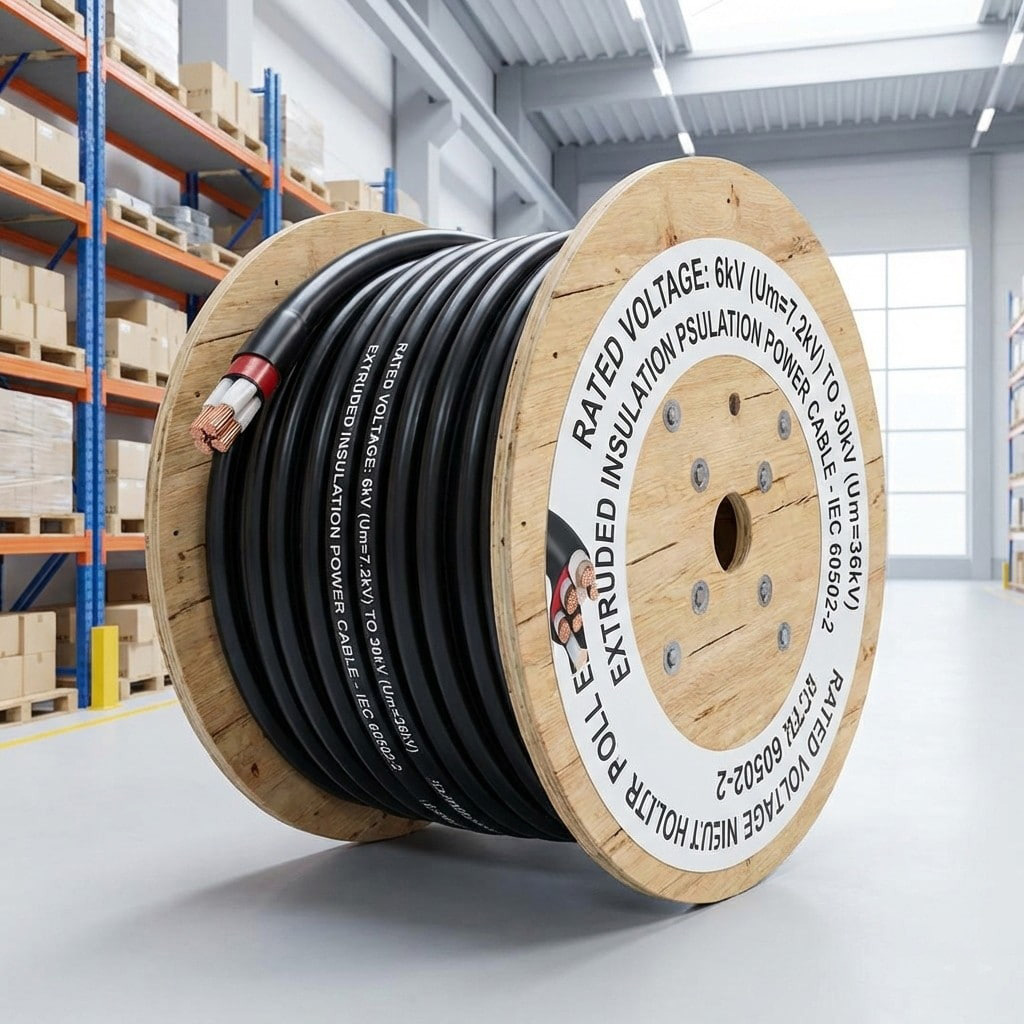
Product Definition: Medium-voltage extrusion-insulated power cable for 6kV to 30kV systems, using high-quality copper or aluminum conductors and premium insulation materials, designed for medium-volta...
See Details -
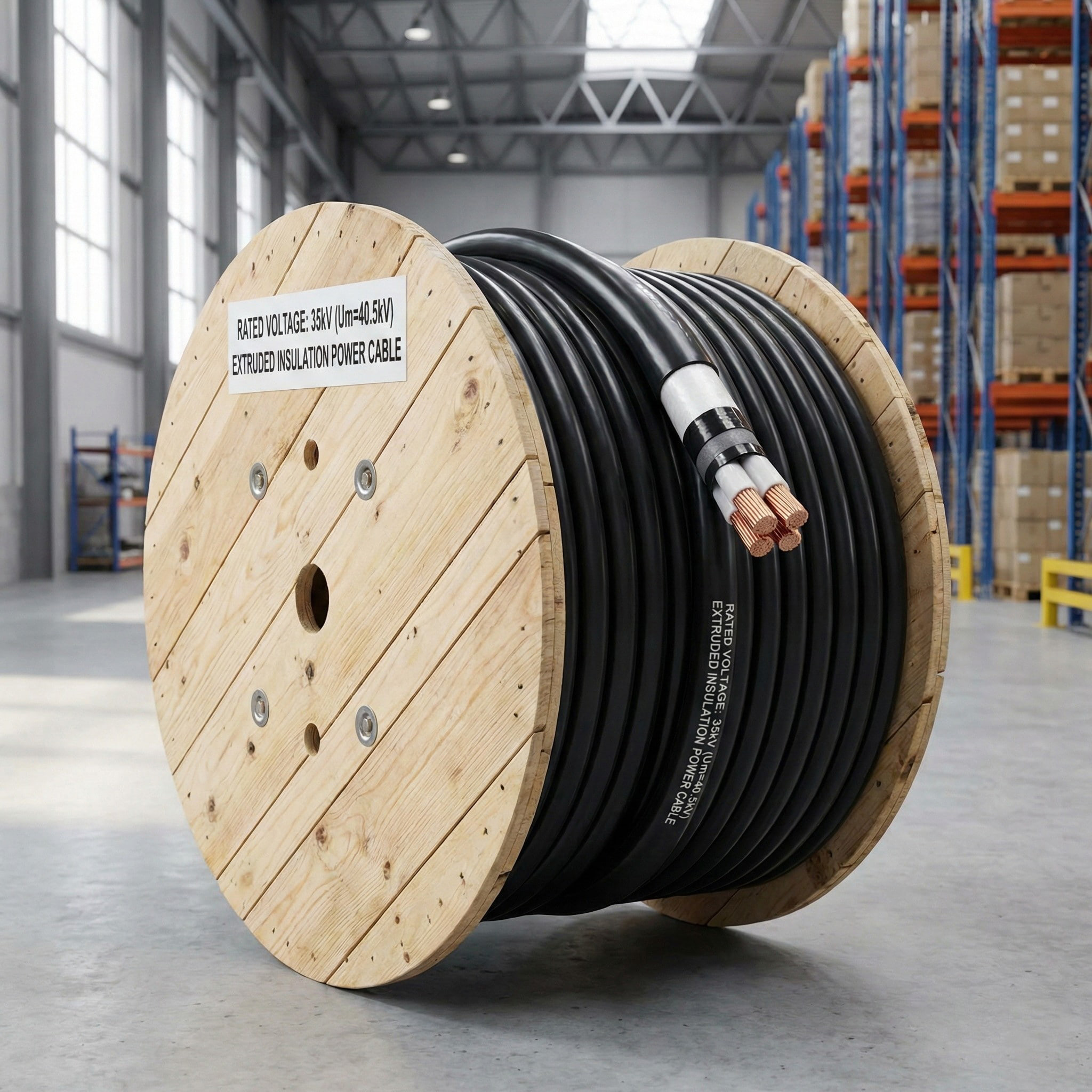
Product Definition: High-voltage extrusion-insulated power cable rated at 35kV, designed for high-voltage transmission lines, large industrial facilities, and urban power systems.
See Details
- About Us
- Company Profile
- History
- Smart Factory
- Resources
- Resources
- Technical Datasheets
- Product Catalogs
- Certificates & Compliance
- Industry Standards
- FAQs
- News
- Products
- Power Cables
- Electrical Equipment Cables
- Wind Power Cables
- Photovoltaic / Energy Storage Cables
- Overhead Cables
- Rail Transit
- Contact
- Contact
- Contact Meaia
-
Mobile QR code

Back to top

