
 English
 中文简体


Product Introduction: Railway signal cables are specifically designed for rail transit signaling systems, used to transmit control commands, monitoring information, and communication data. These cable...
See Details
Custom Rail Transit Cables: Engineering Guide for Rail Projects | Qucheng
Sep 24,2026
Content
- 1 What Defines a Custom Rail Transit Cable?
- 2 Rail Standards and Certifications That Shape Cable Design
- 3 Rolling Stock Cables: Design for Motion, Heat, and Fire Safety
- 4 Signal Cables: Shielding and Impedance Control for Reliable Communication
- 5 Through-Ground Conductors: Return Current and Earth Continuity
- 6 Selecting a Custom Rail Transit Cable Manufacturer
- 7 FAQ: Custom Rail Transit Cables
- 7.1 What is EN 45545-2 and why does it matter for custom rail cables?
- 7.2 How do custom rail transit cables differ from standard industrial cables?
- 7.3 Can custom rail transit cables be made for older locomotives and rolling stock?
- 7.4 What is the typical lead time for custom rail transit cable orders?
A metro extension in Southeast Asia was held up for two weeks because the signaling integrator demanded EN 45545-2 HL3-approved shielded pairs while the rolling stock constructor asked for a 125°C-rated flexible power cable from the same supplier family. Two separate qualification tracks, one critical path. This is the everyday status of custom rail transit cable procurement: standard industrial cable families rarely survive the combined load of fire-safety mandates, mechanical endurance testing, and electromagnetic compatibility (EMC) limits imposed by rail and metro projects.
What Defines a Custom Rail Transit Cable?
A custom rail transit cable is one where the conductor stranding, insulation compound, shielding arrangement, jacket material, and certified fire-safety rating are selected together to satisfy the specific circuit, environment, and regulation of a railway application.
Three inputs shape every custom design:
- Circuit profile: voltage, current, signal frequency, and transmission distance
- Installation environment: temperature range, vibration level, bending radius, and exposure to oil, water, or ultraviolet light
- Regulatory requirement: the EN 45545 hazard level or IEC flame-propagation class that applies in the vehicle or tunnel
From these inputs, the cable manufacturer adjusts the following elements:
- Conductor stranding: Class 5 flexible or Class 6 highly flexible conductors for rolling stock
- Insulation and jacket compounds: XLPE, EPR, or low-smoke zero-halogen (LSZH) thermosets
- Shielding layers: tinned copper braid, aluminum foil, or combined EMC barriers
- Voltage rating: from 300 V signal circuits to 10 kV traction power loops
- Cable geometry: twisted pair lay length, bundle construction, and printed marking
What rail projects customize most often
Fire-safety certification
92%
Custom routing and terminations
78%
High temperature rating
71%
EMC shielded pair construction
64%
LSZH jacket compound
58%
Representative data from global rail procurement records.
Rail Standards and Certifications That Shape Cable Design
EN 45545-2 compliance is not a matter of labeling. It changes the cable from the insulation compound to the outer jacket printing.
The hazard level (HL1, HL2, or HL3) is fixed by the vehicle's operation category and the installation zone. A custom cable has to be verified against that level through type tests from an accredited laboratory, not just fabricated from a generic formula. For projects in EN 45545-regulated regions, the standard also impacts the cable's oxygen index and the heat release rate during combustion. Without those verified numbers, a cable cannot be certified for vehicle installation. This is why custom rail transit cable manufacturers maintain a validated material library that pairs each insulation compound with a specific hazard level.
| Standard | Typical application | Key requirement |
| EN 45545-2 | Rolling stock interiors and exteriors | Hazard levels HL1, HL2, HL3; flame propagation and smoke density |
| IEC 60332-3-24 | Tunnel and infrastructure | Vertical flame propagation on bundled cables |
| IEC 61034-2 | Vehicles and tunnels | Smoke emission coefficient |
| IEC 60754-1 / -2 | Vehicles and tunnels | Halogen acid gas emission limits |
| EN 50267, EN 50305 | Signaling and control circuits | Insulation resistance and extended temperature tests |
Rolling Stock Cables: Design for Motion, Heat, and Fire Safety
Rolling stock cables are the most customized rail cables because they must survive constant vibration, repeated bending, and temperature swings while maintaining a predictable service life.
90°CContinuous temperature rating
125°CShort-circuit temperature limit
HL2Typical hazard level for interiors
Key design factors include Class 5 or Class 6 flexible conductor stranding for door wiring, pantograph connections, and bogie junctions; XLPE or EPR insulation for extended thermal endurance; and LSZH sheathing to reduce toxic smoke inside the passenger compartment. Cross-linked polyethylene insulation keeps its mechanical strength at 90°C continuous operation, while ethylene propylene rubber can handle up to 125°C on short exposure. The choice between them is a project decision about cost, flexibility, and thermal margin.
For retrofit and refurbishment programs, custom rolling stock cables are also built to match original termination dimensions and voltage classes while upgrading the fire-safety performance.
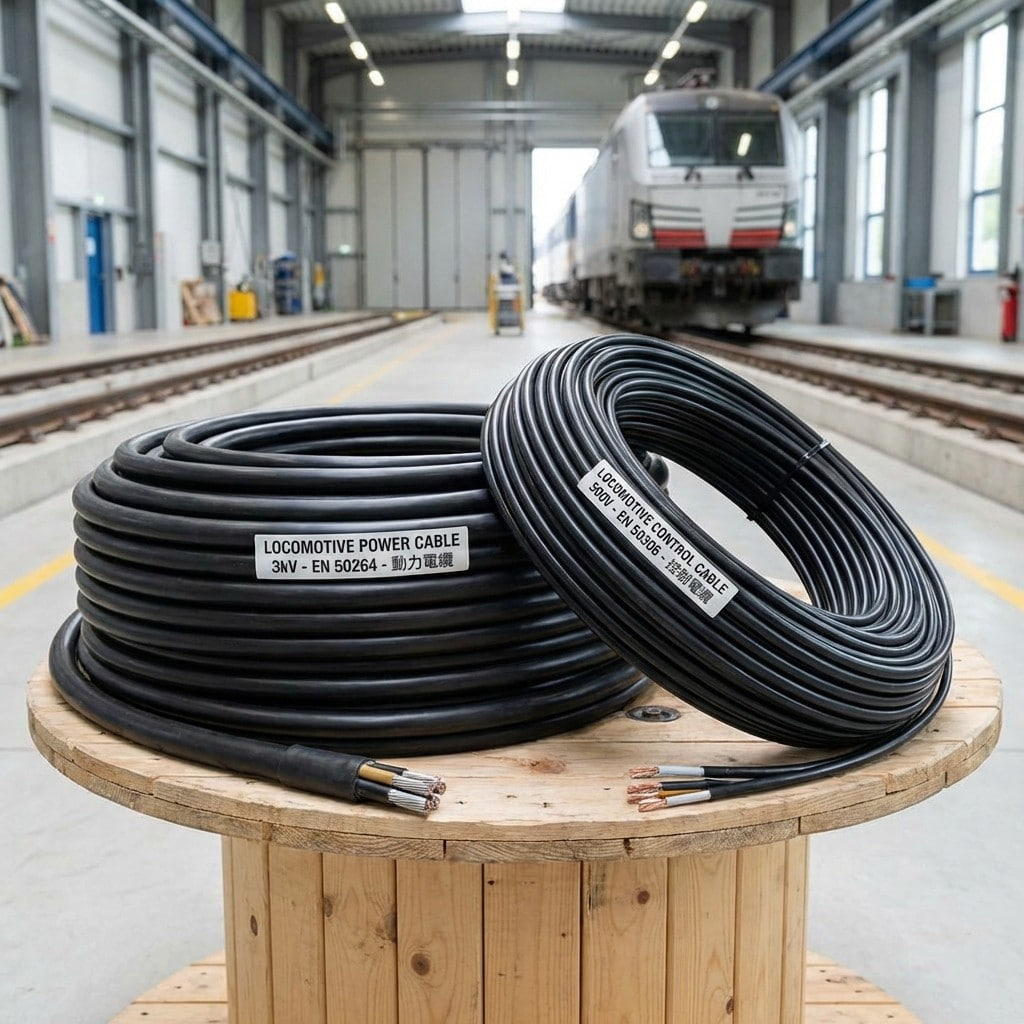 Custom Power and Control Cable for Locomotives and Rolling StockDesigned for retrofit projects, this cable matches original termination dimensions and voltage classes while upgrading fire safety. Its flexible, oil-resistant construction ensures reliable operation under vibration and harsh conditions.View Product →
Signal Cables: Shielding and Impedance Control for Reliable Communication
For signaling circuits, shielding and pair geometry matter more than conductor ampacity. A custom signal cable is designed around capacitance, impedance, and EMC limits.
Tinned copper braid with at least 85% coverage backed by aluminum foil is common in rail signal assemblies. Pairs are twisted with a defined lay length to cancel interference from adjacent power circuits, and the capacitance between cores is held within tight tolerances - often near 200 pF/m for critical trackside circuits. The braid coverage percentage and the shielding material directly affect the cable's transfer impedance, which is the metric that national rail authorities look for in EMC test reports. A signal cable with a poorly specified shield will show up as intermittent track circuit issues once the train leaves the depot.
Signal cables for metro and light rail projects must also satisfy EN 50267 and EN 50305 in addition to the EN 45545 fire-safety requirement, which makes the material selection a balancing act between electrical performance and heat release.
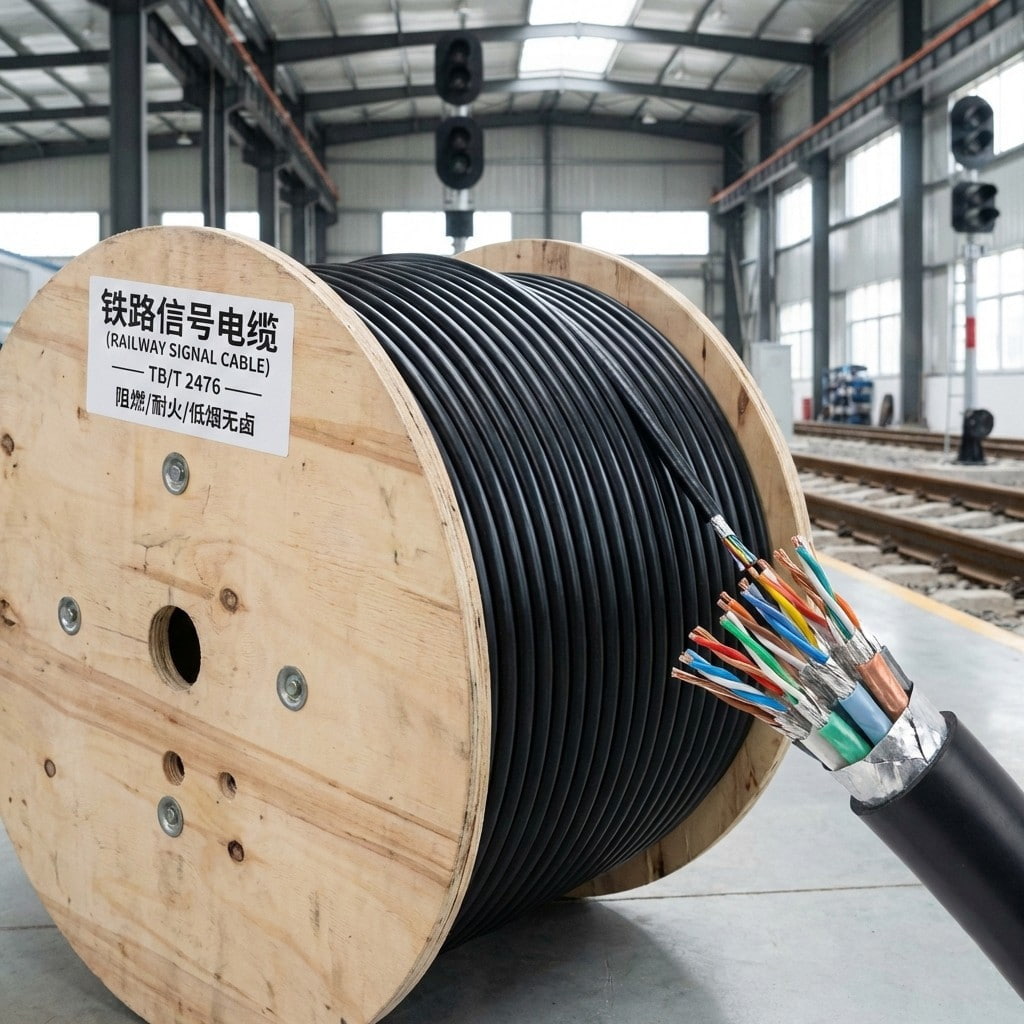
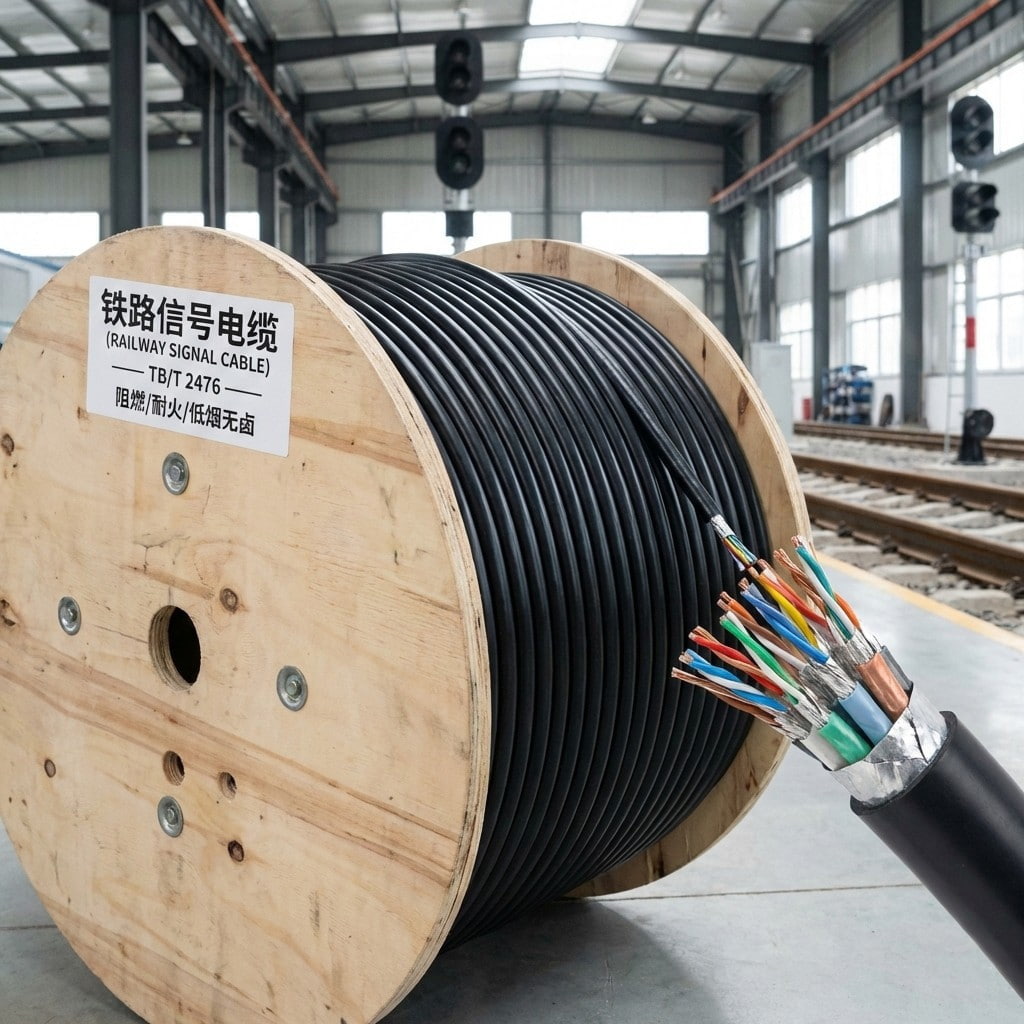 Shielded Railway Signal Cable for Control and MonitoringCompliant with EN 50267 and EN 50305, this cable offers low attenuation and multi-layer shielding for stable signal transmission in metro and light rail systems, balancing electrical performance with fire safety.View Product →
Through-Ground Conductors: Return Current and Earth Continuity
A railway through-ground conductor is sized for fault current and earth continuity, not for normal load current. It is one of the most application-specific custom cables in a rail project.
The conductor cross-section is calculated from the substation fault current and the track circuit design, which means two projects with the same nominal voltage can require very different conductor sizes. Copper and tinned copper are the standard conductor materials, with LSZH jackets specified for tunnel environments where smoke emission must be controlled. The standard practice is to bond the through-ground conductor at every substation, which means the conductor's terminal length, lug type, and jacket removal length are all part of the customization specification. A cable supplier that offers pre-terminated and pre-lugged conductors can reduce installation labor significantly.
Some projects need a bare conductor or a semi-conductive jacket to support track circuit return paths - another decision point that a custom manufacturer has to be able to configure.
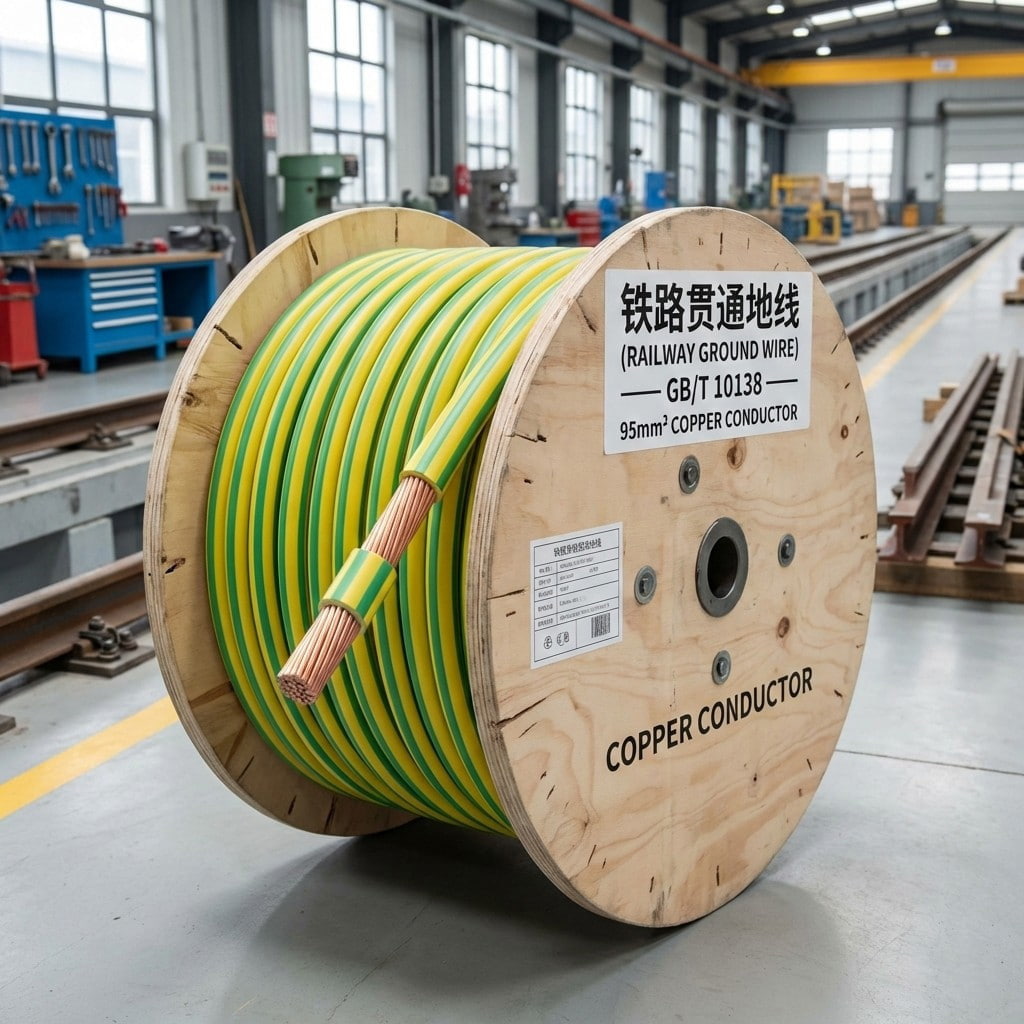 Through-Ground Conductor for Railway Integrated GroundingProvides low-impedance full-line electrical connection and corrosion resistance, compatible with track circuits and signaling networks. It withstands mechanical stresses like settlement and vibration, ensuring reliable grounding.View Product →
Selecting a Custom Rail Transit Cable Manufacturer
Compare suppliers on verifiable evidence - type test reports, factory testing capability, and reference rail projects - rather than on the lowest quote.
Ask for the following documents and capabilities before award:
- Accredited type test reports for EN 45545-2, IEC 60332, IEC 61034, and IEC 60754
- In-house test capability: spark testing, partial discharge, high-voltage and EMC testing
- Management system certifications: ISO 9001, ISO 14001, and ISO 45001
- Environmental documentation: product carbon footprint and ESG reporting for green rail programs
- Engineering support to interpret a rail specification and propose the correct material package
A supplier with these credentials can shorten the qualification cycle. For a deeper walkthrough of metro and light rail cable selection, see our complete guide for metro and light rail coverage, or reach the engineering team directly through the contact page.
FAQ: Custom Rail Transit Cables
What is EN 45545-2 and why does it matter for custom rail cables?
EN 45545-2 is the European standard for fire safety in railway vehicles. It defines hazard levels HL1, HL2, and HL3 based on the vehicle's operation category and installation location. For custom rail transit cables, this standard governs insulation choice, sheathing material, and even cable marking - it is not optional when the project requires certified compliance.
How do custom rail transit cables differ from standard industrial cables?
Standard industrial cables are designed mostly for voltage and current capacity. Custom rail transit cables add fire-safety certification, high flexibility, EMC shielding, temperature ratings that can reach 125°C, and tighter construction tolerances - all matched to the specific rail application.
Can custom rail transit cables be made for older locomotives and rolling stock?
Yes. Refurbishment and maintenance programs regularly replace obsolete cables with custom designs. The key is matching the original dimensions, termination style, and voltage rating while upgrading to current fire-safety and environmental requirements.
What is the typical lead time for custom rail transit cable orders?
For a newly designed rail transit cable, allow 8 to 12 weeks from approved technical drawings, including type test verification. Projects that reuse an already qualified design can shorten the lead time to 4 to 6 weeks.
Related products
-
-
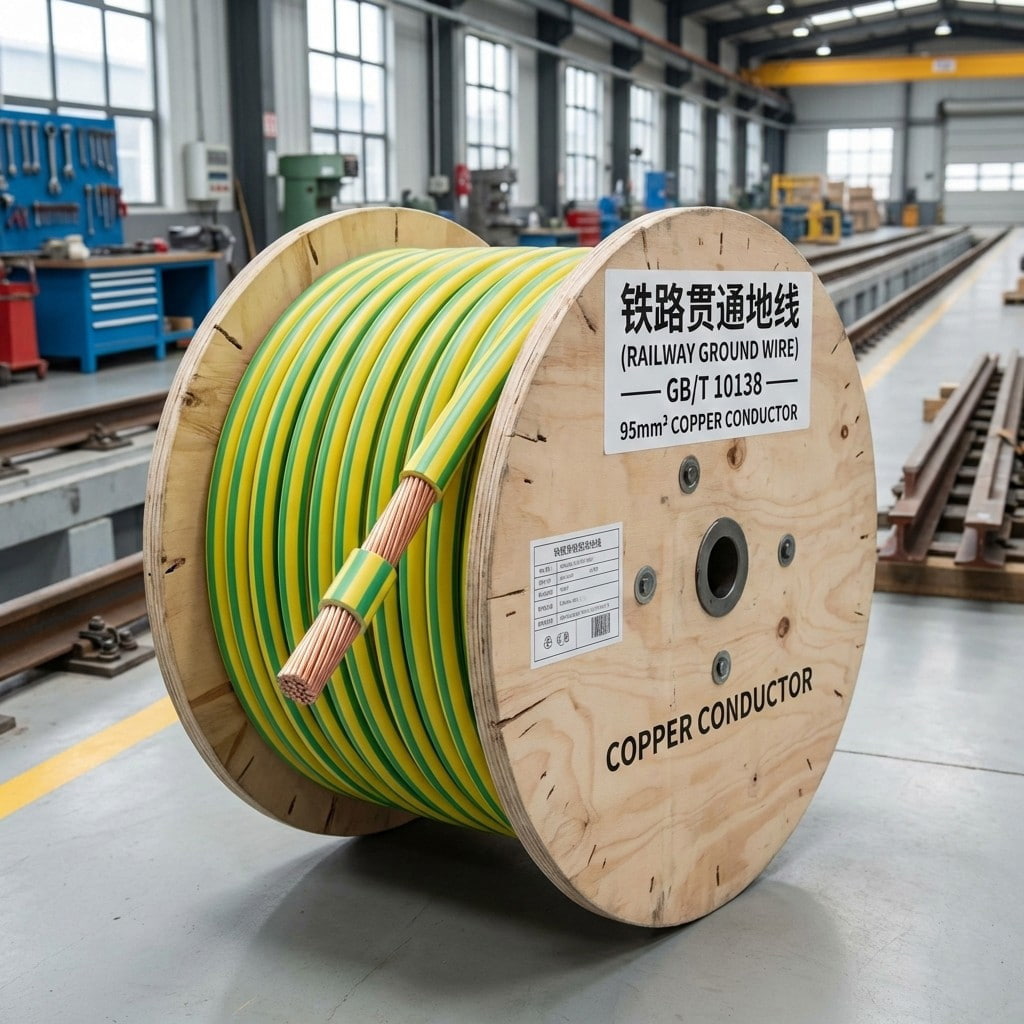
Product Overview: Railway through grounding wires are dedicated grounding conductors laid along the entire length of a railway line, forming the core framework of the railway's integrated grounding sy...
See Details -
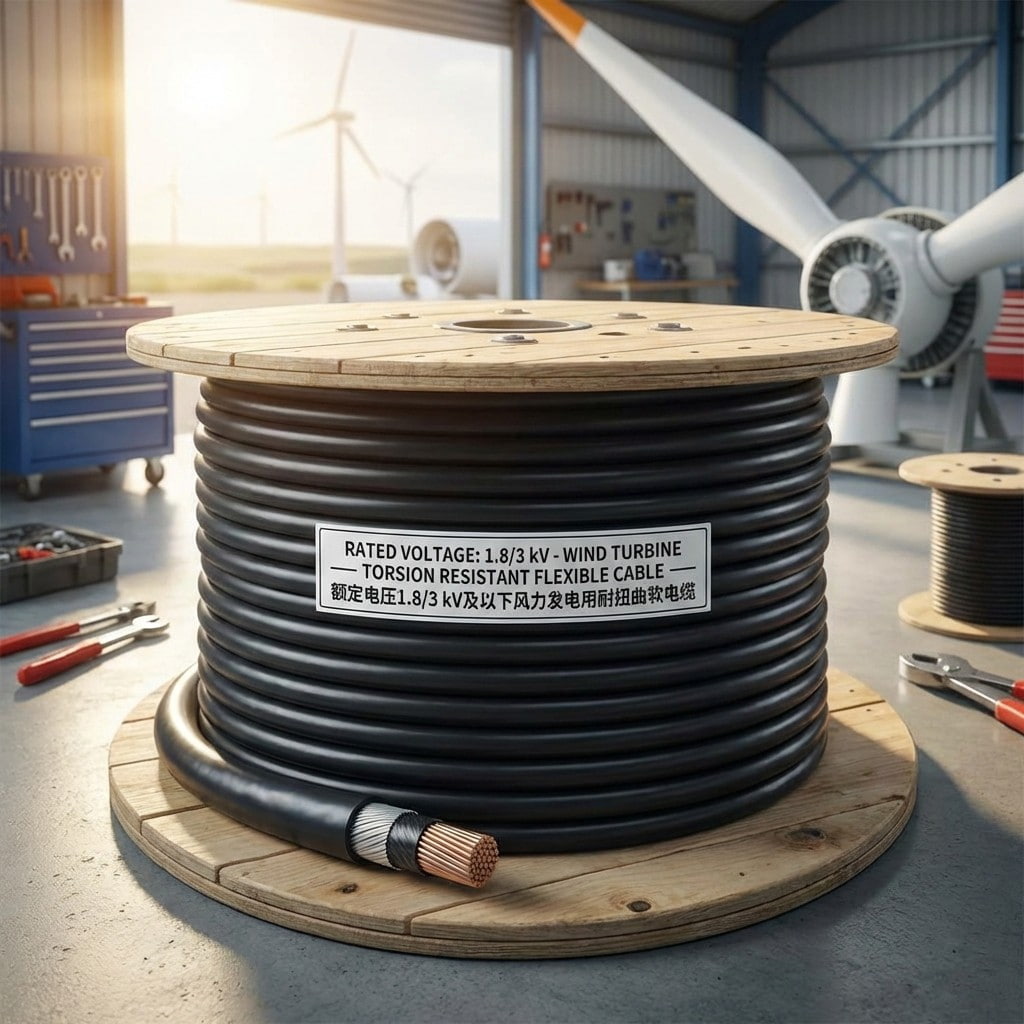
Product Introduction: Designed specifically for the harsh operating environment of wind power systems, meeting the requirements of continuous torsion and bending during mobile installation within the...
See Details -
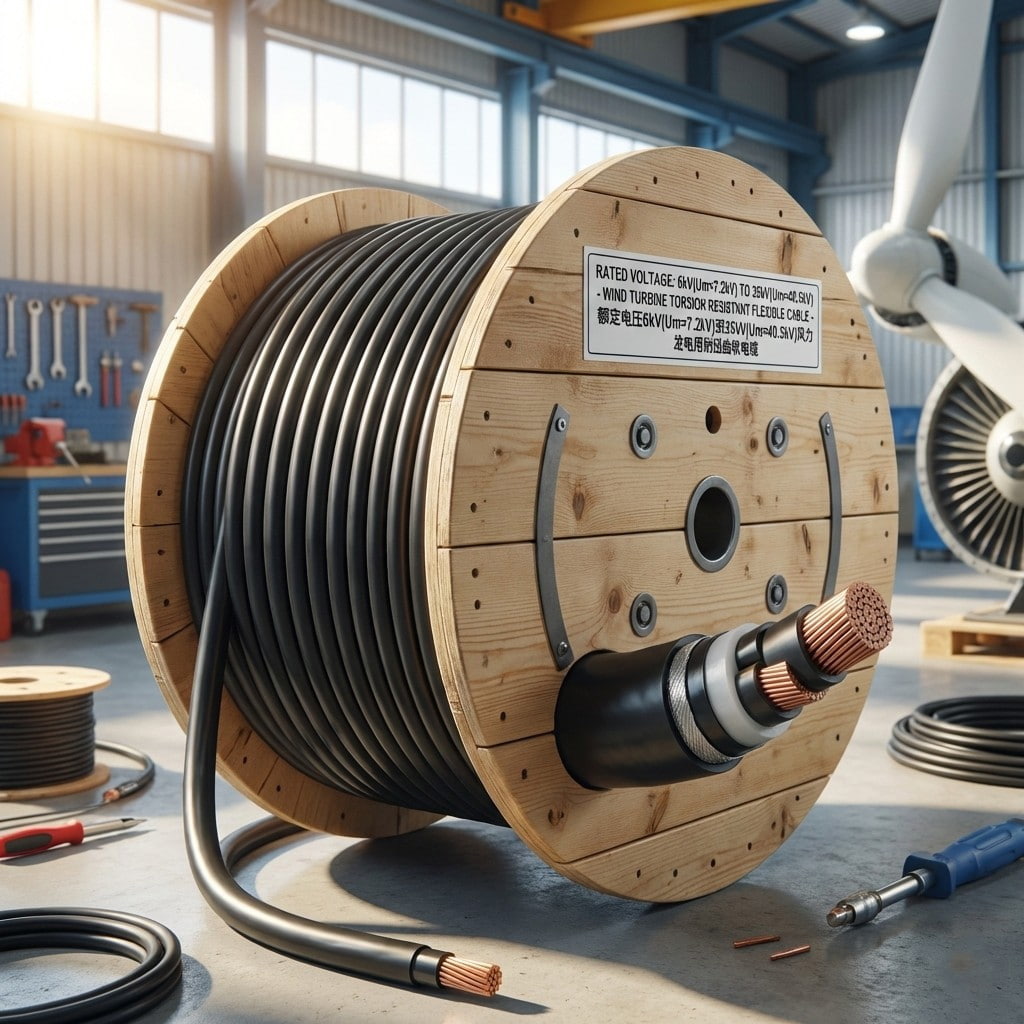
Product Overview: This series of products consists of high-performance, torsion-resistant flexible cables specifically designed for the harsh environments of wind turbine generators. Rated voltages ra...
See Details -
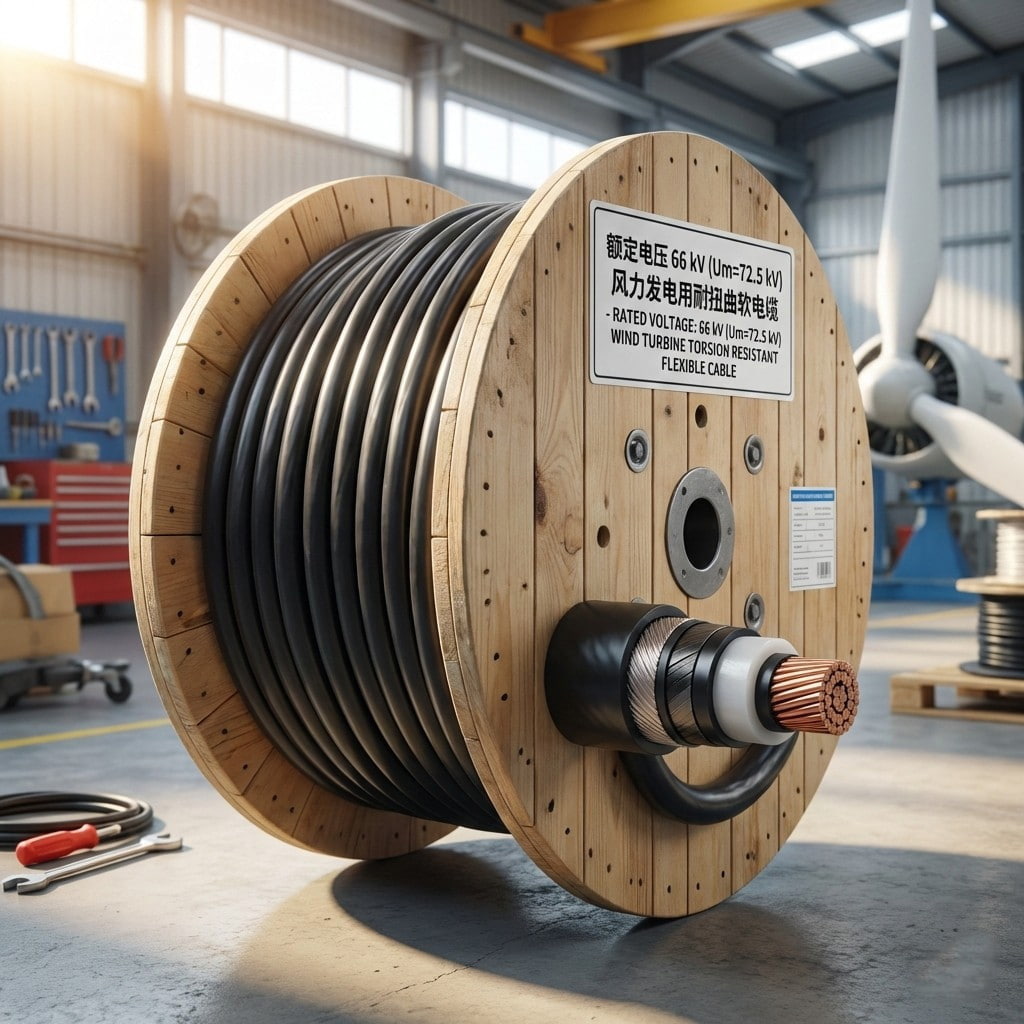
Product Introduction: This cable is specifically designed for medium- and high-voltage wind power generation equipment, with a rated voltage of 66 kV. It is suitable for high-reliability power transmi...
See Details -
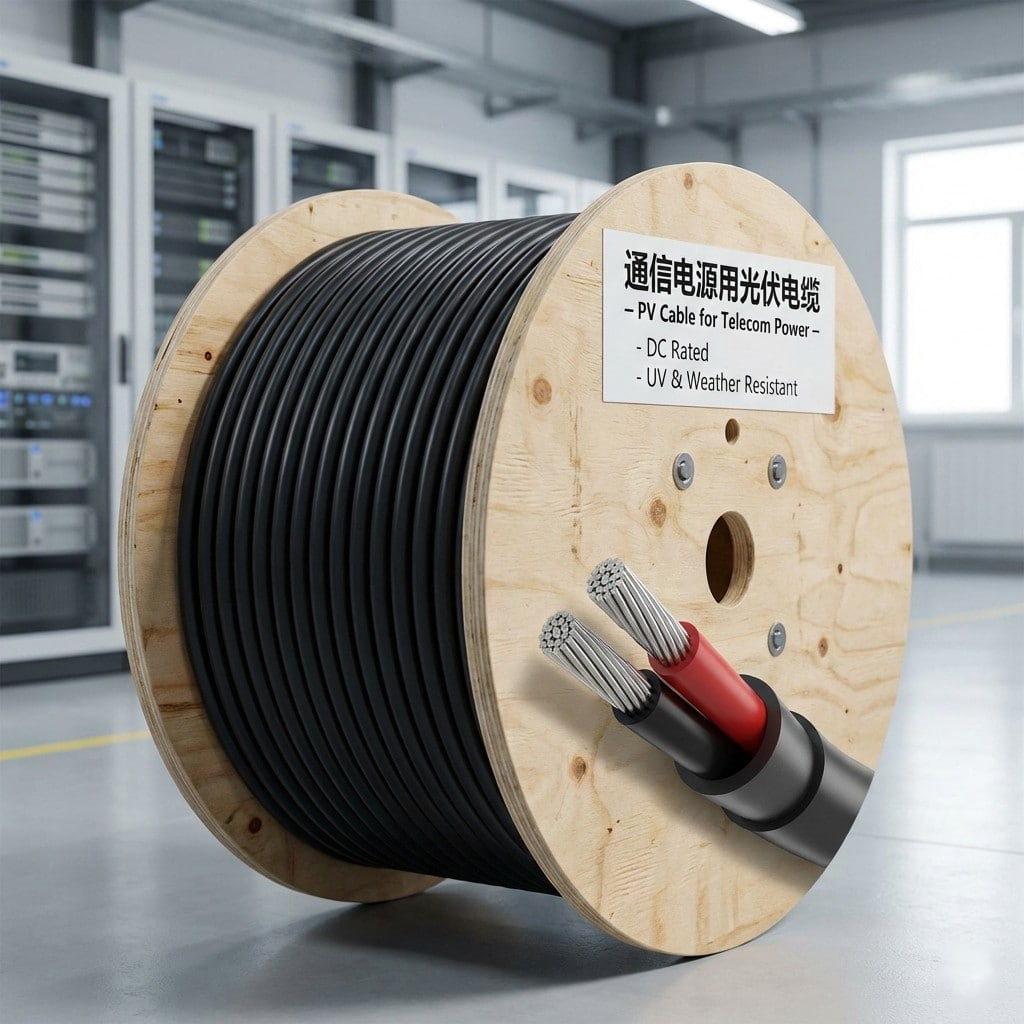
Product Overview: Designed specifically for photovoltaic power supply systems in communication base stations, data centers, etc., this product transmits DC power from photovoltaic modules to communica...
See Details
- About Us
- Company Profile
- History
- Smart Factory
- Resources
- Resources
- Technical Datasheets
- Product Catalogs
- Certificates & Compliance
- Industry Standards
- FAQs
- News
- Products
- Power Cables
- Electrical Equipment Cables
- Wind Power Cables
- Photovoltaic / Energy Storage Cables
- Overhead Cables
- Rail Transit
- Contact
- Contact
- Contact Meaia
-
Mobile QR code

Back to top

