English
  中文简体
中文简体 


Insulated power cables form the backbone of modern electrical infrastructure, carrying electricity from generation sources to distribution networks and end users. These cables are engineered with specialized insulation materials that provide electrical isolation, mechanical protection, and environmental resistance, ensuring safe and reliable power transmission across a wide range of applications.
From underground urban distribution networks to high-voltage transmission lines and industrial power systems, insulated power cables are essential for delivering electricity safely and efficiently. The selection of the right cable type, insulation material, and conductor size is critical for ensuring system reliability, safety, and longevity.
"Insulated power cables are the unsung heroes of modern electrical systems. Proper cable selection and installation ensure safety, reliability, and long service life."
— Industry PerspectiveUnderstanding Insulated Power Cables
Insulated power cables consist of one or more conductors surrounded by insulation materials that provide electrical isolation and mechanical protection. The conductor is typically made of copper or aluminum, chosen for their excellent electrical conductivity and mechanical properties. The insulation material must withstand the operating voltage, temperature, and environmental conditions while maintaining its electrical and mechanical integrity over the cable's service life.
The insulation system may include multiple layers: the primary insulation, which provides the main electrical isolation; semiconductor layers that control the electric field distribution; and protective sheaths that provide mechanical and environmental protection. The selection of insulation materials depends on the voltage rating, operating temperature, and specific application requirements.
Types of Insulated Power Cables
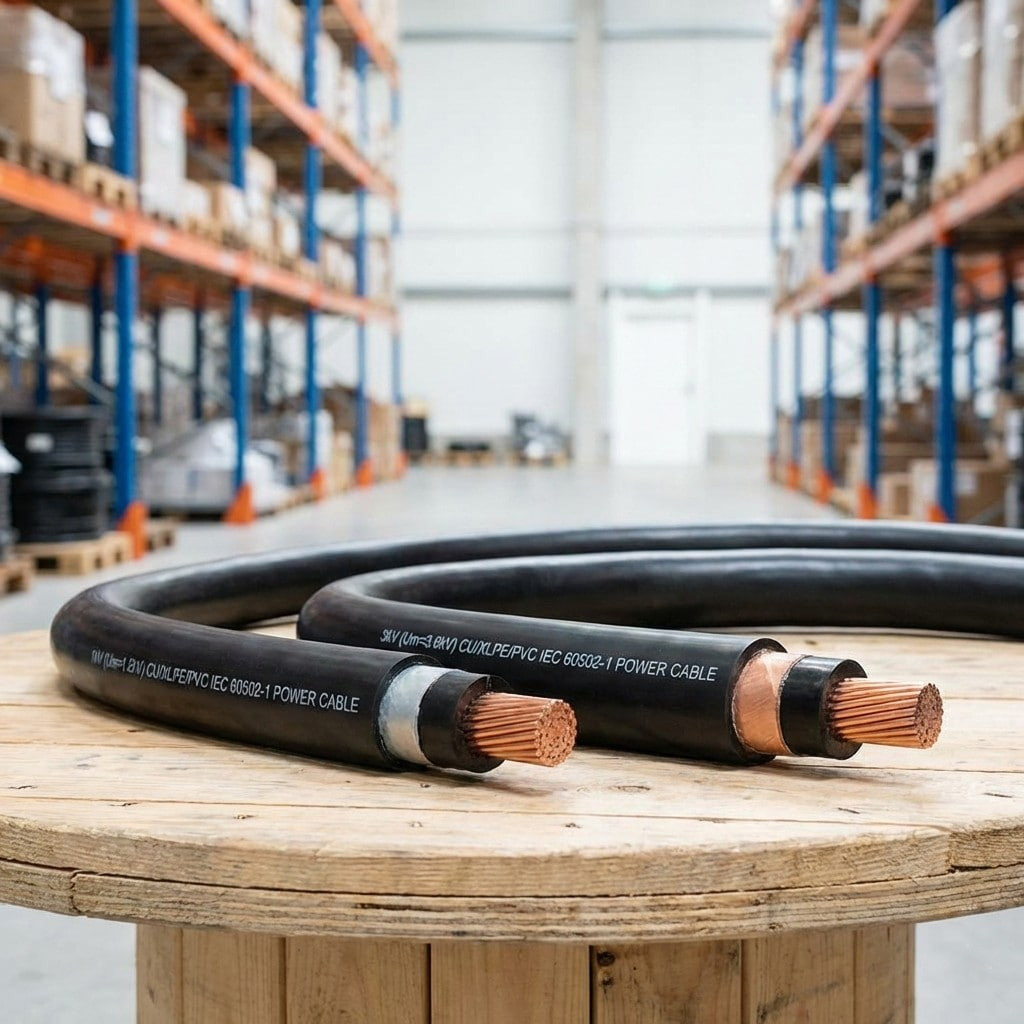
Insulated power cables are classified by voltage level, insulation material, and construction. The following are the most common types:
Rated for voltages up to 1 kV. Used in building wiring, industrial control panels, and distribution networks. Common insulation materials include PVC, XLPE, and EPR.
Rated for voltages from 1 kV to 35 kV. Used in primary distribution networks, industrial facilities, and renewable energy installations. XLPE and EPR insulation are standard.
Rated for voltages above 35 kV, typically up to 500 kV. Used in transmission networks and large-scale power distribution. XLPE and oil-filled or gas-insulated designs are common.
Cable Construction Diagram: Conductor → Conductor Shield → Insulation → Insulation Shield → Metallic Shield → Jacket
Insulation Materials
Insulated power cables utilize a range of insulation materials, each with specific properties that make them suitable for different applications:
Cross-Linked Polyethylene (XLPE) is the most widely used insulation material for medium and high voltage cables. It offers excellent electrical properties, high temperature resistance (up to 90°C continuous, 250°C short circuit), and good mechanical strength. XLPE cables are lighter and more flexible than traditional paper-insulated cables, making them easier to install and maintain.
Ethylene Propylene Rubber (EPR) is a synthetic rubber insulation that provides excellent flexibility and resistance to moisture, chemicals, and ozone. It is often used in medium voltage cables and flexible power cables where repeated bending is required.
Polyvinyl Chloride (PVC) is a cost-effective insulation material widely used for low voltage cables. It offers good electrical properties, flame retardance, and resistance to moisture and chemicals. However, PVC has limited temperature resistance (up to 70°C) and is being replaced by XLPE in many applications.
Paper-Insulated Lead-Covered (PILC) cables are traditional designs still found in older installations. While they offer excellent electrical properties and long service life, they are heavy, rigid, and require careful handling.
| Insulation Material | Voltage Rating | Max. Temperature | Key Applications |
|---|---|---|---|
| XLPE | Up to 500 kV | 90°C / 250°C | Medium and high voltage |
| EPR | Up to 35 kV | 90°C | Flexible cables, medium voltage |
| PVC | Up to 1 kV | 70°C | Low voltage, building wiring |
| PILC | Up to 66 kV | 75°C | Legacy installations |
Key Performance Characteristics
Insulated power cables are defined by several key performance characteristics that determine their suitability for specific applications:
Voltage rating is the maximum continuous voltage the cable can withstand. It is determined by the insulation thickness and material properties. Exceeding the voltage rating can cause insulation breakdown and cable failure.
Current carrying capacity is the maximum current the cable can carry without exceeding its temperature rating. It depends on the conductor size, insulation material, ambient temperature, and installation conditions. Proper sizing is essential to prevent overheating and ensure reliable operation.
Short-circuit rating is the maximum current the cable can withstand for a short duration without damage. It is determined by the conductor cross-section and the insulation temperature limits. The short-circuit rating is important for system protection coordination.
Insulation resistance measures the quality of the insulation and its ability to prevent current leakage. High insulation resistance is essential for safety and reliable operation.
Applications
Insulated power cables are used across a wide range of applications, from building wiring to high-voltage transmission networks. The following are some of the most common applications:
Power distribution within commercial, residential, and industrial buildings. Low voltage cables with PVC or XLPE insulation.
Power distribution networks in urban and suburban areas. Medium voltage cables with XLPE or EPR insulation.
Power supply to motors, control panels, and other industrial equipment. Medium voltage cables with robust insulation and mechanical protection.
Solar and wind power installations. Medium voltage cables with UV-resistant and weatherproof insulation.
High-voltage power transmission over long distances. High voltage cables with XLPE or oil/gas insulation.
Power transmission under water. Specialized cables with water-blocking and corrosion-resistant construction.
Selection Guide
Selecting the right insulated power cable requires careful consideration of several factors. The following guidelines provide a structured approach to cable selection:
Identify the system voltage and select a cable with an appropriate voltage rating. Consider both operating and transient voltages.
Determine the maximum current the cable must carry, considering load growth and future expansion. Size the conductor accordingly.
Choose the insulation material based on voltage, temperature, and environmental conditions. XLPE is suitable for most applications.
Consider the installation method (direct burial, cable tray, conduit), ambient temperature, and exposure to sunlight or chemicals.
Determine if additional protection (armor, metallic sheath, or oversheath) is required for mechanical protection or environmental resistance.
Ensure the cable meets applicable standards (IEC, BS, ASTM, etc.) and any specific customer requirements.