
 English
 中文简体


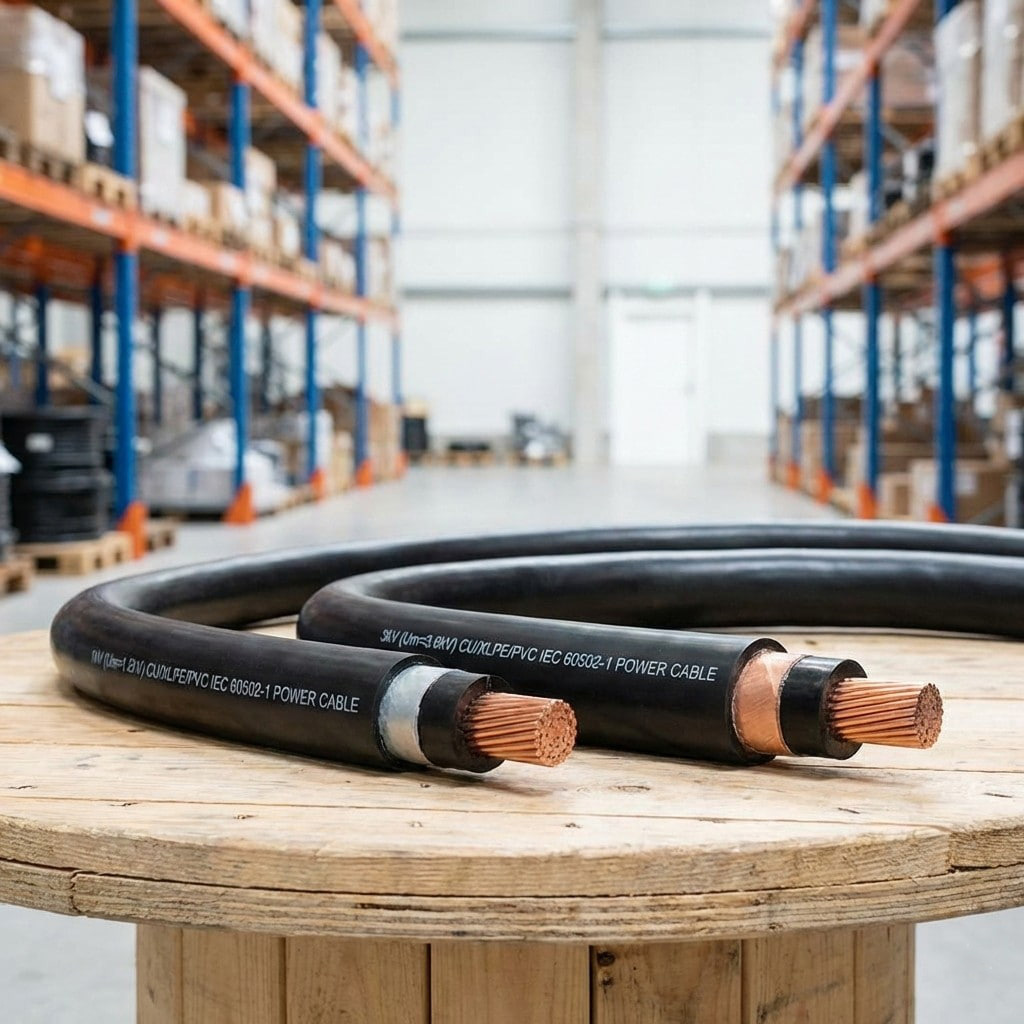
Product Definition: Low-voltage extrusion-insulated power cable for 1kV and 3kV systems, made with high-conductivity copper or aluminum conductors and premium extrusion insulation.
See Details
Industrial Electric Wire: How to Specify Voltage, Insulation and Shielding
Oct 30,2026
Content
- 1 What Industrial Electric Wire Actually Covers in a Real Project
- 2 Set the Voltage Class First and Everything Else Follows
- 3 The Insulation System Sets the Temperature Rating and the Service Life
- 4 Shielding in Electrical Equipment Cables: When It Is Worth Paying For
- 5 Mechanical Load: Where Most Industrial Electric Wire Actually Fails
- 6 Four Incoming Inspections That Catch the Expensive Field Failures
- 7 Compliance Documents That Should Travel With the Purchase Order
- 8 Frequently Asked Questions
An industrial electric wire that clears every incoming inspection can still fail on the machine.
Incoming tests measure conductor resistance, insulation thickness and dielectric strength. They do not measure whether the insulation will still be flexible after two million drag-chain cycles, whether an unscreened control loop will hold a 20 mA signal next to a variable-frequency drive switching at 12 kHz, or whether a 70 C PVC compound will survive inside a cabinet that runs at 95 C.
Selection therefore comes down to four decisions made in sequence. Voltage class first. Then the insulation system, which fixes the continuous conductor temperature. Then shielding, but only if there is a named interference source. Finally the mechanical construction, which is what actually sets service life in anything that moves. Colour, drum length and packing are commercial details that can be renegotiated.
What Industrial Electric Wire Actually Covers in a Real Project
Industrial electric wire is a category defined by application, not by a single technical specification. A 450/750 V PVC hook-up wire and a 220 kV XLPE transmission cable can share the same catalogue page, yet beyond the basic conductor-and-insulation build they almost never overlap.
In electrical procurement, the term normally resolves into six product families:
- Power cables: extruded insulated cables at 1 kV, 6 kV and 35 kV, plus XLPE insulated cables at 110 kV and 220 kV for transmission and grid connection
- Electrical equipment cables: computer and instrument shielded cable, plastic insulated control cable, and PVC insulated cable rated 450/750 V and below
- Overhead insulated cables: 10 kV and 1 kV and below, used on overhead distribution lines
- Photovoltaic and energy storage cables: PV system cable and PV cable for communication power systems
- Wind power cables: torsion-resistant flexible cable at 1.8 kV, 6 kV and 66 kV
- Rail transit cables: locomotive and rolling stock power and control cable, railway signal cable, and railway throughground conductor
Voltage class 450/750 V up to 220 kV
Conductor temperature 70 C to 125 C continuous
Mechanical duty Fixed installation or torsion-resistant
Working definition: industrial electric wire is any insulated conductor selected by an engineer for use inside a plant, machine or infrastructure asset, and specified primarily by voltage class, permitted continuous conductor temperature and mechanical duty, rather than by retail length or appearance.
Set the Voltage Class First and Everything Else Follows
Voltage class is the first non-negotiable gate, and it is decided by the system, not by the cable. A 450/750 V equipment cable is entirely correct inside a machine fed from a 400 V panel. Push the same wire onto a 690 V bus and the insulation margin is gone.
One step up, medium-voltage distribution lands on 6 kV and 35 kV extruded insulated power cables. Transmission and grid connection use 110 kV and 220 kV XLPE insulated cables, rated Um 126 kV and 252 kV respectively. Getting this layer wrong is expensive in a way that no amount of incoming testing can recover, because the cable was never the problem.
| Product family | Rated voltage | Typical use |
| Electrical equipment cables | 450/750 V and below | Control circuits, instrument signals, panel wiring |
| Extruded insulated power cables | 1 kV / 6 kV / 35 kV | Low-voltage and medium-voltage distribution |
| XLPE insulated power cables | 110 kV / 220 kV (Um 126 kV / 252 kV) | Transmission and grid connection |
| Overhead insulated cables | 1 kV and below, 10 kV | Overhead distribution lines |
| Torsion-resistant wind power cables | 1.8 kV / 6 kV / 66 kV | Nacelle, hub and tower wiring |
| Rail transit cables | Low-voltage power and signal circuits | Rolling stock, signalling and earthing |
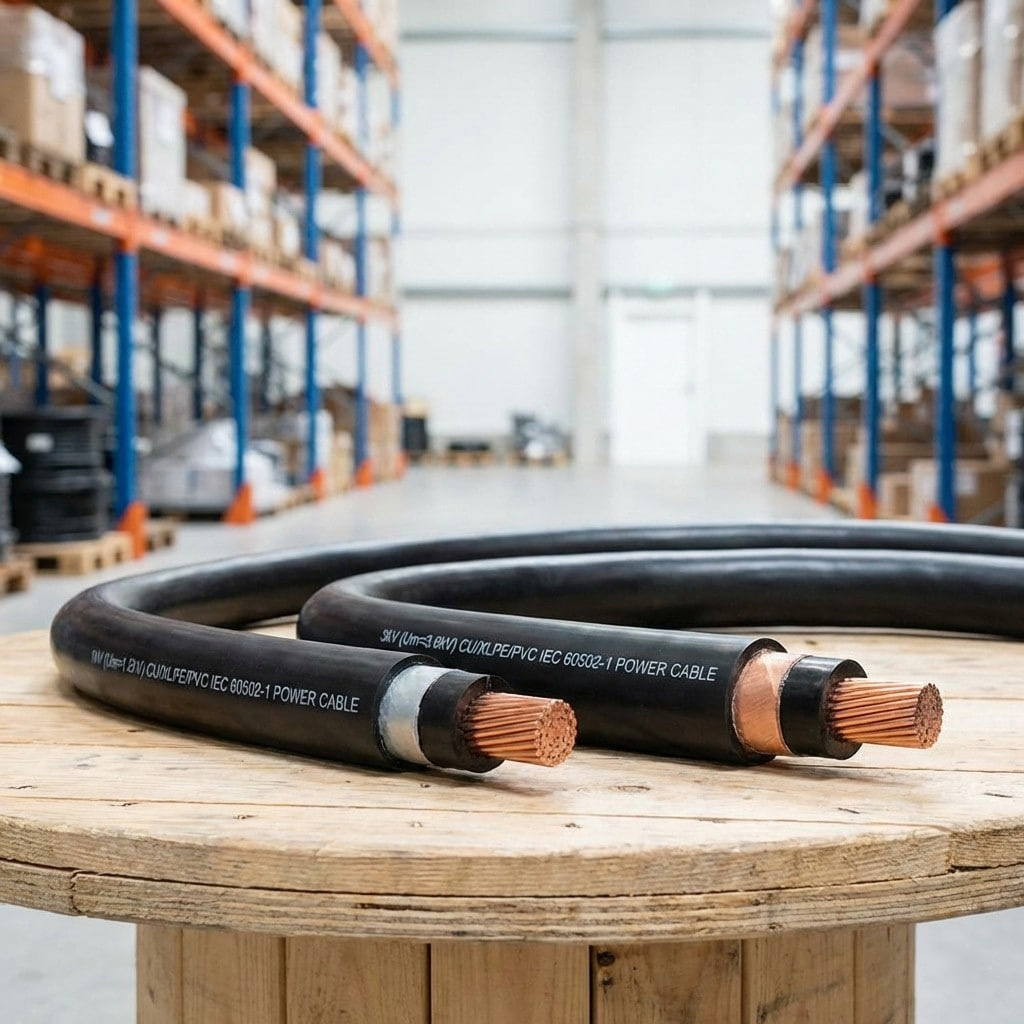 Extruded Insulated Power Cable Rated 1 kV and 3 kVLow-voltage extruded-insulation power cable for 1 kV and 3 kV systems, suited to industrial, commercial, residential, and urban distribution where insulation temperature ratings matter.View Product →
The Insulation System Sets the Temperature Rating and the Service Life
The permitted continuous conductor temperature is the single most consequential number in insulation selection, because it governs both current-carrying capacity and thermal ageing.
PVC compounds run continuously at 70 C and hold up for two to three decades in that envelope. XLPE raises the ceiling to 90 C, which is why it dominates power cables from 6 kV upward. Irradiation cross-linked polyolefin fixed wiring cable is designed around 125 C, which makes it the right answer inside hot enclosures and compact equipment where airflow is poor.
Typical continuous conductor temperature ratings by insulation system, indexed to the highest value shown.
The practical consequence is blunt. A 70 C PVC cable installed in a cabinet that stabilises at 95 C will age prematurely no matter how clean its factory test report looks. Choosing the wrong insulation cannot be rescued afterwards by increasing the conductor cross-section, because the failure mode is chemical degradation of the compound, not resistive heating of the copper.
A temperature rating is not a paper figure. It sets a ceiling that the enclosure temperature, the ambient temperature and the load profile all have to sit under, for every hour of the asset's life.
Shielding in Electrical Equipment Cables: When It Is Worth Paying For
Shielding earns its cost only when it is aimed at a specific interference source. It is not insurance that can be ticked by default. Computer and instrument shielded cable is the correct choice when a 4-20 mA loop or an RTD signal has to run alongside a variable-frequency drive or a high-current busbar, because the braid plus drain wire diverts coupled noise to ground instead of letting it ride on the signal.
Where the signal circuit can be physically separated from power runs, plastic insulated control cable is cheaper, thinner and faster to terminate. Specification should also state the coverage percentage, since 85 percent optical coverage and 60 percent coverage behave like two different cables while looking identical on a quotation.
If the mechanism is unclear, what braided shielding actually does in a control cable is worth reading before the specification is frozen, because retrofitting a shield onto a finished harness is rarely an option.
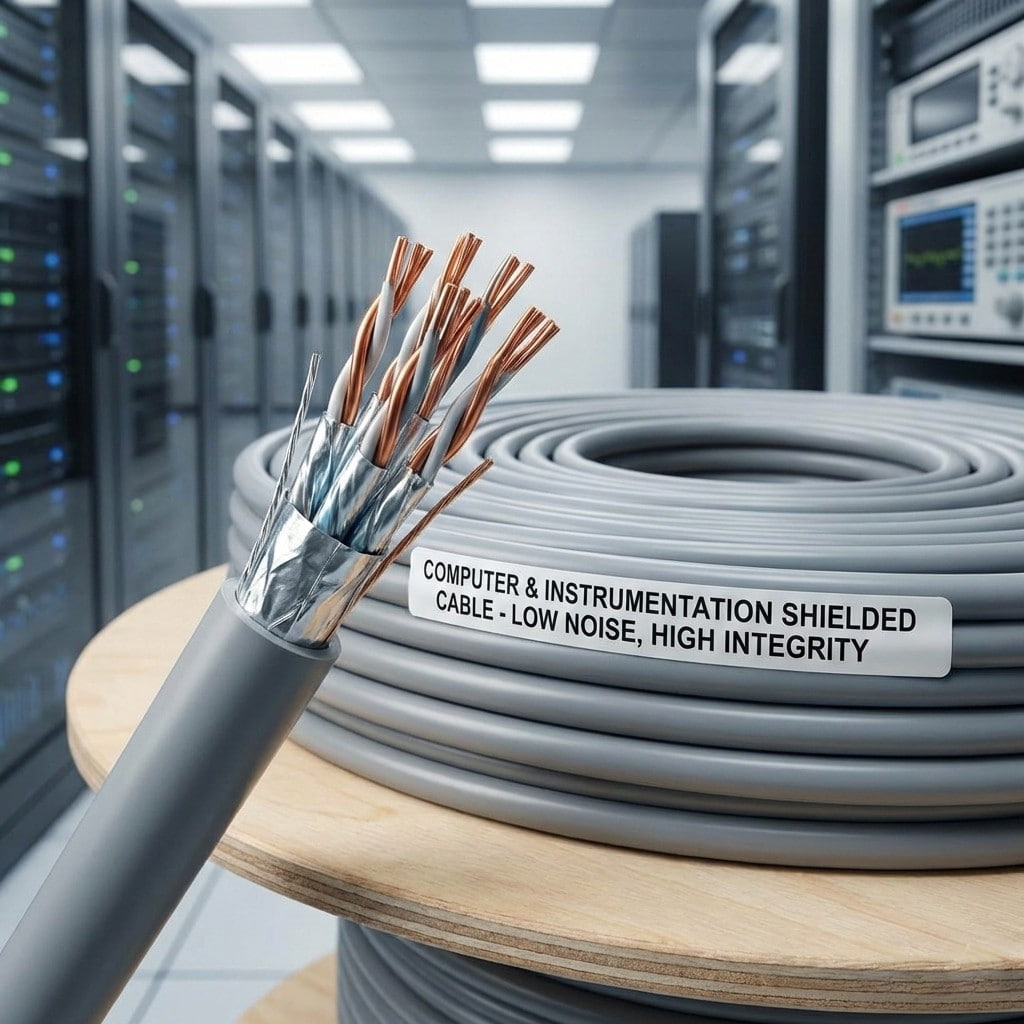 Shielded Computer and Instrument Cable for Automation ControlShielded cable for automation control and instrument signal transmission, using tinned copper braid or foil-plus-braid to resist EMI/RFI in harsh industrial settings.View Product →
Mechanical Load: Where Most Industrial Electric Wire Actually Fails
Fixed installation and moving applications are two different engineering problems. A cable that survives thirty years on a tray can fail in six months inside a drag chain, because the failure mechanism changes from thermal ageing to copper fatigue.
Fixed installation
- Class 1 solid or Class 2 stranded copper conductor
- PVC, XLPE or cross-linked polyolefin insulation
- Bending radius roughly 6 to 8 times the outer diameter
- Target life of 25 to 30 years at the rated conductor temperature
Moving application
- Flexible Class 5 or Class 6 copper conductor to IEC 60228
- Torsion-resistant construction with bundled stranding
- Bending radius roughly 4 to 5 times the outer diameter
- Life defined by torsion or flex cycles, not by calendar years
Wind power is the clearest case in the industry. Cable inside the nacelle and hub twists with every rotor revolution, while the section running down the tower is also under continuous vertical load, and the two demands pull the design in different directions. Torsion-resistant flexible cables at 1.8 kV, 6 kV and 66 kV exist precisely because a standard fixed-installation cable cannot serve both positions.
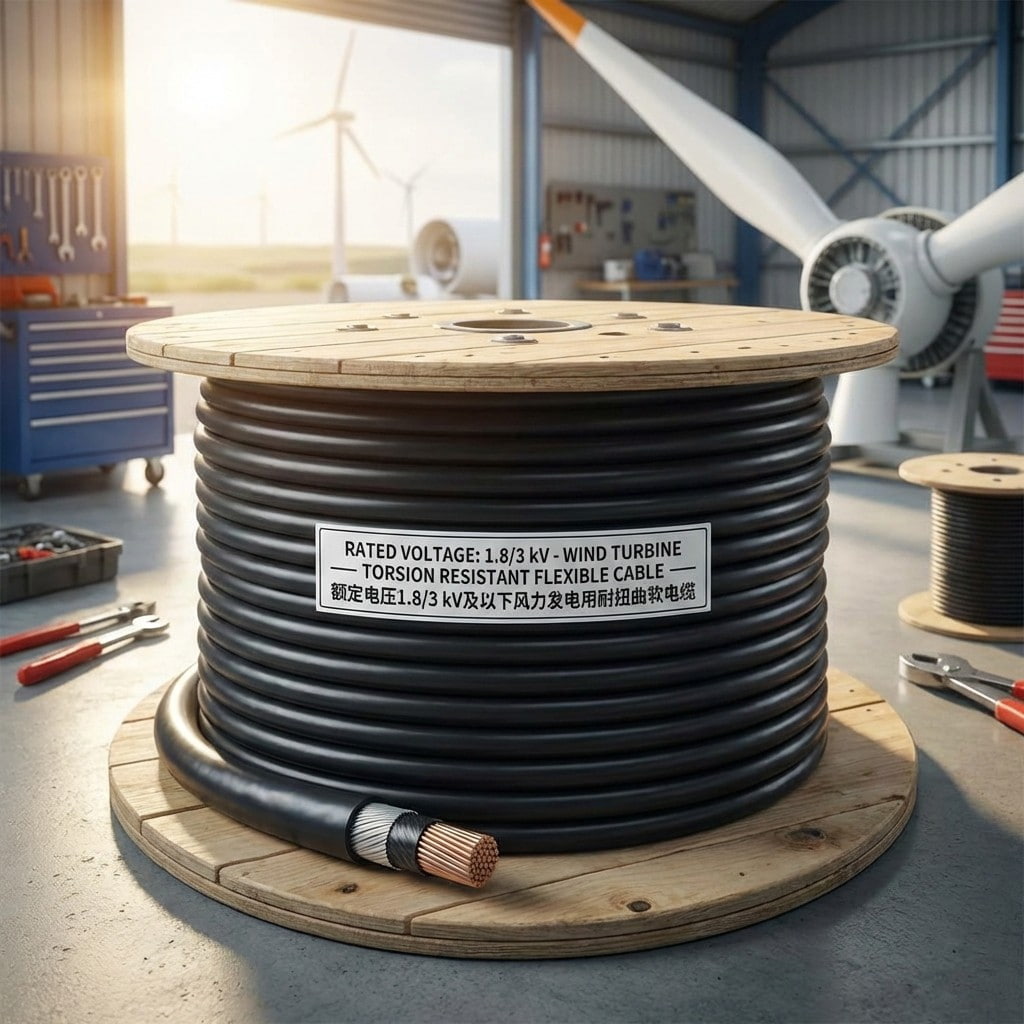 Torsion-Resistant Flexible Cable for Wind Power ApplicationsFlexible 1.8/3 kV cable with elastomer insulation and sheath for continuous torsion in nacelle-to-tower runs, pitch and yaw systems, and offshore or onshore towers.View Product →
Substituting an ordinary 1 kV fixed-installation cable for a torsion-resistant type is the classic way to trade a short-term saving against a warranty claim two maintenance seasons later.
Four Incoming Inspections That Catch the Expensive Field Failures
Four incoming inspections catch the vast majority of defects that later turn into site rework, and all four are destructive, low-cost and finishable in a single afternoon.
- Conductor DC resistance, corrected to 20 C and expressed in ohms per kilometre, against the IEC 60228 limit for the declared class. This is the check that catches undersized or copper-coated aluminium conductors before they are cut to length.
- Minimum insulation thickness, not average thickness. Measure the thinnest point around the circumference and along the length, because the thinnest point is what the dielectric stress sees.
- Voltage withstand. A spark test for low-voltage equipment cables or an AC withstand test for power cables, held for the full duration specified by the standard for that voltage class.
- Mechanical properties of the sheath, before and after ageing: tensile strength and elongation at break. On anything destined for a moving application, add a torsion or flex cycle test as well.
Write those numbers into the purchase order. A clause that says only "to national standard" settles nothing; a usable specification names the standard number, the voltage class, the conductor class, the temperature rating and the document package in the same sentence.
Compliance Documents That Should Travel With the Purchase Order
A shipment without paperwork is stock risk, not inventory. Today's enquiries expect management system certification plus product-level test evidence, and the expectation keeps getting more granular.
Jiangsu Qucheng Cable Technology Co., Ltd. holds ISO 9001, ISO 14001 and ISO 45001 management system certification alongside CB and TUV qualifications, covering the factory rather than an individual drum. Product-level documents are where tenders are won or lost. Product carbon footprint verification reports issued for specific types, including 60227 IEC 01 BV, JKLYJ-10kV, ZAN-KVVP2, and ZC-YJV22 8.7/15 kV and 26/35 kV, are increasingly named in tender documents for grid, new energy and rail transit projects, together with greenhouse gas verification reporting and an ESG report covering the full manufacturing operation.
Send the model number, voltage class, conductor temperature, installation environment and required document list together, and technical data sheets and certificates can be matched to the actual order rather than to a generic catalogue range.
Frequently Asked Questions
How is the voltage class of industrial electric wire decided?
By the system voltage, not by the cable. Plant equipment and control panels sit at 450/750 V. Low-voltage and medium-voltage distribution uses 1 kV, 6 kV and 35 kV. Transmission and grid connection use 110 kV and 220 kV XLPE cables, rated Um 126 kV and 252 kV. The cable rating must always exceed the highest sustained voltage of the bus it is connected to, with margin for switching surges and transient overvoltage.
How long does an industrial cable actually last?
In fixed installation at 70 C, a PVC cable is typically expected to serve 25 to 30 years. XLPE runs at 90 C with broadly comparable life characteristics and higher current capacity. In moving applications, life is measured in torsion or flex cycles rather than years, which is why a supplier who cannot quote a cycle count has not actually answered the question.
Is shielded cable always better than unshielded?
No. Shielding pays for itself only when a specific interference source has been identified and needs to be blocked. Where the signal circuit is routed separately from power cables, an unshielded control cable is cheaper, smaller in diameter and quicker to terminate. Ask for the coverage to be stated as a percentage in the specification, not just the word "shielded".
Which documents should be requested before placing an order?
Management system certificates, product-level type test reports, and a carbon footprint verification report for the specific model being purchased. For tender-driven projects, also request conductor resistance, minimum insulation thickness and sheath ageing data, so that incoming inspection has a baseline to compare against.
Recommended Links
Recommended News
Related products
-
-
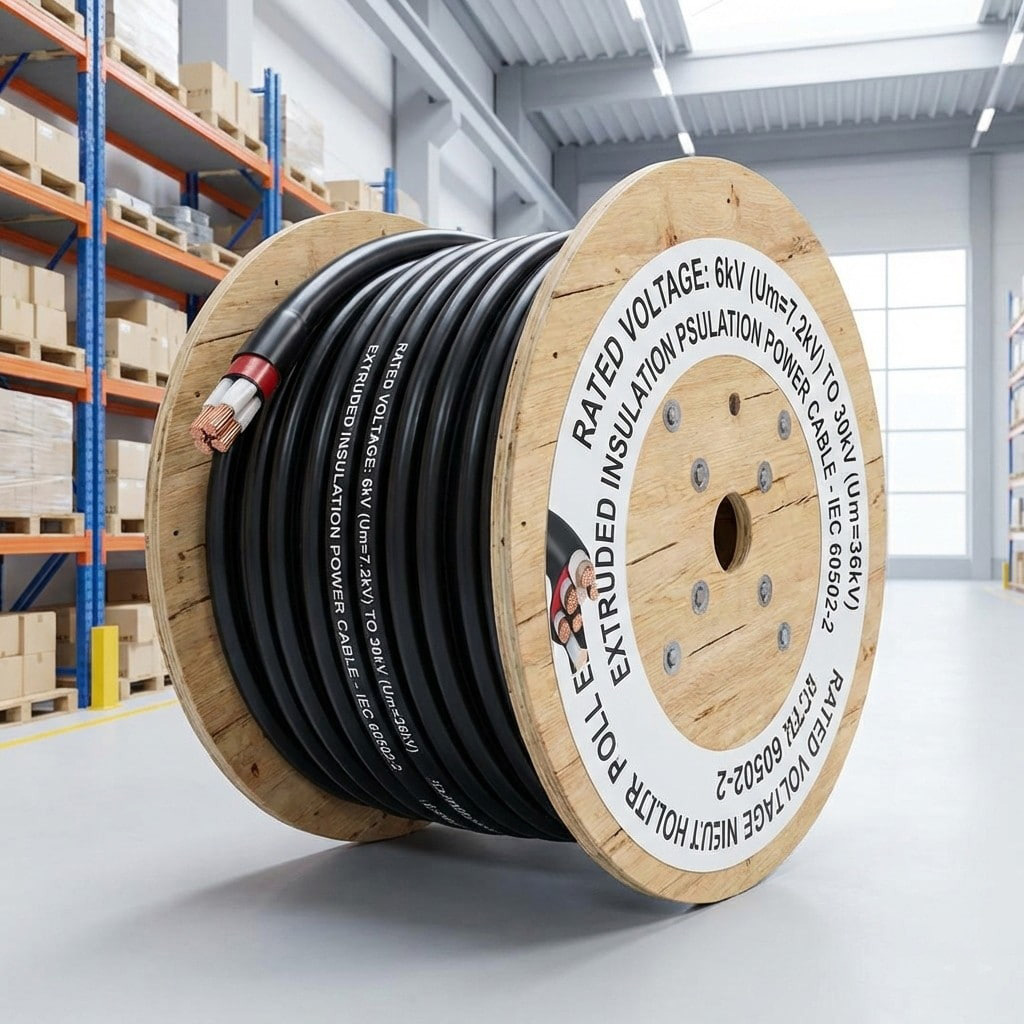
Product Definition: Medium-voltage extrusion-insulated power cable for 6kV to 30kV systems, using high-quality copper or aluminum conductors and premium insulation materials, designed for medium-volta...
See Details -
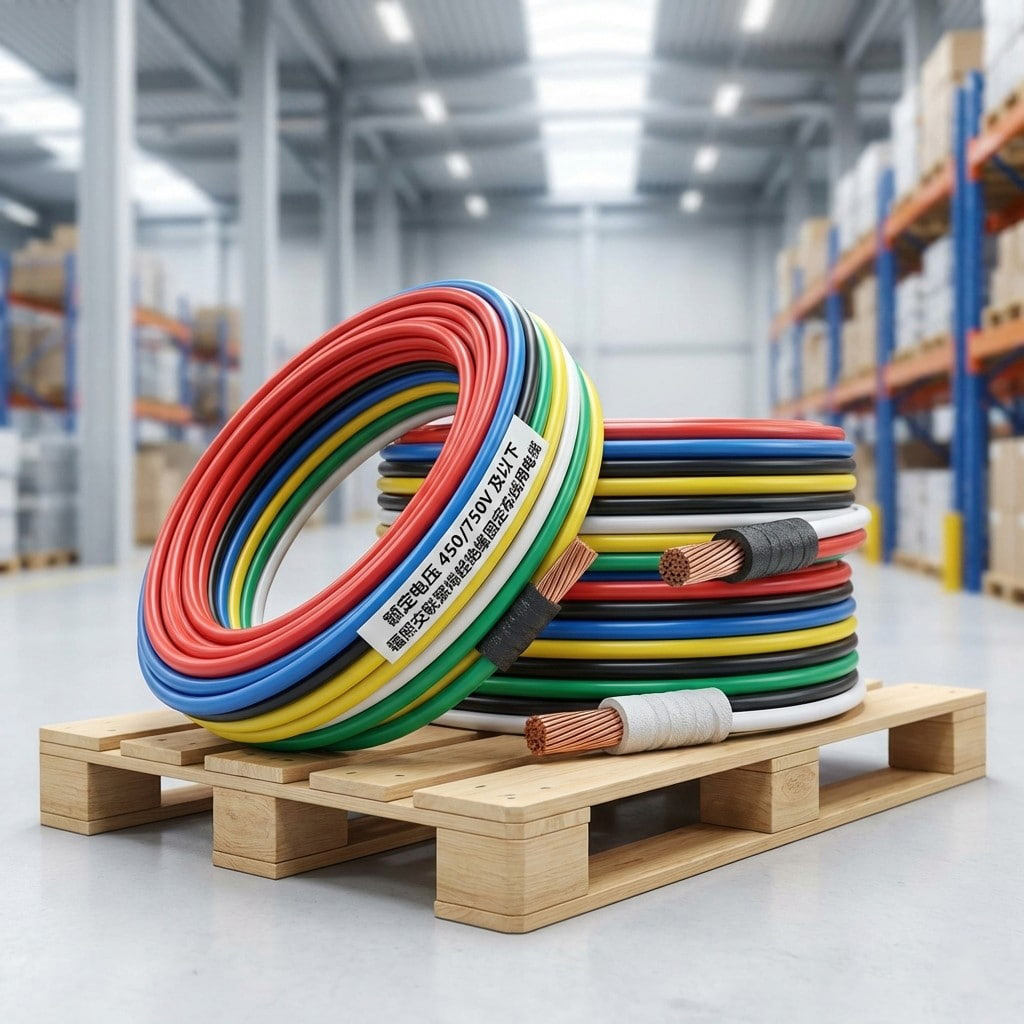
Product Overview:This product is made of high-quality polyolefin material through an electron irradiation cross-linking process. It is suitable for fixed installations with rated voltages of 450/750V ...
See Details -
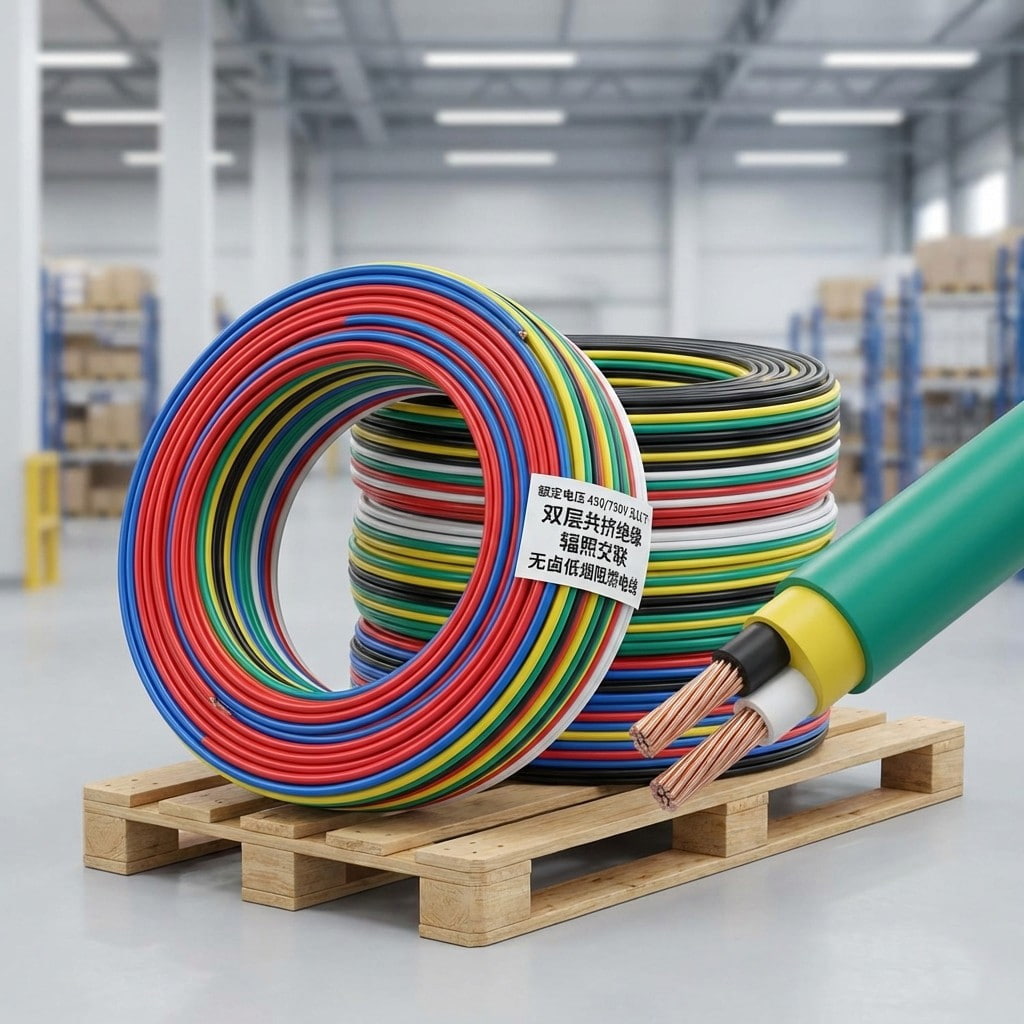
Product Overview: This product utilizes a double-layer co-extrusion insulation and electron irradiation cross-linking process, possessing halogen-free, low-smoke, and flame-retardant properties. It i...
See Details -
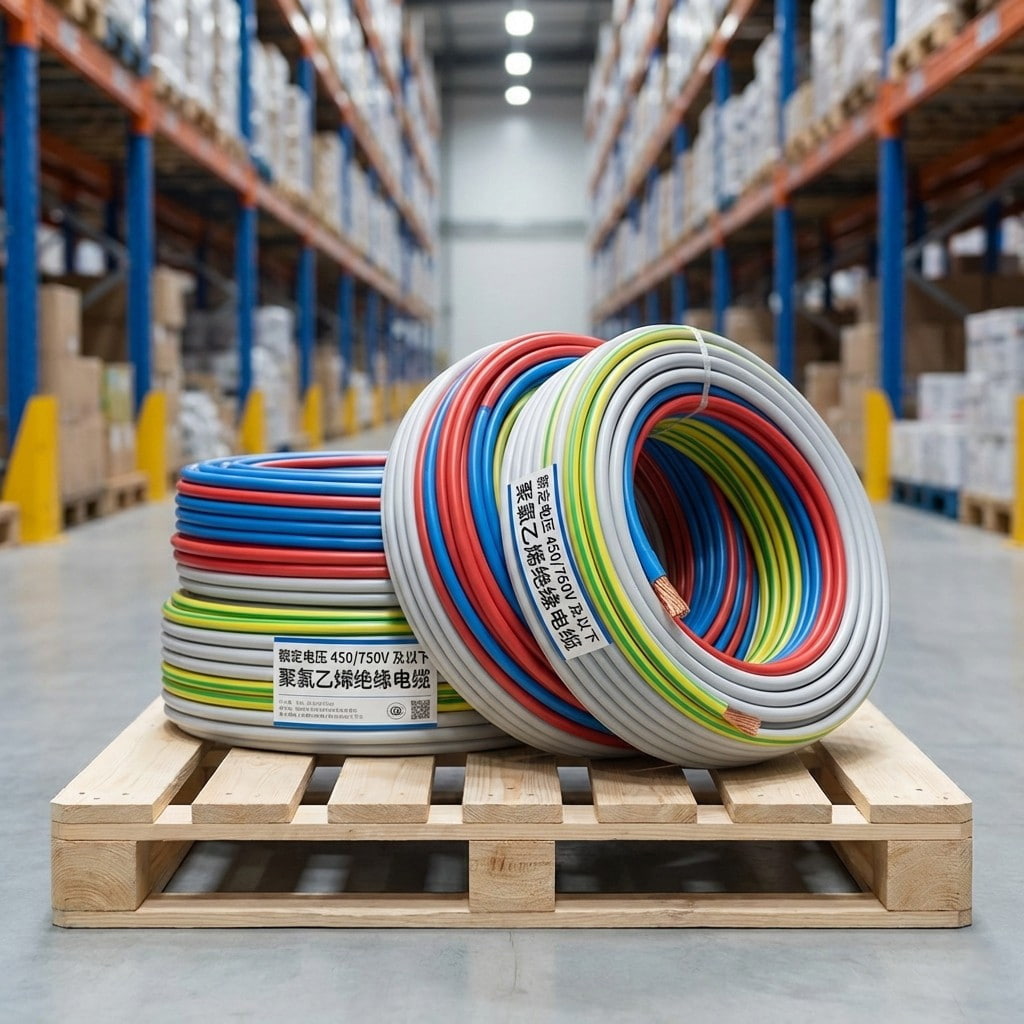
Product Overview: This series consists of general-purpose wires and cables with a rated voltage of 450/750V and below, using polyvinyl chloride (PVC) insulation and sheathing. Featuring mature technol...
See Details -
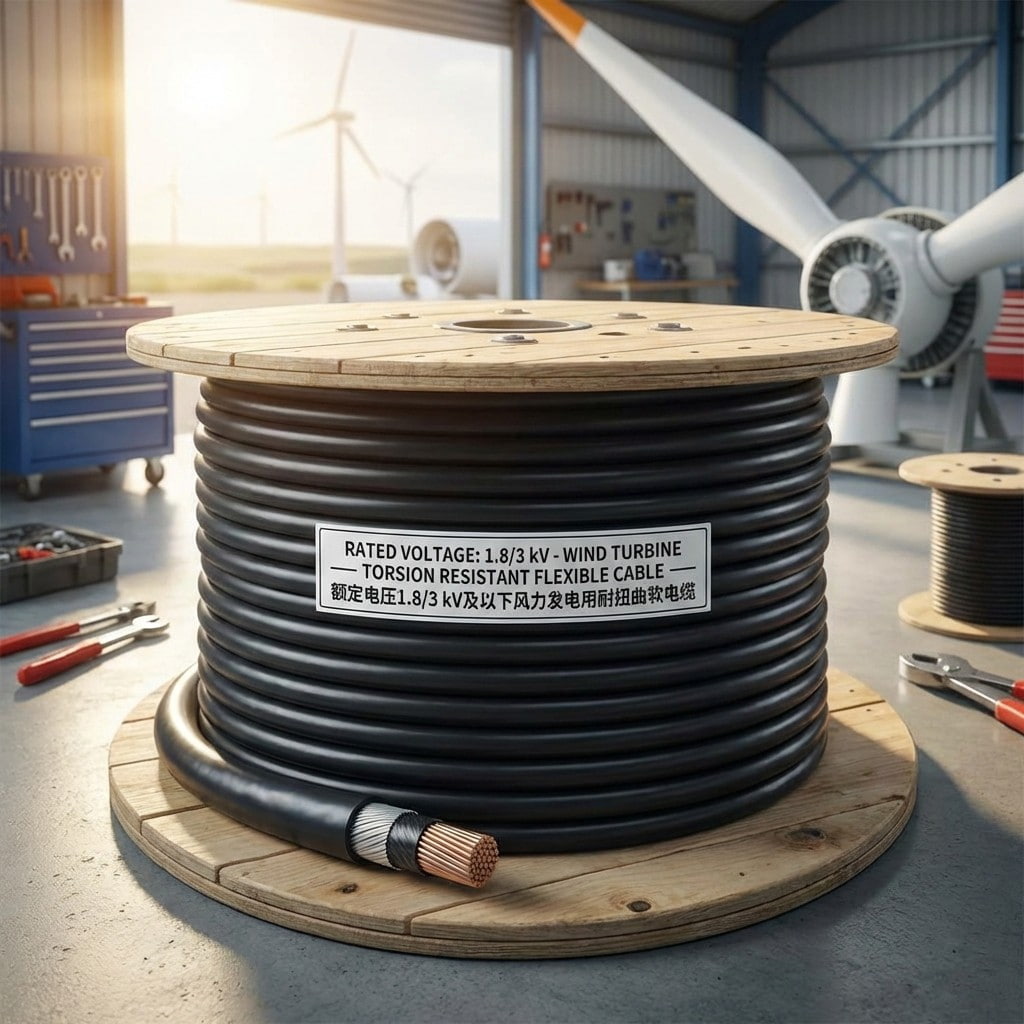
Product Introduction: Designed specifically for the harsh operating environment of wind power systems, meeting the requirements of continuous torsion and bending during mobile installation within the...
See Details
- About Us
- Company Profile
- History
- Smart Factory
- Resources
- Resources
- Technical Datasheets
- Product Catalogs
- Certificates & Compliance
- Industry Standards
- FAQs
- News
- Products
- Power Cables
- Electrical Equipment Cables
- Wind Power Cables
- Photovoltaic / Energy Storage Cables
- Overhead Cables
- Rail Transit
- Contact
- Contact
- Contact Meaia
-
Mobile QR code

Back to top

