
 English
  中文简体
中文简体 

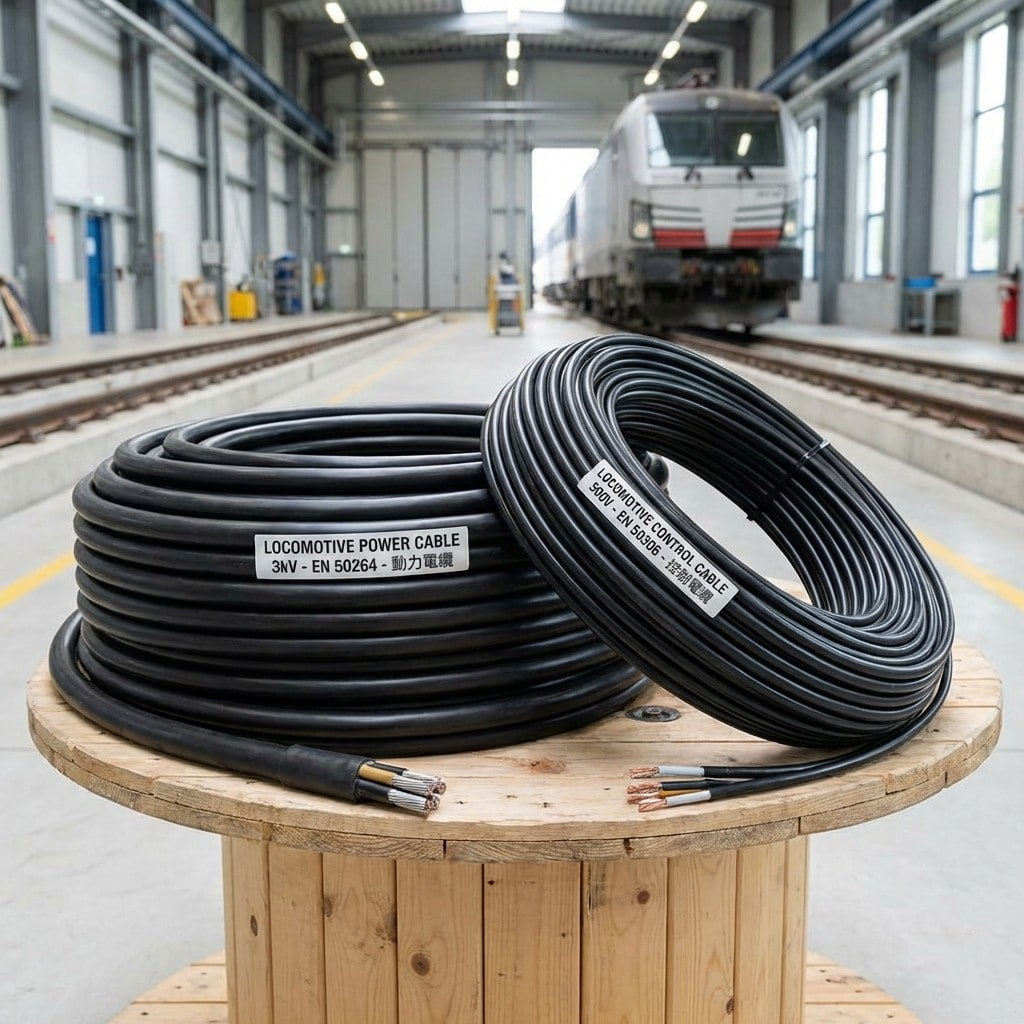
Product Introduction: Locomotive and rolling stock cables are specifically designed for the rail transit industry, covering both power supply and control signaling. The cables utilize highly flexible ...
See Details
Custom Photovoltaic Storage Cables: What to Specify and Why It Matters
Aug 17,2026
Most inquiries for custom photovoltaic storage cables arrive with conductor cross-section, voltage class, and target length. Those three numbers matter, but they do not explain how a cable will behave after years of direct sunlight, high ambient temperature, constant bending, and the charging and discharging cycles typical of battery storage. A cable that looks identical on a datasheet can fail early on site if the wrong materials or construction details are chosen. The shorter path to a reliable supply is simple: define the working environment first, then let the cable design follow.
Custom Photovoltaic Storage Cables Face Conditions Ordinary Cables Do Not
The cables used in a photovoltaic system are not just extensions of the solar panel. They connect the panel strings to the inverter, and in a storage plant they connect the battery racks to the power conversion system. On the DC side, these cables carry full system voltage continuously during daylight hours, and in a storage plant the current can flow in both directions as the battery charges and discharges. That means the insulation and connection system must hold up not only electrically, but also under frequent thermal cycling.
The installation environment adds mechanical and climatic stress. Rooftop cables are exposed to ultraviolet radiation, rain, and temperature swings from below -20 °C to well above 50 °C. Storage containers concentrate heat inside an enclosed steel box, where cable surface temperature can be far higher than the ambient temperature shown in the datasheet. Cables laid in cable trays or pulled through narrow conduits also face compression, abrasion, and bending around small radii. An ordinary PVC-insulated cable is not designed for this combination of DC voltage, UV exposure, and thermal cycling.
That is why most experienced solar EPC contractors use a purpose-built PV system cable for solar and storage installations, with cross-linked insulation and a jacket formulated for outdoor service.
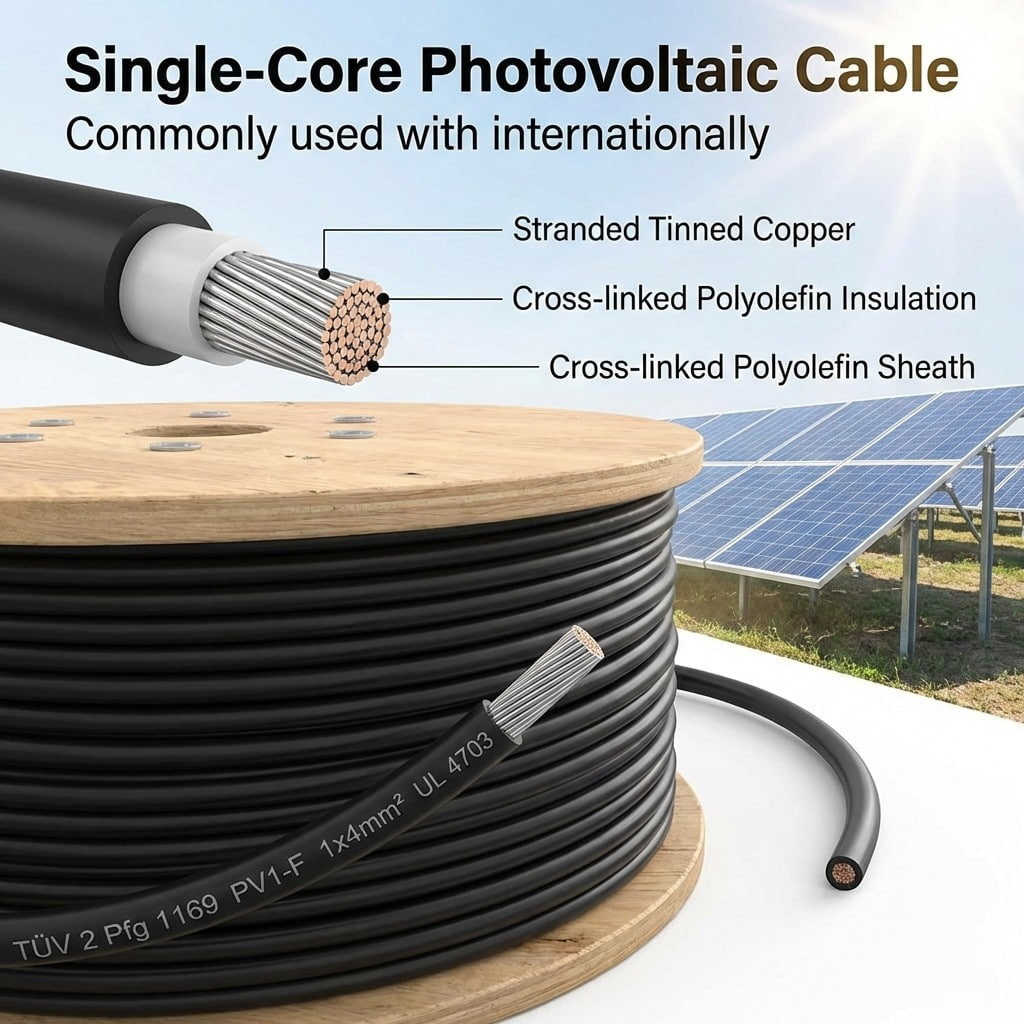 Wholesale PV System Cable Supplier, OEM/ODM CompanyJiangsu Qucheng Cable Technology Co., Ltd. is a China Wholesale PV System Cable Supplier and OEM/ODM Company, Core Advantages: ● Superior...View Product →
Standard PV String Cable vs. Cable for Storage Duty
On short cable runs and under mild conditions, a standard PV string cable may work in a storage plant. But storage projects add two complications that normal PV strings do not have: enclosed container heat and charge-discharge cycling. Do not assume that a cable certified for PV panels is automatically suitable for storage racks.
| Parameter | Typical PV string cable | Cable engineered for storage duty |
|---|---|---|
| Long-term conductor temperature | 90 °C rating is common | Must be checked against container heat accumulation; derating often required |
| DC system voltage | 1.0 kV or 1.5 kV systems | Often 1.5 kV DC; PCS side may need an additional AC rating |
| Fire performance | Basic flame retardance | Enclosed spaces favor low-smoke, halogen-free materials and a higher flame class |
| Mechanical stress | Fixed installation | Bending, vibration, and compression in battery racks and cable trays |
| Service life target | 25 years typical | Project life varies; thermal cycling should be included in evaluation |
Another similar case is communication power systems, where a DC supply must stay stable even when the grid fluctuates or the site is off-grid. The battery bank and solar input are both connected to a DC bus, and the cable between them is exactly what keeps the system running during outages. A PV cable for communication power systems is built around that reliability requirement, with the same UV resistance and insulation quality as solar cable, but specified for the continuous DC operation that telecom rectifiers rely on.
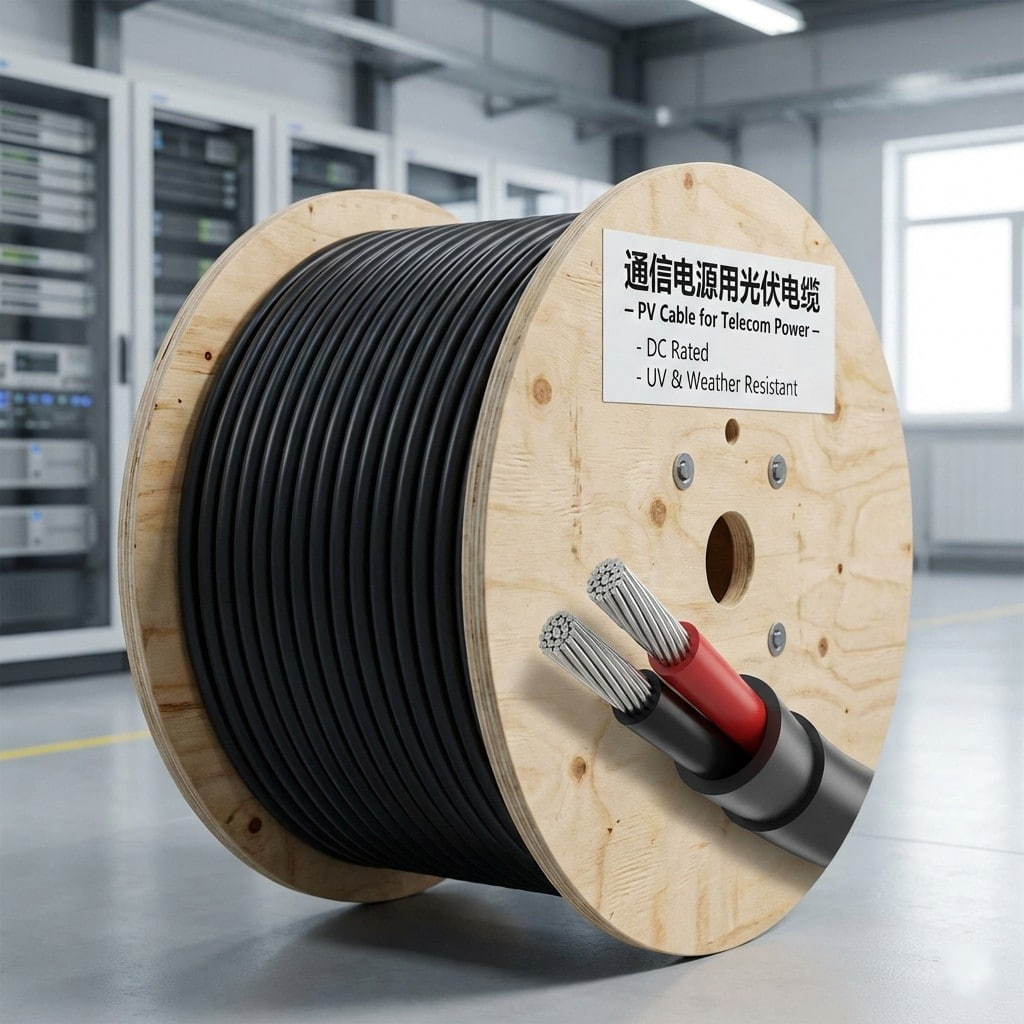 Wholesale PV Cable for Communication Power Systems Supplier, OEM/ODM CompanyJiangsu Qucheng Cable Technology Co., Ltd. is a China Wholesale PV Cable for Communication Power Systems Supplier and OEM/ODM Company, Co...View Product →
Material and Construction Choices That Define a Custom Cable
When you move from an off-the-shelf cable to a custom design, the material choices define cost, weight, lifetime, and installation behaviour. Three decisions have the largest impact.
Copper or Aluminium Conductor
Copper remains the default for PV and storage applications. It has predictable resistance, handles repeated bending without fatigue at the connection point, and is compatible with the crimp terminals commonly used in solar combiner boxes and battery racks. Aluminium saves weight and cost on long runs, but it needs a larger cross-section for the same current, and every termination must be prepared against oxide formation. For a custom DC cable that will be terminated and re-terminated during maintenance, copper is the safer technical choice.
Single-Core or Multi-Core Design
Single-core cables are common on the DC side because they dissipate heat more easily and can be routed with a smaller bending radius. Multi-core cables reduce installation time and tray space, but the current rating must be derated because the conductors heat each other. In a storage container where space is tight, the layout of the battery racks and the PCS will usually decide which construction is feasible before the cable is even designed.
Insulation and Jacket Materials
Photovoltaic cables typically use cross-linked polyethylene (XLPE) or irradiation cross-linked polyolefin insulation with a jacket that resists UV and moisture. Ratings such as 90 °C continuous conductor temperature and -40 °C cold flexibility are common targets for outdoor installations, while flame-retardant and low-smoke versions are specified when the cable runs inside buildings or containers. The insulation system should be matched not only to the voltage, but to the long-term temperature profile of the specific site. That is where a custom specification earns its value: a generic cable meets a standard, while a correctly specified cable meets the project.
What a Cable Factory Must Be Able to Prove
A custom design is only as good as the factory that builds it. Before approving a supplier, a buyer should see evidence that the factory can actually convert a specification into a repeatable product.
Testing and Type Approval
The test programme for a custom PV storage cable should cover conductor resistance, insulation resistance, high-voltage withstand, thermal ageing, cold bending, UV resistance, and flame propagation. The manufacturer should be able to show type-test reports and, where relevant, certificates from recognised bodies such as TÜV or CB schemes. Management system certificates such as ISO 9001, ISO 14001, and ISO 45001 are useful signals, but they describe the factory system rather than the specific cable. Ask for cable-level test reports, not just factory-level certificates.
Documentation for Global Projects
Export projects increasingly ask for more than test reports. Environmental documentation, product carbon footprint verification, and ESG reporting are becoming part of tender requirements, especially in Europe and the Middle East. A supplier that can provide these documents simplifies the approval process for the EPC contractor and the end customer. Beyond that, a project is easier to manage when the same team can discuss layout, routing, termination, and compatibility with the rest of the electrical system. That is why the renewable energy cable solutions at our Yixing factory start with an engineering discussion rather than a price list.
Write These Points Into Your Inquiry
The quality of the quotation depends on the quality of the specification. If the enquiry is vague, the quotes will be difficult to compare and the risk moves to the buyer. Work through the list below before you send the RFQ.
- Installation environment: outdoor, cable tray, conduit, container, underground, or direct burial.
- Electrical ratings: DC or AC system voltage, continuous current, short-circuit withstand.
- Temperature range: minimum ambient, maximum ambient, and any container heat accumulation.
- Mechanical requirements: bending radius, pulling tension, vibration, or repeated flexing.
- Fire performance: flame test class, halogen-free, smoke density, toxicity.
- Standards and certificates: IEC, EN, TÜV, CB, or project-specific acceptance criteria.
- Cable construction: single-core or multi-core, conductor material and cross-section, armour if required.
- Documentation: test reports, material declarations, carbon footprint verification, and quality plan.
The last step is simple. Send these details to the factory and ask for a design review before you chase a price. A genuine cable manufacturer will come back with questions, because the details define the product. If you have a project in hand, contact our engineering team with your cable specification and we will take it from there.
Related products
-
-
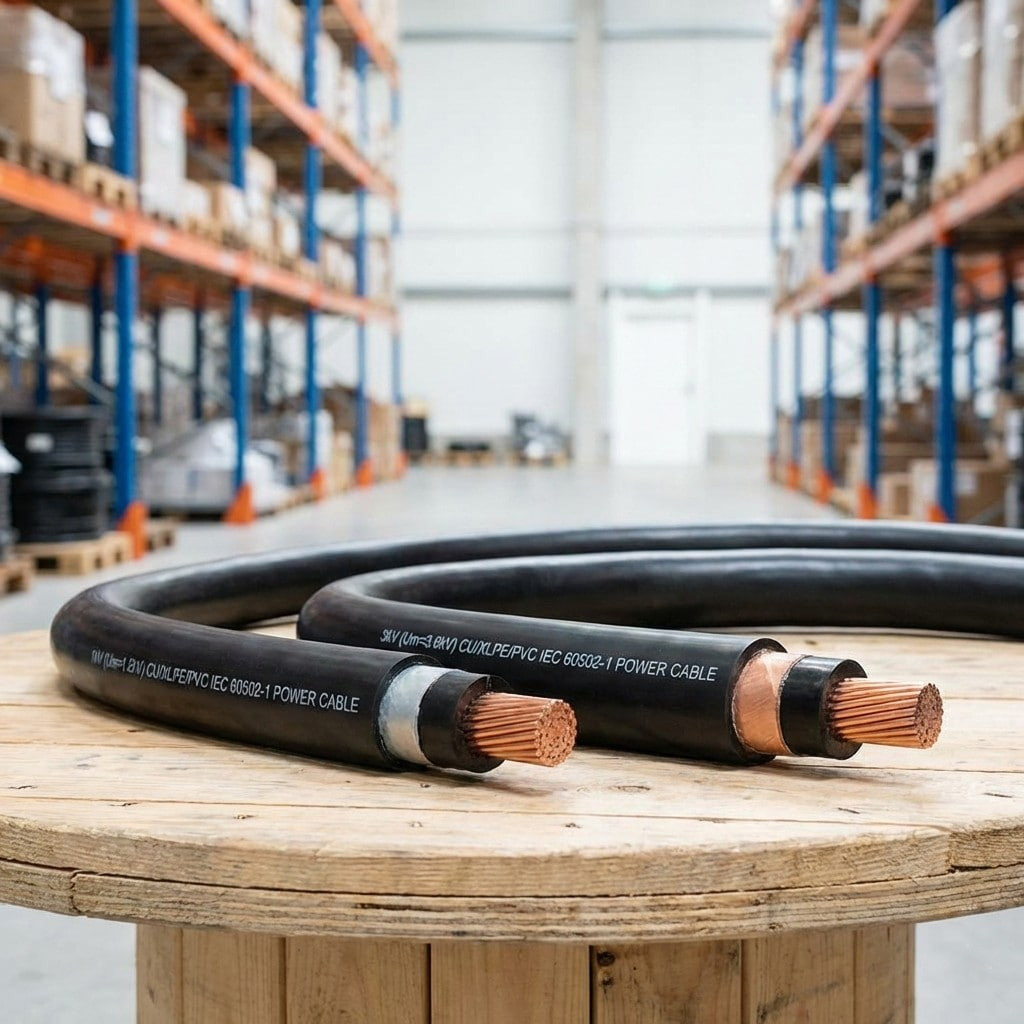
Product Definition: Low-voltage extrusion-insulated power cable for 1kV and 3kV systems, made with high-conductivity copper or aluminum conductors and premium extrusion insulation.
See Details -
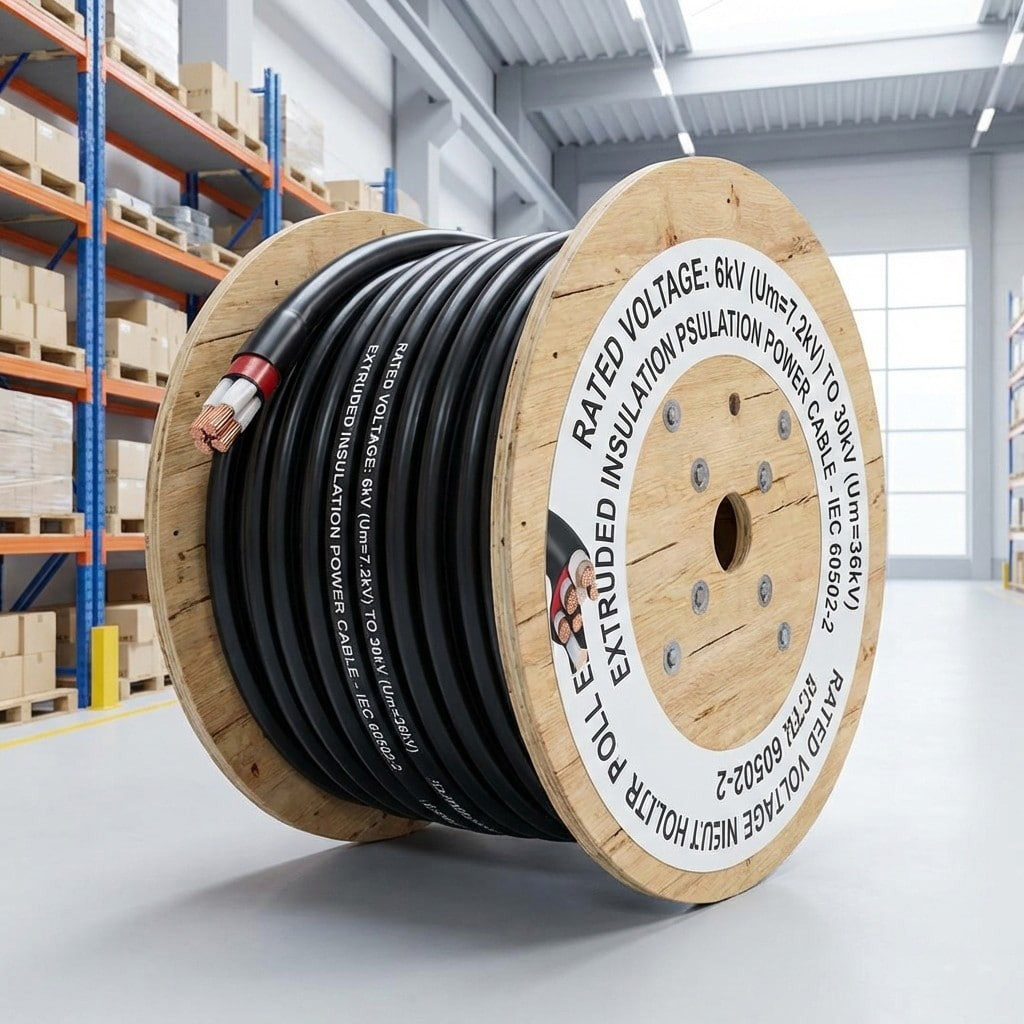
Product Definition: Medium-voltage extrusion-insulated power cable for 6kV to 30kV systems, using high-quality copper or aluminum conductors and premium insulation materials, designed for medium-volta...
See Details -
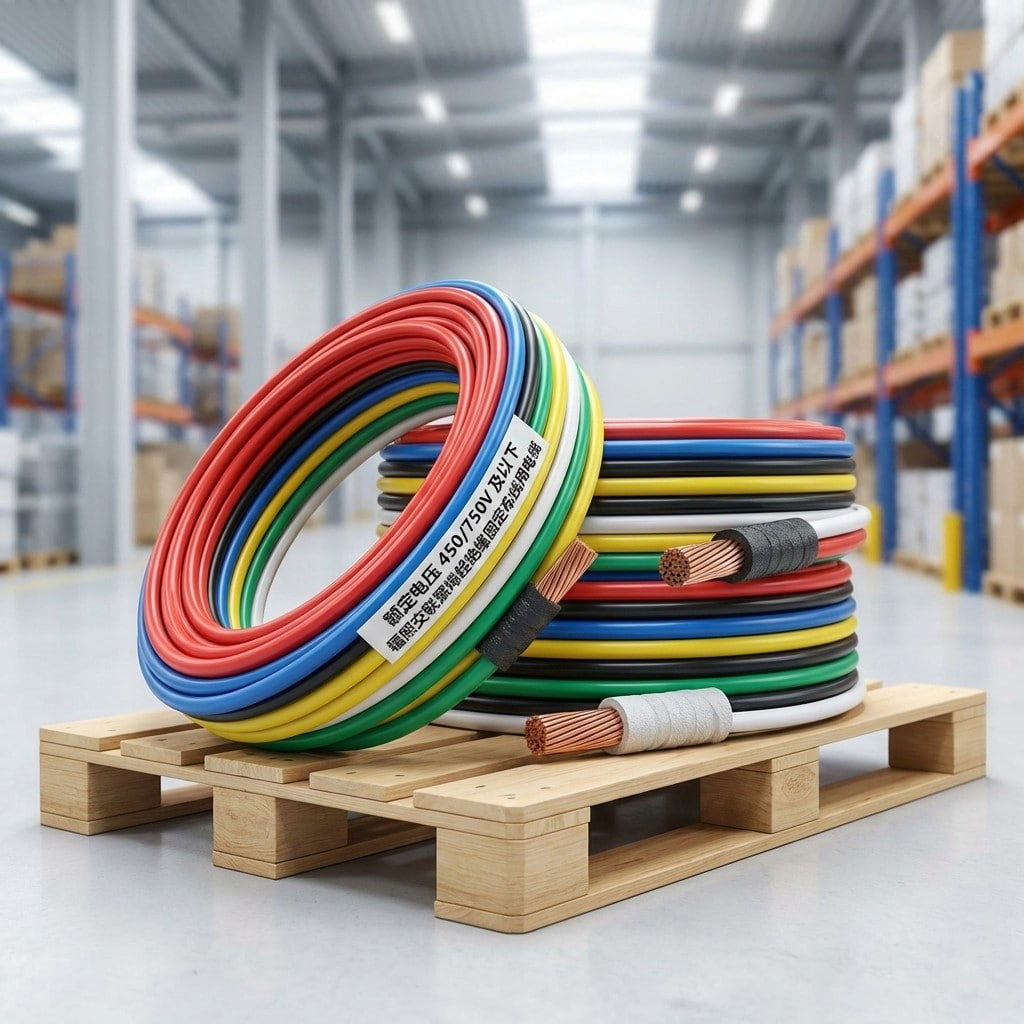
Product Overview:This product is made of high-quality polyolefin material through an electron irradiation cross-linking process. It is suitable for fixed installations with rated voltages of 450/750V ...
See Details -
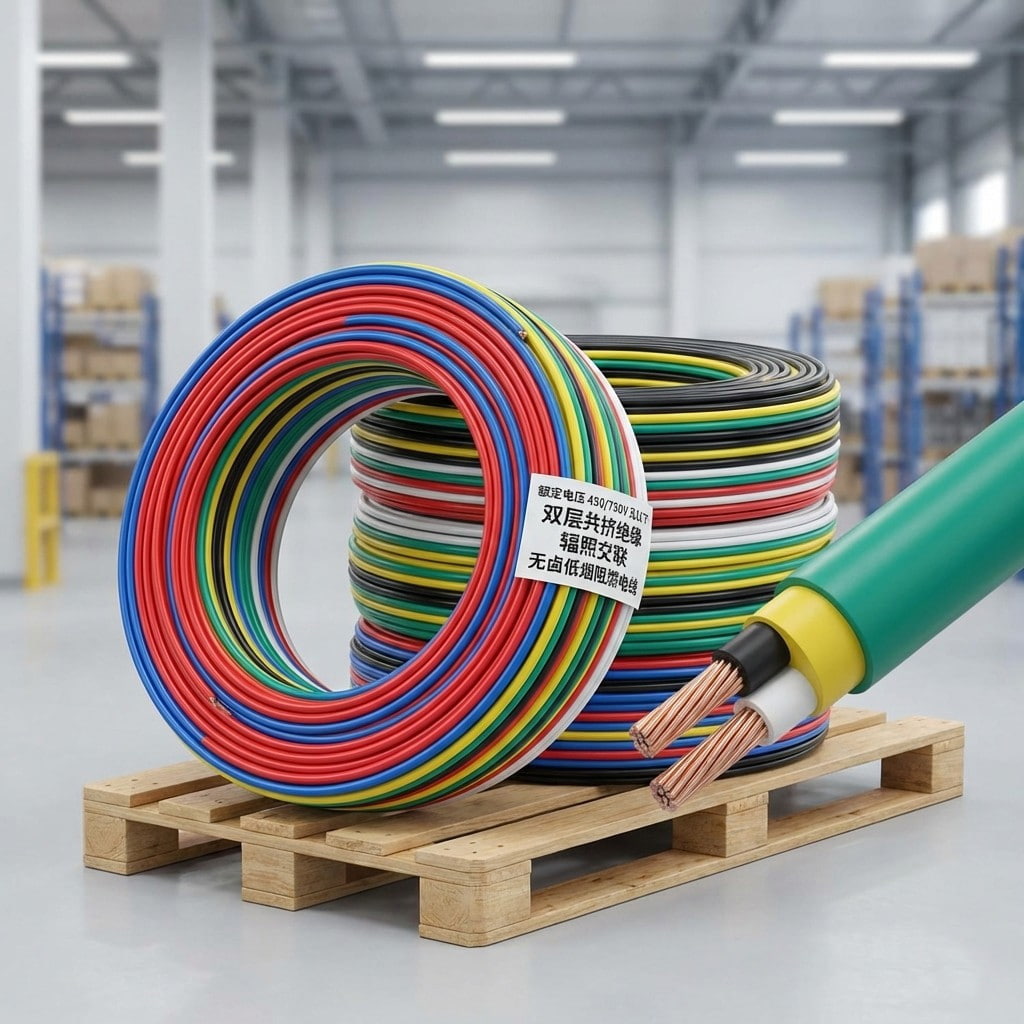
Product Overview: This product utilizes a double-layer co-extrusion insulation and electron irradiation cross-linking process, possessing halogen-free, low-smoke, and flame-retardant properties. It i...
See Details -
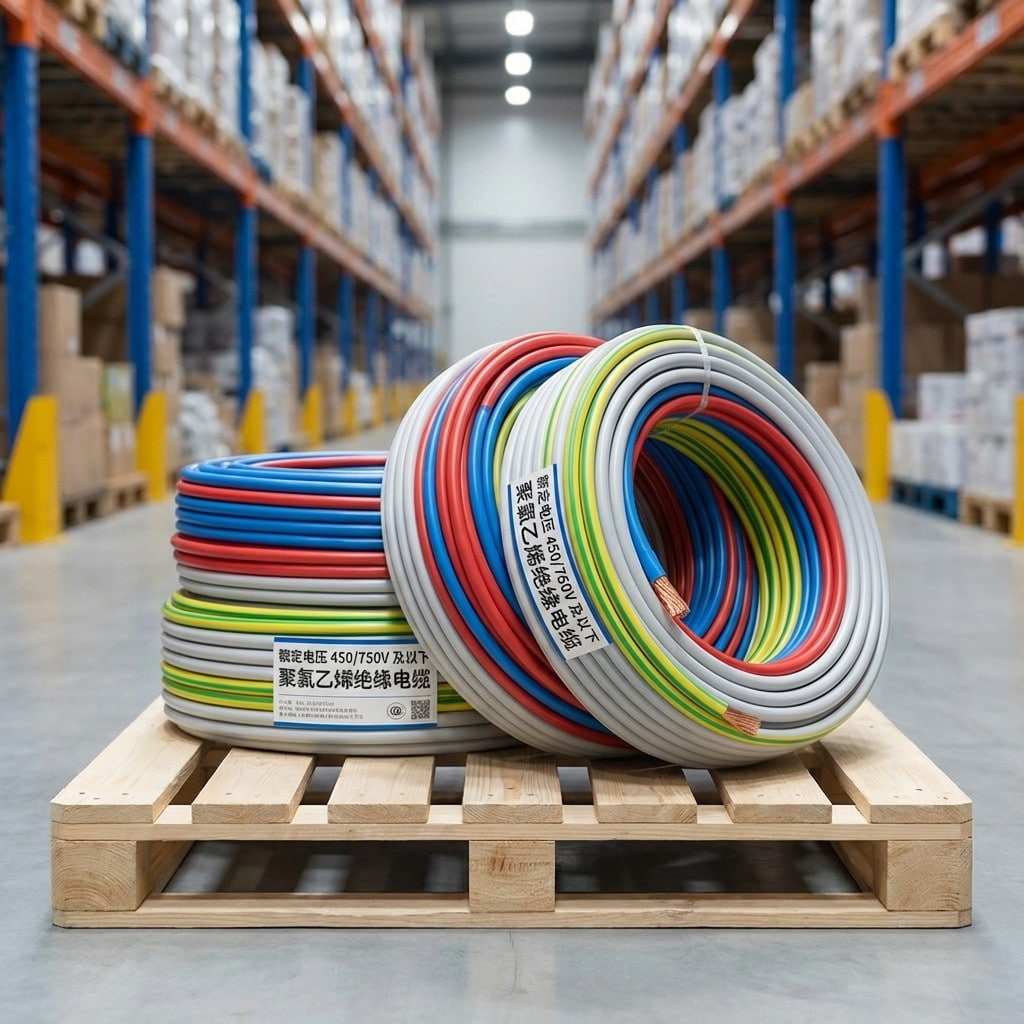
Product Overview: This series consists of general-purpose wires and cables with a rated voltage of 450/750V and below, using polyvinyl chloride (PVC) insulation and sheathing. Featuring mature technol...
See Details
- About Us
- Company Profile
- History
- Smart Factory
- Resources
- Resources
- Technical Datasheets
- Product Catalogs
- Certificates & Compliance
- Industry Standards
- FAQs
- News
- Products
- Power Cables
- Electrical Equipment Cables
- Wind Power Cables
- Photovoltaic / Energy Storage Cables
- Overhead Cables
- Rail Transit
- Contact
- Contact
- Contact Meaia
-
Mobile QR code

Back to top

