
 English
  中文简体
中文简体 

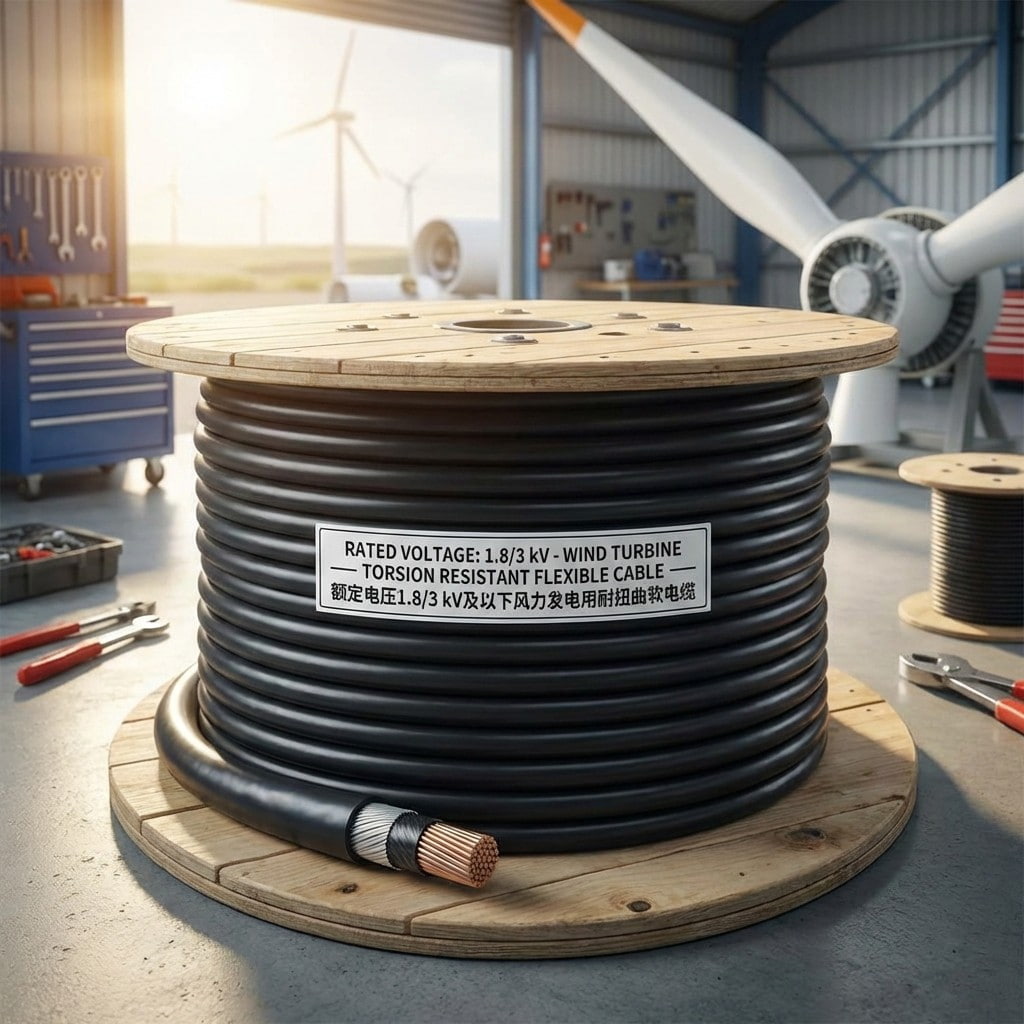
Product Introduction: Designed specifically for the harsh operating environment of wind power systems, meeting the requirements of continuous torsion and bending during mobile installation within the...
See Details
What Are Wind Power Cables and How Do They Work in Wind Energy Systems?
Jun 17,2026
Content
- 1 The Rising Importance of Wind Power Cables in Renewable Energy Systems
- 2 Wind Power Cables: Core Backbone of Wind Energy Systems
- 3 Torsion-Resistant Turbine Cables: Engineering for Continuous Rotation Stress
- 4 Types of Wind Power Cables Used in Modern Wind Farms
- 5 Technical Specifications of Wind Power Cables
- 6 Offshore Wind Cable Systems: Engineering Challenges and Solutions
- 7 Wind Farm Electrical Cables and System Integration
- 8 Materials Used in Wind Power Cables
- 9 Installation and Maintenance of Wind Turbine Cables
- 10 Wind Power Cable Failure Modes and Reliability Challenges
- 10.1 1. Mechanical Fatigue and Torsional Stress Failure
- 10.2 2. Insulation Aging and Electrical Breakdown
- 10.3 3. Offshore Corrosion and Environmental Damage
- 10.4 4. Thermal Overload in Wind Farm Electrical Cables
- 10.5 5. Installation Damage and Improper Handling
- 10.6 6. Electrical Stress and Partial Discharge Effects
- 10.7 Reliability Improvement Strategies
- 11 Conclusion: Wind Power Cables as the Foundation of Global Wind Energy Growth
- 12 FAQ
- 12.0.1 1. What are wind power cables used for in wind energy systems?
- 12.0.2 2. What makes torsion-resistant turbine cables different from standard cables?
- 12.0.3 3. Why are XLPE insulated wind power cables widely used in wind farms?
- 12.0.4 4. What is the difference between offshore wind cable and onshore wind cable?
- 12.0.5 5. Where are medium voltage wind energy cables typically used?
- 12.0.6 6. What is the function of LSZH cable in wind turbine systems?
The Rising Importance of Wind Power Cables in Renewable Energy Systems
As the global energy structure continues to shift toward low-carbon and sustainable development, wind energy has become one of the fastest-growing renewable power sources worldwide. In this transformation, wind power cables play a critical role in ensuring efficient energy transmission, system stability, and long-term operational reliability in both onshore wind farms and offshore wind power projects.
Modern wind farms rely heavily on advanced electrical infrastructure. Unlike conventional power transmission systems, wind energy environments are highly dynamic, exposed to extreme weather conditions, continuous mechanical stress, and complex installation environments. As a result, wind power cables must deliver exceptional mechanical strength, electrical performance, and environmental resistance.
In particular, the increasing deployment of offshore wind cable systems has driven significant innovation in cable design, especially in terms of durability, corrosion resistance, and long-distance transmission capability.
Wind Power Cables: Core Backbone of Wind Energy Systems
Wind power cables are specialized electrical cables designed to transmit power generated by wind turbines to substations and ultimately to the power grid. These cables are engineered to operate under harsh environmental conditions, including high humidity, UV exposure, saltwater corrosion, and continuous mechanical movement.
The primary function of wind power cables includes:
- Power transmission from turbine generators
- Signal and control communication between turbine components
- Grid connection for energy distribution
- System safety and monitoring support
Unlike standard industrial cables, wind farm electrical cables must maintain stable performance under dynamic load conditions, especially in large-scale wind energy transmission systems where voltage stability is critical.
Torsion-Resistant Turbine Cables: Engineering for Continuous Rotation Stress
One of the most technically demanding components in wind energy systems is the torsion-resistant turbine cables. These cables are specifically designed to withstand continuous twisting forces generated by wind turbine nacelle rotation and blade pitch adjustments.
Mechanical Challenges in Wind Turbine Systems
Wind turbines are constantly subjected to rotational motion. This creates torsional stress that can lead to:
- Cable fatigue failure
- Conductor breakage
- Insulation cracking
- Reduced service life
To address these challenges, torsion-resistant turbine cables are engineered with:
- High-flexibility copper conductors
- Multi-layer reinforcement structures
- Special polymer-based insulation materials
- Optimized twisting resistance design
These characteristics ensure long-term reliability even under extreme rotational cycles in modern wind turbine systems.
Types of Wind Power Cables Used in Modern Wind Farms
The wind energy industry utilizes various types of specialized cables depending on application scenarios, voltage levels, and installation environments.
High Voltage Wind Turbine Cable for Grid Transmission
High voltage wind turbine cable systems are used to transmit electricity from offshore or large-scale wind farms to onshore grids. These cables ensure stable energy delivery over long distances while minimizing power loss.
Medium Voltage Wind Energy Cable for Internal Distribution
Medium voltage wind energy cable systems are widely used within wind farms for connecting individual turbines. They provide a balance between cost efficiency and electrical performance.
XLPE Insulated Wind Power Cables for Thermal Stability
XLPE insulated wind power cables are widely adopted due to their excellent thermal resistance, electrical insulation performance, and long service life. XLPE (cross-linked polyethylene) ensures stable operation under high temperature and high load conditions.
LSZH Cable for Safety-Critical Applications
LSZH cable (low smoke zero halogen) is commonly used in wind turbine internal systems where fire safety and environmental protection are essential. These cables reduce toxic gas emissions in case of fire incidents.
Submarine Wind Power Cable for Offshore Projects
Submarine wind power cable systems are designed for offshore wind farms. They are engineered to withstand:
- Deep-sea pressure
- Saltwater corrosion
- Mechanical seabed impact
- Long-distance transmission requirements
Technical Specifications of Wind Power Cables
To ensure clarity in industrial applications, the following table summarizes the key technical parameters of modern wind power cables:
| Parameter | Specification | Description |
|---|---|---|
| Rated Voltage | 1kV – 66kV | Suitable for wind energy transmission systems |
| Conductor Material | Copper / Aluminum | High conductivity and mechanical strength |
| Insulation Type | XLPE / EPR | Excellent thermal and electrical resistance |
| Outer Sheath | LSZH / PVC / PUR | Flame retardant and weather-resistant |
| Temperature Range | -40°C to +90°C | Stable performance in extreme environments |
| Torsion Resistance | ±150°/m to ±360°/m | Critical for turbine rotation systems |
| Application | Onshore / Offshore wind farms | Renewable energy infrastructure |
Offshore Wind Cable Systems: Engineering Challenges and Solutions
Offshore wind cable systems represent one of the most advanced segments in renewable energy infrastructure. Unlike onshore installations, offshore environments introduce additional challenges such as seawater corrosion, seabed movement, and long-distance transmission requirements.
Key Engineering Challenges
- Saltwater exposure leading to corrosion
- Mechanical stress from underwater currents
- Difficult installation and maintenance conditions
- High voltage loss over long distances
Structural Design of Submarine Wind Power Cable
Submarine wind power cable systems typically include:
- Steel armoring layer for mechanical protection
- Waterproof sealing layers
- XLPE insulation core
- Anti-corrosion outer sheath
These layers work together to ensure durability and reliability in offshore wind power generation systems.
Wind Farm Electrical Cables and System Integration
Wind farm electrical cables serve as the internal nervous system of wind energy projects. They connect turbines, transformers, and substations into a unified power generation network.
Key functions include:
- Inter-turbine connection
- Power aggregation
- Control signal transmission
- Fault detection and monitoring
Proper cable selection directly affects the efficiency and stability of wind energy transmission systems.
Materials Used in Wind Power Cables
Modern wind power cables rely on advanced materials to achieve high performance:
XLPE Insulation Technology
XLPE provides superior thermal resistance and electrical stability, making it ideal for high-load wind energy applications.
Copper vs Aluminum Conductors
Copper offers higher conductivity, while aluminum provides lightweight and cost advantages for large-scale installations.
LSZH Sheathing Materials
LSZH materials enhance safety by reducing toxic emissions during fire incidents, making them essential for offshore wind environments.
Installation and Maintenance of Wind Turbine Cables
Proper installation of wind power cables is crucial for long-term system reliability. Installation processes typically include:
- Cable routing design
- Torsion stress control during installation
- Mechanical protection setup
- Connection testing and commissioning
Maintenance strategies focus on:
- Regular inspection of insulation integrity
- Monitoring torsion-resistant turbine cables for fatigue
- Detecting corrosion in offshore environments
- Preventive replacement scheduling
Wind Power Cable Failure Modes and Reliability Challenges
As wind energy projects expand toward larger offshore wind farms and higher-capacity turbines, the reliability of wind power cables becomes increasingly critical. Due to continuous mechanical stress, harsh environmental exposure, and long operational cycles, cable failure can significantly impact wind energy transmission efficiency and system safety.
Understanding the common failure modes of wind power cables and torsion-resistant turbine cables is essential for improving design, installation, and maintenance strategies in modern wind power systems.
1. Mechanical Fatigue and Torsional Stress Failure
One of the most common issues in torsion-resistant turbine cables is mechanical fatigue caused by continuous rotation inside wind turbine nacelles.
Wind turbines constantly adjust direction to optimize wind capture, resulting in repeated twisting motion. Over time, this leads to:
- conductor fatigue and micro-cracks
- insulation layer deformation
- loss of elasticity in cable structure
This type of failure is especially critical in dynamic sections of wind turbine systems where wind power cables must withstand thousands of torsion cycles annually.
2. Insulation Aging and Electrical Breakdown
Another major failure mode in wind power cables is insulation degradation. Materials such as XLPE insulated wind power cables are designed for long-term thermal and electrical stability, but they can still deteriorate under extreme conditions.
Key causes include:
- prolonged high-voltage operation
- thermal cycling in wind farms
- partial discharge activity
- UV exposure in onshore installations
Once insulation weakens, it may lead to electrical leakage, short circuits, or complete system shutdown.
3. Offshore Corrosion and Environmental Damage
In offshore wind cable systems, environmental stress is one of the most severe challenges. Submarine wind power cables are exposed to:
- seawater corrosion
- seabed abrasion
- marine organism attachment
- hydrostatic pressure
Over time, the outer sheath and armoring layers may degrade, increasing the risk of moisture ingress and electrical failure.
This is why offshore wind cable designs often include multi-layer protection structures such as steel armoring and waterproof barriers.
4. Thermal Overload in Wind Farm Electrical Cables
Wind farm electrical cables operate under fluctuating load conditions depending on wind speed and energy output. When demand exceeds design capacity, thermal overload can occur.
Consequences include:
- overheating of conductors
- insulation softening or melting
- reduced cable lifespan
Proper selection of medium voltage wind energy cable and accurate load balancing are essential to prevent thermal stress-related failures.
5. Installation Damage and Improper Handling
A significant percentage of cable failures occur during installation rather than operation. Wind power cables are highly sensitive to:
- excessive bending radius
- improper pulling tension
- mechanical impact during laying
- incorrect torsion control during installation
For offshore wind cable projects, installation vessels and cable-laying equipment must strictly follow engineering standards to avoid hidden structural damage.
6. Electrical Stress and Partial Discharge Effects
High voltage wind turbine cable systems may experience localized electrical stress, especially at connection points and termination joints.
This can lead to:
- partial discharge activity
- insulation erosion
- long-term dielectric failure
Advanced monitoring systems are increasingly used in modern wind farms to detect early-stage electrical anomalies in wind power cables.
Reliability Improvement Strategies
To reduce failure risks in wind power cables and torsion-resistant turbine cables, the industry focuses on several key improvements:
- enhanced XLPE insulation formulations
- improved torsion-resistant structural design
- better offshore protective armoring systems
- real-time cable monitoring technologies
- optimized installation procedures
These advancements significantly improve the service life and operational stability of wind energy transmission systems.
Conclusion: Wind Power Cables as the Foundation of Global Wind Energy Growth
Wind power cables are the essential backbone of modern renewable energy infrastructure. From onshore wind farms to complex offshore wind cable systems, these advanced electrical components ensure stable, efficient, and safe energy transmission.
As wind energy continues to expand globally, technologies such as torsion-resistant turbine cables, XLPE insulated wind power cables, and submarine wind power cable systems will play increasingly important roles in supporting sustainable energy development.
FAQ
1. What are wind power cables used for in wind energy systems?
Wind power cables are used to transmit electricity generated by wind turbines to substations and power grids. They also handle control signals and communication between turbine components, ensuring stable and efficient wind energy transmission.
2. What makes torsion-resistant turbine cables different from standard cables?
Torsion-resistant turbine cables are specially designed to withstand continuous twisting and rotational movement inside wind turbines. Unlike standard cables, they can handle mechanical stress caused by nacelle rotation without breaking or degrading quickly.
3. Why are XLPE insulated wind power cables widely used in wind farms?
XLPE insulated wind power cables are popular because they offer excellent thermal resistance, high electrical insulation performance, and long service life. They are ideal for high-load and high-voltage wind energy transmission environments.
4. What is the difference between offshore wind cable and onshore wind cable?
Offshore wind cables are designed for underwater and marine environments, requiring waterproofing, corrosion resistance, and mechanical protection. Onshore wind cables are used on land and focus more on UV resistance, flexibility, and installation efficiency.
5. Where are medium voltage wind energy cables typically used?
Medium voltage wind energy cables are mainly used within wind farms to connect individual turbines and internal distribution systems. They help collect and transmit electricity from multiple turbines to a central substation.
6. What is the function of LSZH cable in wind turbine systems?
LSZH (low smoke zero halogen) cables are used in wind turbine systems to improve fire safety. In case of fire, they emit very low smoke and no toxic halogen gases, protecting equipment and personnel.
Related products
-
-
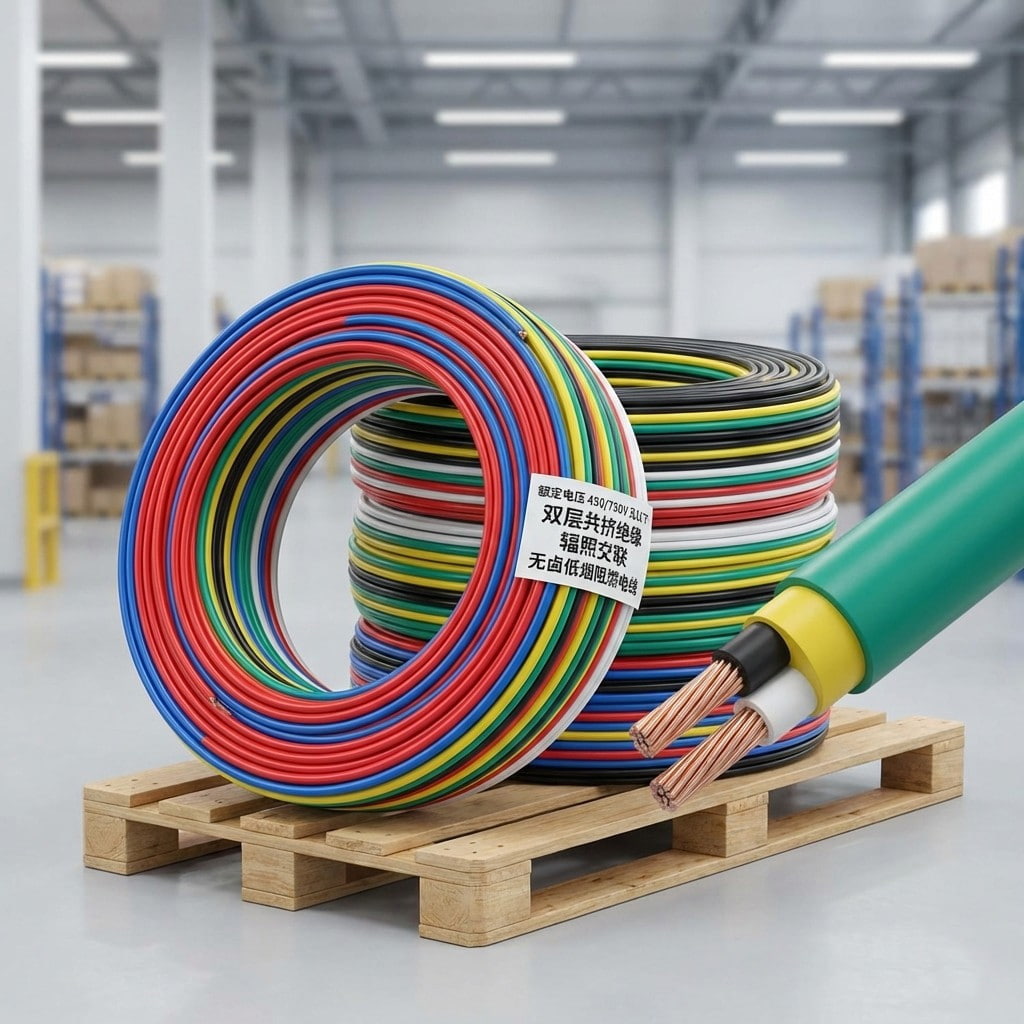
Product Overview: This product utilizes a double-layer co-extrusion insulation and electron irradiation cross-linking process, possessing halogen-free, low-smoke, and flame-retardant properties. It i...
See Details -
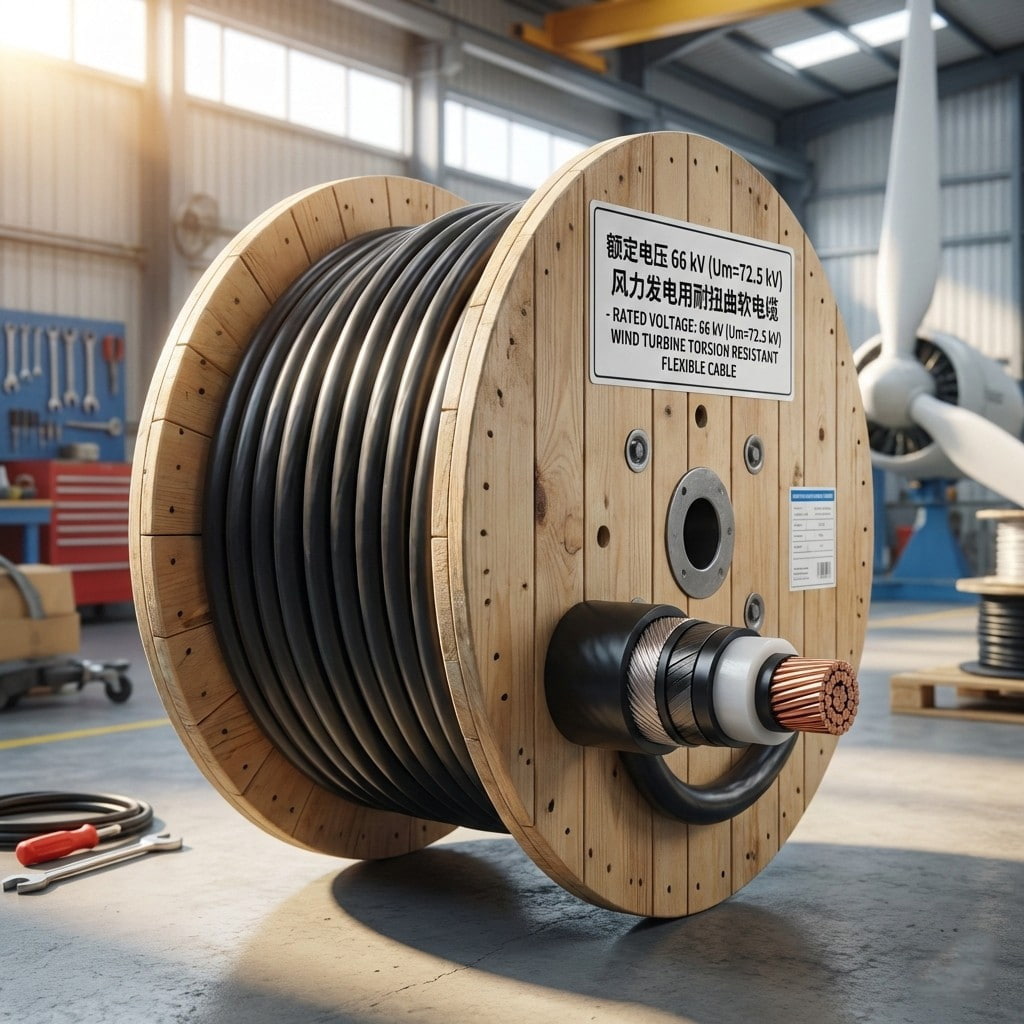
Product Introduction: This cable is specifically designed for medium- and high-voltage wind power generation equipment, with a rated voltage of 66 kV. It is suitable for high-reliability power transmi...
See Details -
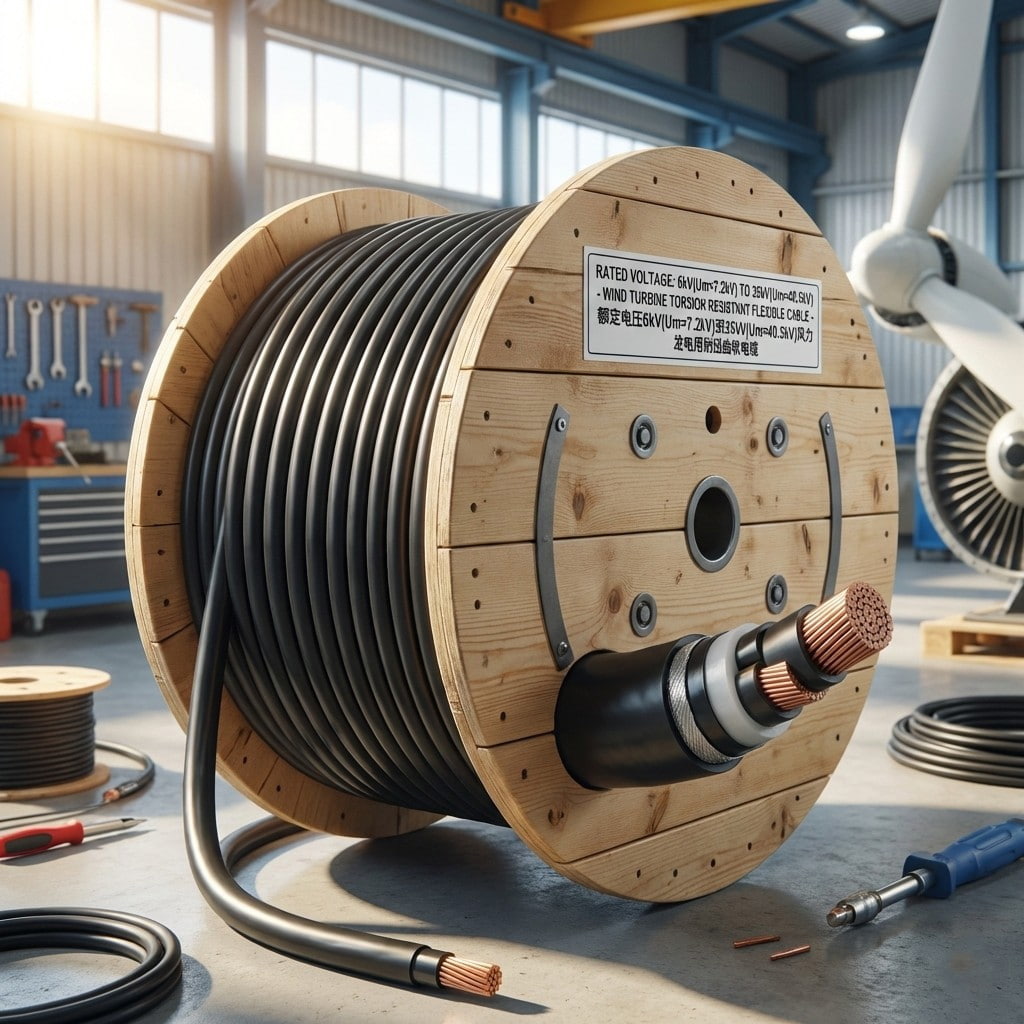
Product Overview: This series of products consists of high-performance, torsion-resistant flexible cables specifically designed for the harsh environments of wind turbine generators. Rated voltages ra...
See Details -
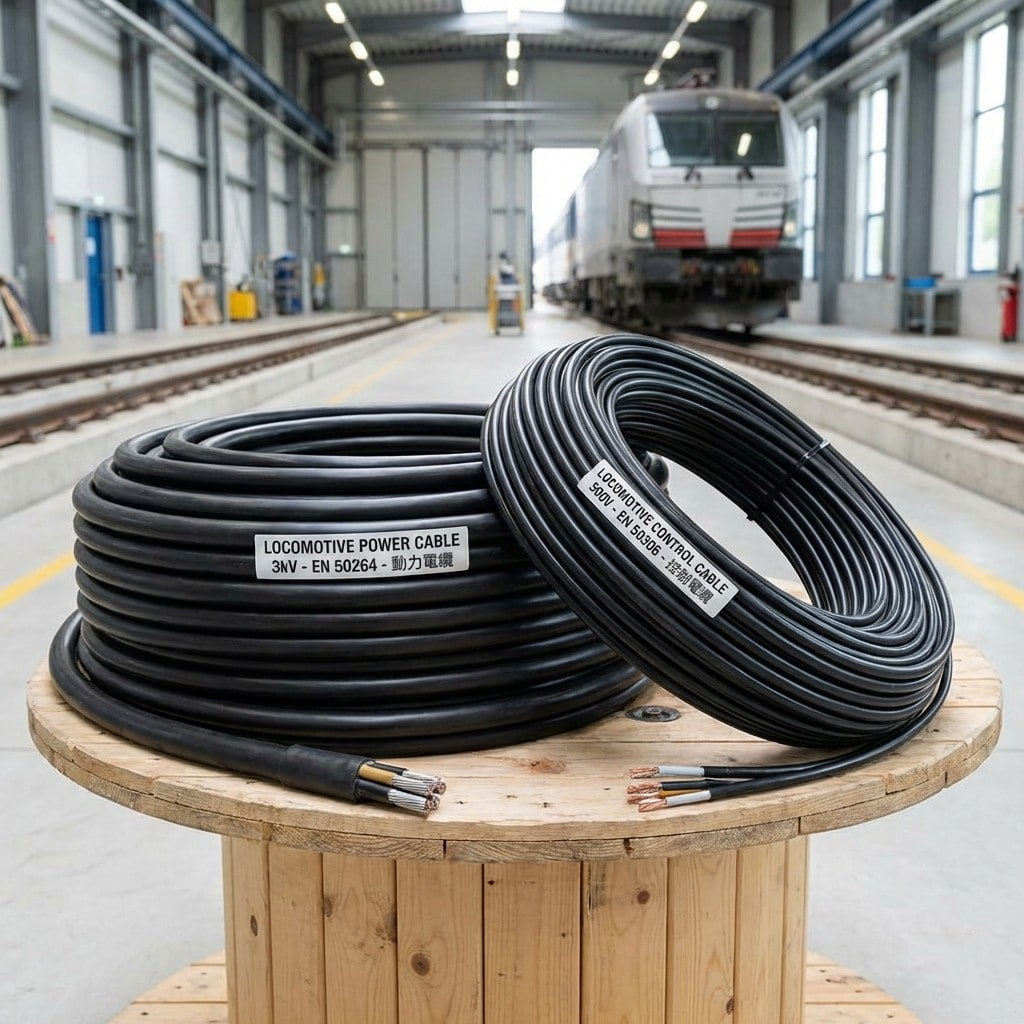
Product Introduction: Locomotive and rolling stock cables are specifically designed for the rail transit industry, covering both power supply and control signaling. The cables utilize highly flexible ...
See Details -
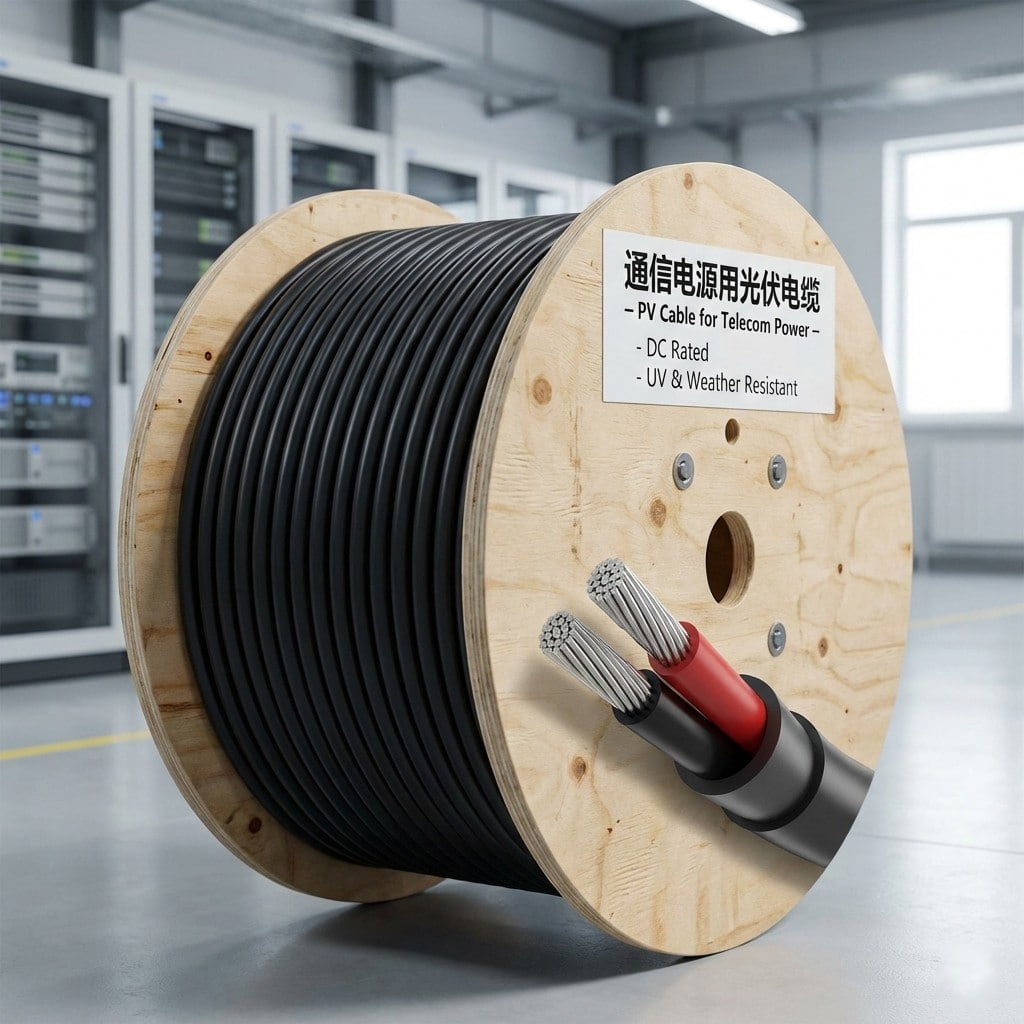
Product Overview: Designed specifically for photovoltaic power supply systems in communication base stations, data centers, etc., this product transmits DC power from photovoltaic modules to communica...
See Details
- About Us
- Company Profile
- History
- Smart Factory
- Resources
- Resources
- Technical Datasheets
- Product Catalogs
- Certificates & Compliance
- Industry Standards
- FAQs
- News
- Products
- Power Cables
- Electrical Equipment Cables
- Wind Power Cables
- Photovoltaic / Energy Storage Cables
- Overhead Cables
- Rail Transit
- Contact
- Contact
- Contact Meaia
-
Mobile QR code

Back to top

