
 English
 中文简体


Product Definition: Low-voltage extrusion-insulated power cable for 1kV and 3kV systems, made with high-conductivity copper or aluminum conductors and premium extrusion insulation.
See Details
Industrial Electric Wire and Cable: Voltage Classes, Derating and Buyer Checks
Nov 24,2026
Content
- 1 What industrial electric wire and cable actually covers
- 2 Voltage class is the first filter, not the last
- 3 Conductor and insulation choices decide the failure mode
- 4 Shielding and control cable: solving noise before it starts
- 5 Temperature derating: the number most datasheets bury
- 6 Standards and documents to demand before approval
- 7 A procurement checklist that survives an audit
- 8 Questions buyers ask before the first purchase order
A 0.6/1 kV cable pulled into the wrong tray does not fail on the day it is energised. It fails two summers later, at a joint, after the insulation has run 15 degrees above its rating for 6,000 hours. Nearly every industrial cable failure traces back to three decisions taken before the purchase order was raised: voltage class, insulation temperature rating, and installation method.
What industrial electric wire and cable actually covers
Industrial electric wire and cable is the conductor category rated for continuous duty inside plants, substations and process equipment, and it spans 450/750 V panel wiring at one end and 220 kV XLPE transmission cable at the other.
Working definition An industrial cable is a conductor assembly - copper or aluminium conductor, insulation, metallic screen, armour where required, and oversheath - selected by four inputs: voltage class, derated current rating, installation method, and environmental exposure.
The category splits into three practical families. Power cable moves energy from switchgear to load, from 0.6/1 kV plant distribution through 6/10 kV and 26/35 kV feeders up to 110 kV and 220 kV transmission. Control and instrument cable carries commands and signals at 450/750 V and below. Specialty cable - overhead insulated, photovoltaic, torsion-resistant wind, and rail transit - carries the same conductor and insulation physics into a specific mechanical environment.
Jiangsu Qucheng Cable Technology Co., Ltd., founded in 2018 and operating a 40,000 sq m plant in Yixing, Jiangsu, manufactures across all three families, with XLPE power cable rated to 220 kV (Um 252 kV) at the top of the range and 450/750 V fixed wiring cable at the bottom.
450/750 V
Lowest fixed wiring rating in the range
220 kV
Highest XLPE rating, Um 252 kV
40,000 sq m
Manufacturing footprint in Yixing
3
Systems certified: ISO 9001, 14001, 45001
Voltage class is the first filter, not the last
Voltage class narrows a cable catalogue faster than any other input: a 0.6/1 kV cable cannot substitute for a 6/10 kV circuit at any conductor size, because insulation thickness and screen construction are fixed by standard rather than by current rating.
The governing documents are IEC 60502-1 for 1 kV and 3 kV cables, IEC 60502-2 for 6 kV to 30 kV, IEC 60840 up to 150 kV, and IEC 62067 from 150 kV to 500 kV. GB/T 12706 mirrors the same structure for the Chinese market. Each standard fixes the maximum system voltage Um, the routine test level, and the minimum insulation wall for a given class.
| Rated voltage | Maximum system voltage Um | Construction standard | Typical industrial deployment |
| 450/750 V | Not applicable | IEC 60227 | Panel wiring, lighting circuits, fixed wiring in tray |
| 0.6/1 kV | 1.2 kV | IEC 60502-1 | Plant distribution, motor feeders, LV switchgear |
| 6/10 kV | 7.2 kV | IEC 60502-2 | In-plant medium voltage ring, pump and compressor feeders |
| 26/35 kV | 40.5 kV | IEC 60502-2 | Substation incomers, large drive feeders |
| 64/110 kV | 126 kV | IEC 60840 | Grid interconnection, high capacity transmission |
| 127/220 kV | 252 kV | IEC 62067 | Transmission backbone, utility substations |
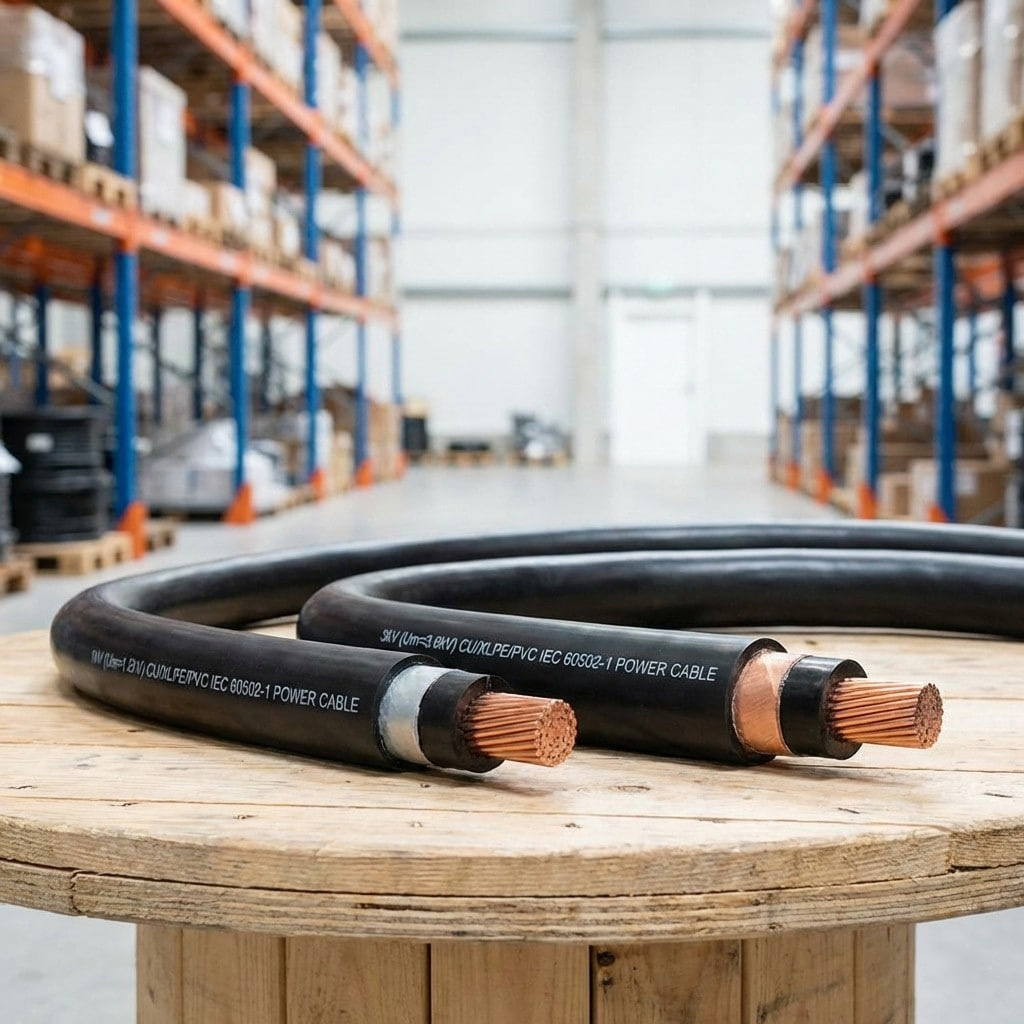 1 kV and 3 kV Extruded Insulated Power CableFits the 0.6/1 kV distribution feeders, motor drops and lighting sub-mains discussed here; IEC 60502-1 construction with copper or aluminium conductors.View Product →
On a typical factory project the 0.6/1 kV class carries most of the cable schedule: distribution board feeders, motor drops and lighting sub-mains. The 6/10 kV and 26/35 kV classes appear only where the site owns its ring main or feeds a large drive, and that is where insulation screening and jointing competence start to matter more than copper price.
U0/U and Um are not interchangeable on a purchase order. A cable marked 0.6/1 kV is designed for 1.2 kV maximum system voltage, and a quotation written as "1 kV cable" without Um leaves the acceptance test undefined.
Conductor and insulation choices decide the failure mode
Copper or aluminium, PVC or XLPE are cost decisions on the quotation and reliability decisions in service: XLPE holds 90 degrees Celsius continuous conductor temperature against 70 degrees Celsius for PVC, which changes how much current a given cross-section carries.
XLPE insulation
- 90 degrees Celsius continuous conductor temperature
- 250 degrees Celsius short-circuit rating for 5 seconds
- Lower dielectric loss at 6 kV and above
- Standard choice from 6/10 kV to 220 kV
PVC insulation
- 70 degrees Celsius continuous conductor temperature
- 160 degrees Celsius short-circuit rating for 5 seconds
- Lower material cost at 450/750 V
- Standard choice for panel and control wiring
On the conductor side, annealed copper conducts at 100% IACS and aluminium at about 61%, so an aluminium feeder needs a larger cross-section for the same current. Aluminium earns its place on long fixed runs above roughly 35 sq mm where weight and cost dominate, provided the terminations are bimetallic and the glands are rated for the material. Copper stays the default for motor drops, flexible connections and anything that moves.
The insulation temperature rating is a current rating in disguise: the same cross-section that runs comfortably at 70 degrees Celsius is thermally under-used at 90 degrees Celsius, and the reverse mistake is the one that burns joints.
Shielding and control cable: solving noise before it starts
A shielded instrument cable reduces coupled interference on signal circuits, and the screen only works when it is terminated correctly: braid coverage of 85% or more, a drain wire bonded at one end for low-frequency signals, and 360-degree gland bonding wherever variable-frequency drives share the tray.
In plants the shielded pair usually sits beside a control cable carrying 24 V commands and a drive cable switching at several kilohertz, and the failure shows up as a drifting analogue reading rather than a blown fuse. Instrument cable with an overall braid plus a drain wire, and control cable with a pair-level screen, solve most of it before commissioning begins.
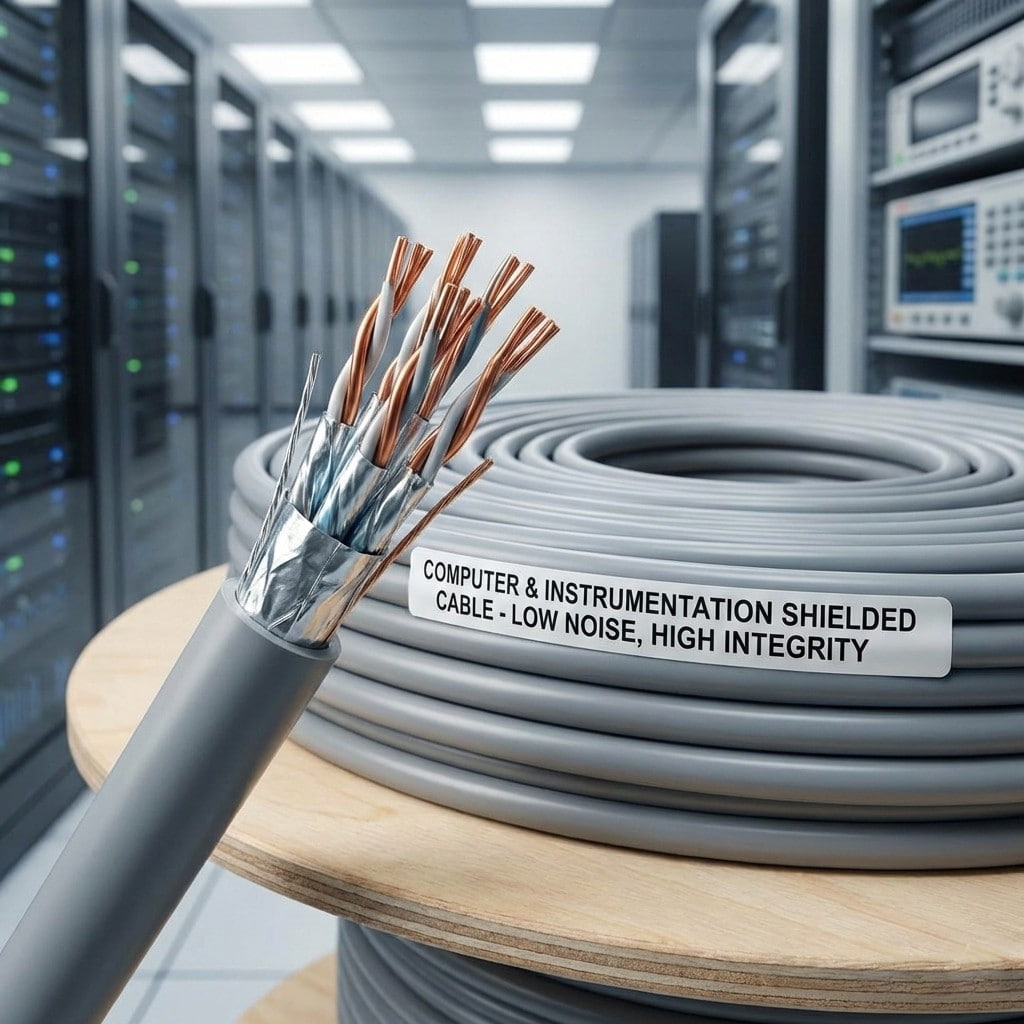 Computer and Instrument Shielded CableComputer and Instrumentation Shielded Cable is a high-performance shielded cable designed specifically for industrial automation control, instrument signal transmissio...View Product →
- Separate signal and power trays, or fit a metallic divider at minimum
- Bond the screen at one end for low-frequency signals, both ends for high-frequency noise
- Keep unshielded parallel runs under 300 mm where a drive cable shares the route
- Verify continuity of the screen after every termination, not only at delivery
The mechanics behind braid, foil and drain-wire performance are covered in this guide to what shielding actually does in a control cable, which is worth reading before the cable schedule is frozen.
Temperature derating: the number most datasheets bury
Cable current ratings are published at a 30 degrees Celsius reference ambient in air, single circuit, and every real installation departs from that reference: at 50 degrees Celsius an XLPE cable carries roughly 82% of its tabulated rating before grouping factors are applied.
Relative current capacity of XLPE cable versus ambient air temperature
The IEC 60287 method behind those tables combines ambient temperature, grouping, installation method and, for buried cable, soil thermal resistivity - a 2.5 K m/W soil assumption is common and generous. Three touching circuits in one tray typically cost a further 15% of the tabulated rating, and a plant room that reaches 45 degrees Celsius in August is not an edge case in most process plants.
A cable sized on the tabulated rating alone is already undersized in a plant room that reaches 45 degrees Celsius, and grouping makes the margin thinner still.
Standards and documents to demand before approval
A cable supplier should produce four documents on request: type test reports to the relevant IEC standard, routine test certificates for each delivered drum, flame and smoke test reports for the specific compound, and environmental declarations for the exact model ordered.
- IEC 60332-1-2 for single insulated wire flame propagation and IEC 60332-3-24 for bunched cable in a tray
- IEC 60754-1 and IEC 60754-2 for halogen acid gas evolution in halogen-free constructions
- IEC 61034-2 for smoke density under defined test conditions
- ISO 9001, ISO 14001 and ISO 45001 certificates, plus CB and TUV approvals where export markets require them
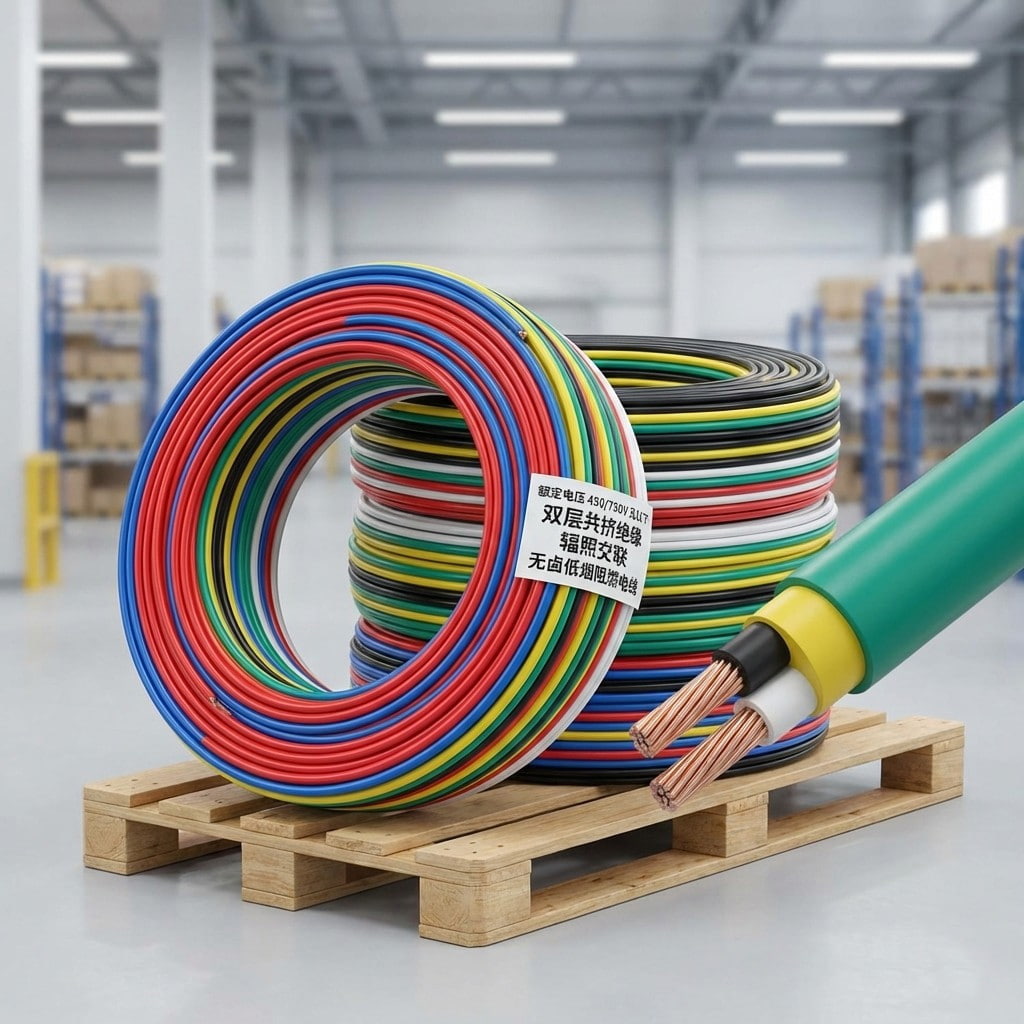 450/750 V Halogen-Free Low-Smoke Cross-Linked CableRelevant where flame/smoke test reports and environmental declarations are requested; double-layer co-extrusion and irradiation cross-linking suit fixed installations needing halogen-free, low-smoke performance.View Product →
Carbon reporting has moved from marketing to procurement. Qucheng publishes verified product carbon footprint reports for models including 60227 IEC 01 BV, JKLYJ-10 kV, ZAN-KVVP2, and ZC-YJV22 in 8.7/15 kV and 26/35 kV, alongside a 2024 ESG report and a greenhouse gas verification statement - documents that increasingly decide whether a supplier clears a project's environmental pre-qualification.
A procurement checklist that survives an audit
Five items close out most industrial cable purchases, and all five belong in the request for quotation rather than in a follow-up email after the drums arrive.
- Rated voltage written as U0/U with Um stated, plus the construction standard number
- Cross-section derived from a derated current calculation, not from the tabulated figure alone
- Conductor material and class to IEC 60228, with the maximum DC resistance stated
- Screen, armour and oversheath requirements, including halogen-free or flame-retardant grade
- Documentation package: type tests, routine tests, flame and smoke reports, environmental declarations
IEC 60228 sets the maximum DC resistance of a class 2 stranded copper conductor at 0.727 ohm per km for 25 sq mm and 0.193 ohm per km for 95 sq mm at 20 degrees Celsius. That single measurement is the fastest incoming-goods check available without a laboratory, and it catches undersized conductor long before the cable is pulled.
Send the cable schedule, derating basis and documentation list to the Qucheng engineering team before the drums are ordered; a voltage class and grouping review at quotation stage costs nothing, while a re-pull after energisation costs the circuit and the schedule.
Questions buyers ask before the first purchase order
How do I confirm the voltage class I ordered actually arrived?
Match the drum marking to the routine test certificate and check the test level. Under IEC 60502-1 a 0.6/1 kV cable is routine-tested at 3.5 kV for 5 minutes, while medium voltage cable to IEC 60502-2 is tested at 3.5 times U0, so a 6/10 kV cable carries a 21 kV routine test.
Is aluminium acceptable for industrial power feeders?
Yes for fixed runs above roughly 35 sq mm, provided terminations are bimetallic and the current rating is recalculated: aluminium conducts at about 61% IACS against 100% for annealed copper, so the cross-section steps up by two sizes for the same current.
What derating should I apply in a hot plant room?
Start from the 30 degrees Celsius table and apply about 0.82 at 50 degrees Celsius, then apply grouping: three touching circuits in one tray typically cost a further 15%, which is why a cable sized at 100% of the tabulated rating runs warm in August.
How long should supplier documentation be kept?
Keep type test reports and routine test certificates for the service life of the circuit. A 220 kV XLPE cable joint bay can stay in service for 40 years, and a carbon footprint declaration is only useful if it can be retrieved when the asset register is audited.
Recommended Links
Recommended News
Related products
-
-
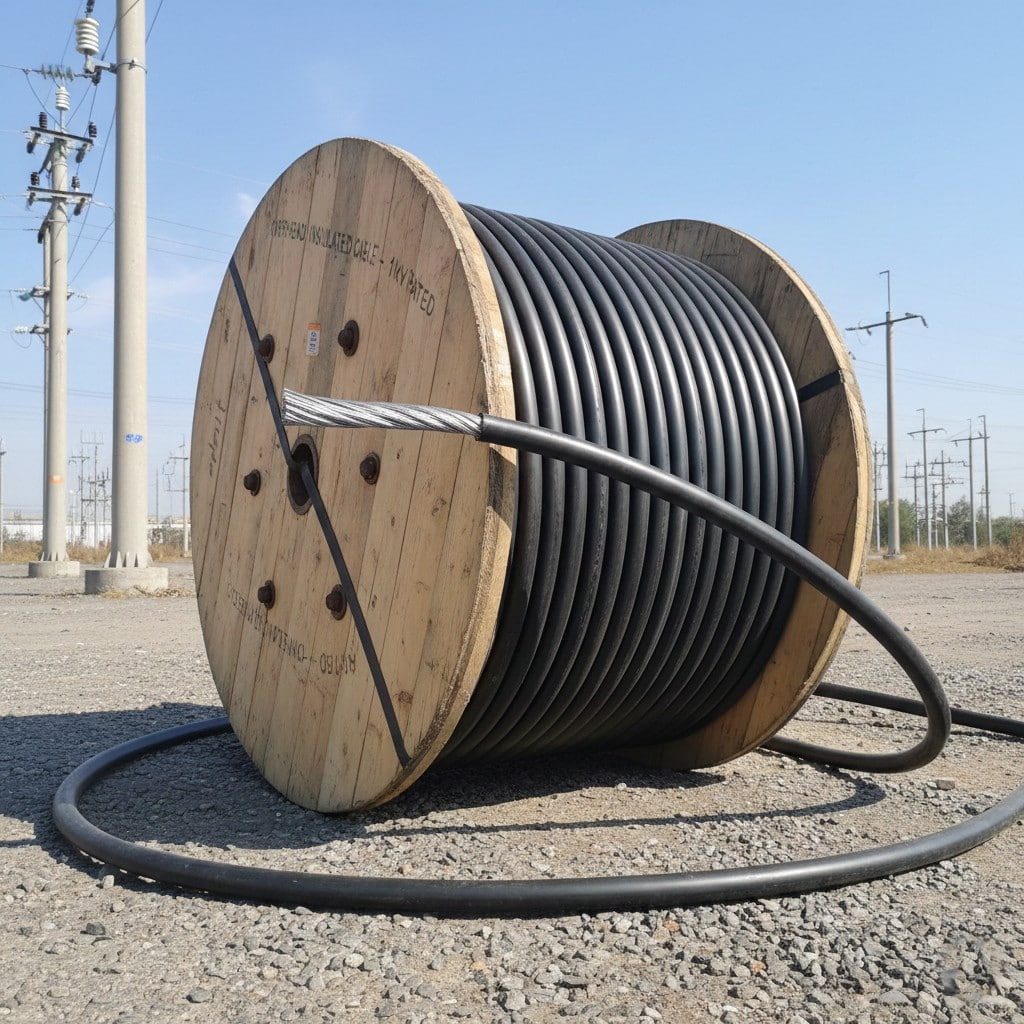
Product Overview: Designed specifically for overhead power line installation, this product is suitable for distribution lines with a rated voltage of 1kV and below, making it an ideal choice for urban...
See Details -
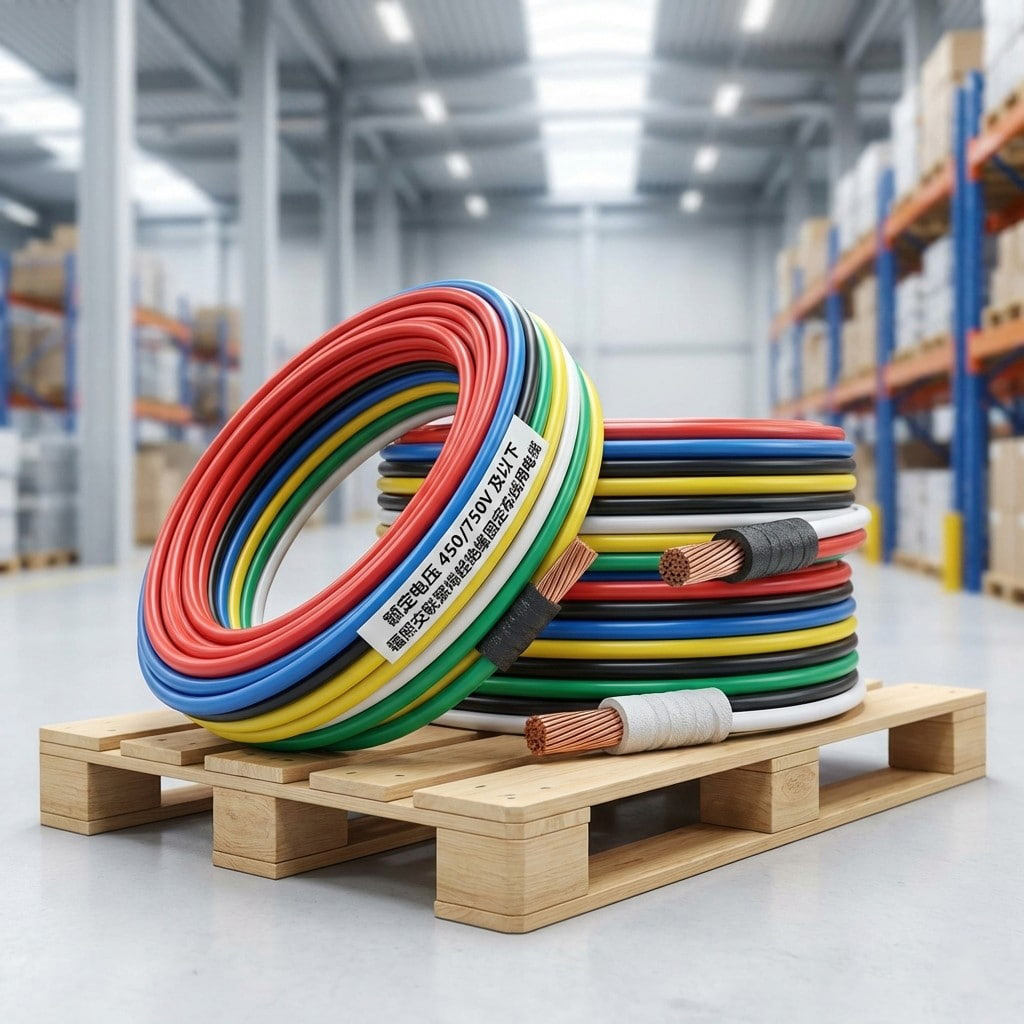
Product Overview:This product is made of high-quality polyolefin material through an electron irradiation cross-linking process. It is suitable for fixed installations with rated voltages of 450/750V ...
See Details -
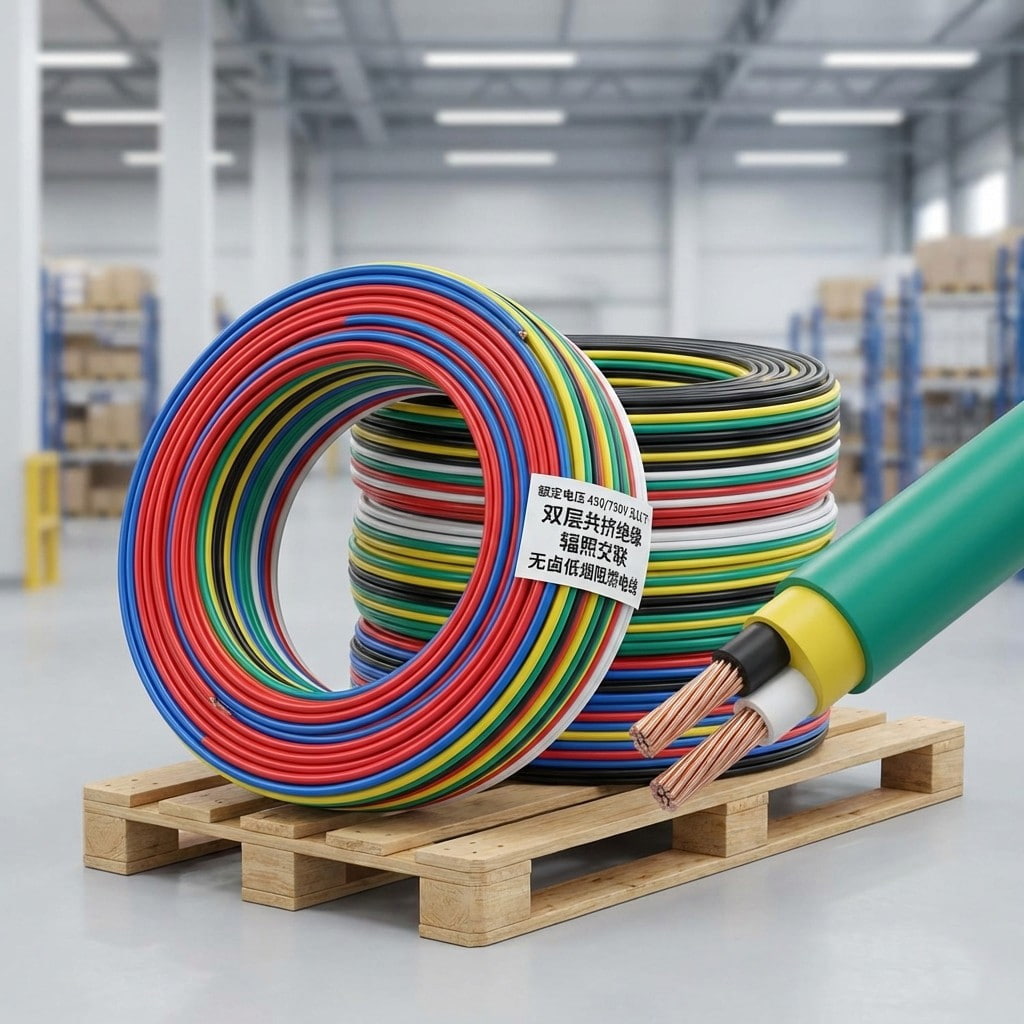
Product Overview: This product utilizes a double-layer co-extrusion insulation and electron irradiation cross-linking process, possessing halogen-free, low-smoke, and flame-retardant properties. It i...
See Details -
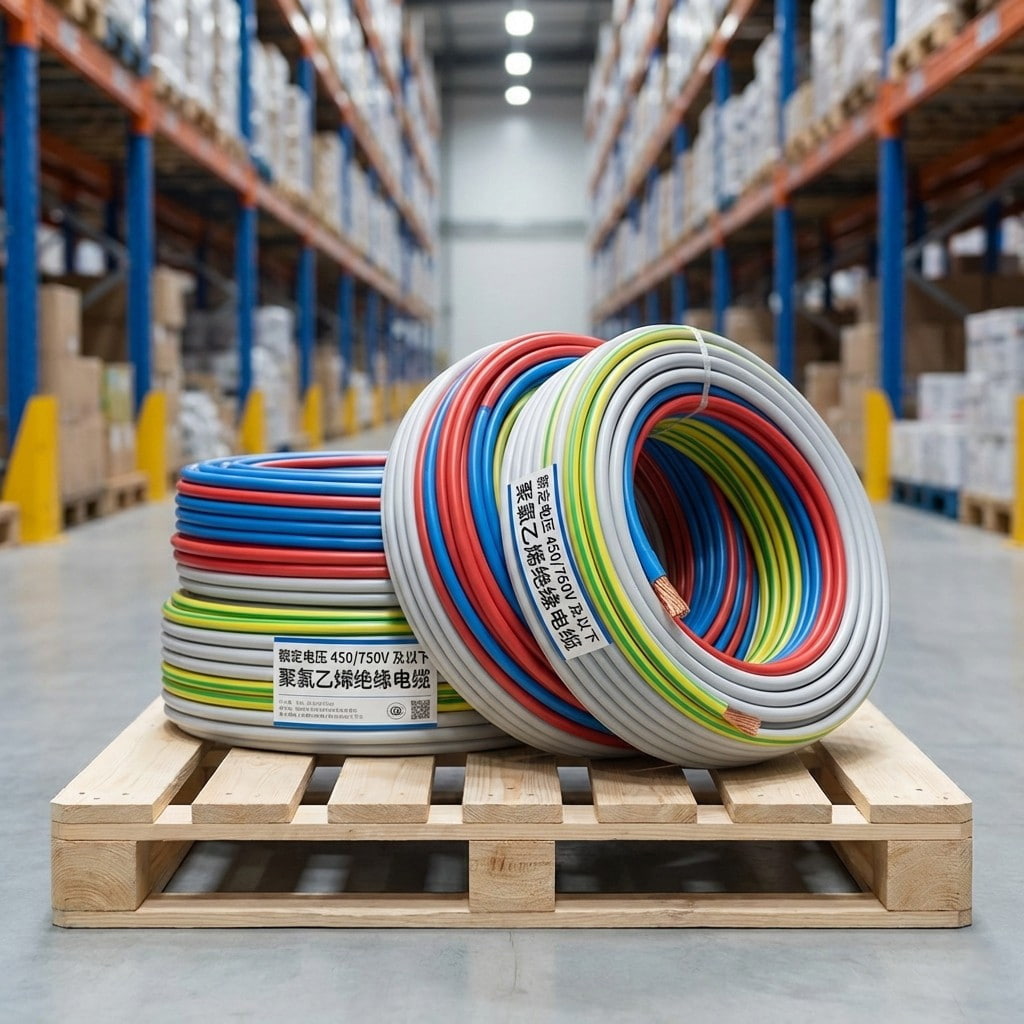
Product Overview: This series consists of general-purpose wires and cables with a rated voltage of 450/750V and below, using polyvinyl chloride (PVC) insulation and sheathing. Featuring mature technol...
See Details -
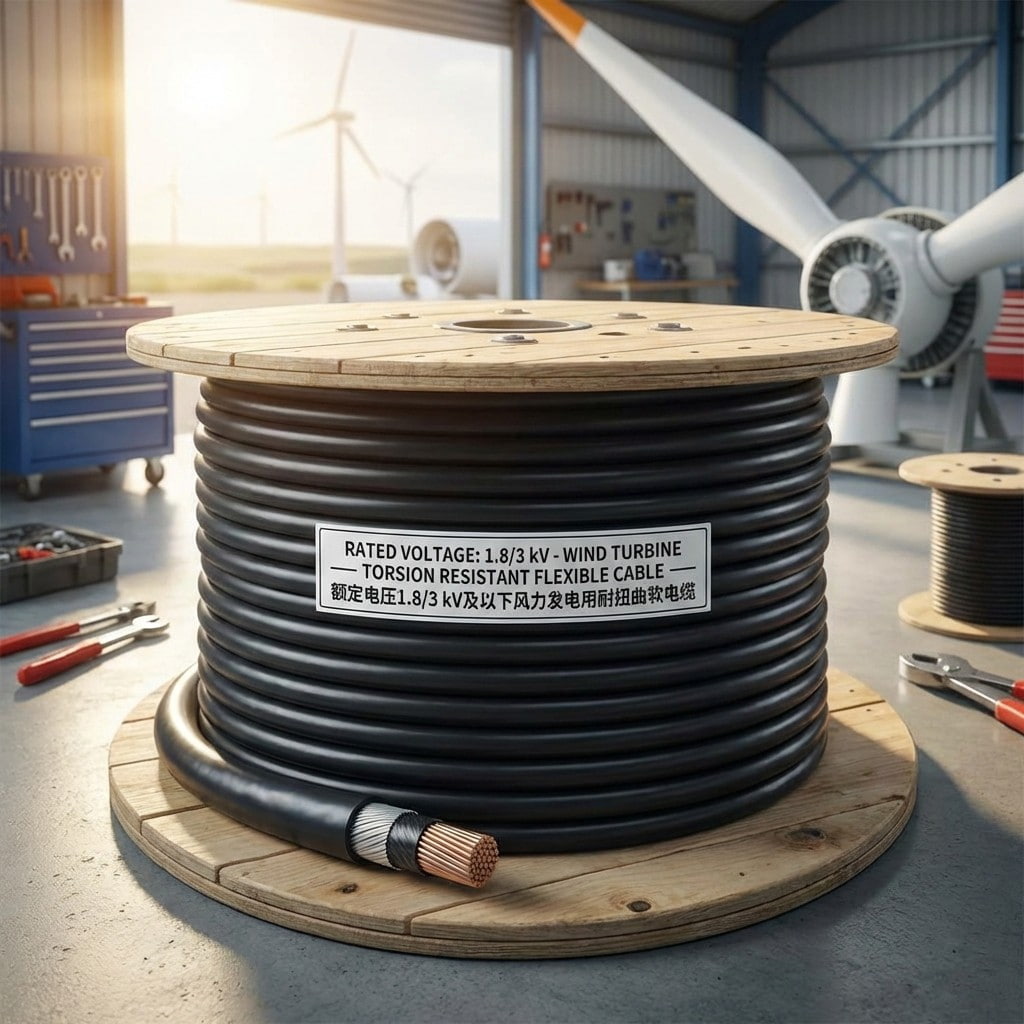
Product Introduction: Designed specifically for the harsh operating environment of wind power systems, meeting the requirements of continuous torsion and bending during mobile installation within the...
See Details
- About Us
- Company Profile
- History
- Smart Factory
- Resources
- Resources
- Technical Datasheets
- Product Catalogs
- Certificates & Compliance
- Industry Standards
- FAQs
- News
- Products
- Power Cables
- Electrical Equipment Cables
- Wind Power Cables
- Photovoltaic / Energy Storage Cables
- Overhead Cables
- Rail Transit
- Contact
- Contact
- Contact Meaia
-
Mobile QR code

Back to top

